Impact of Negative Online Reputation on Sales & Customer Perception
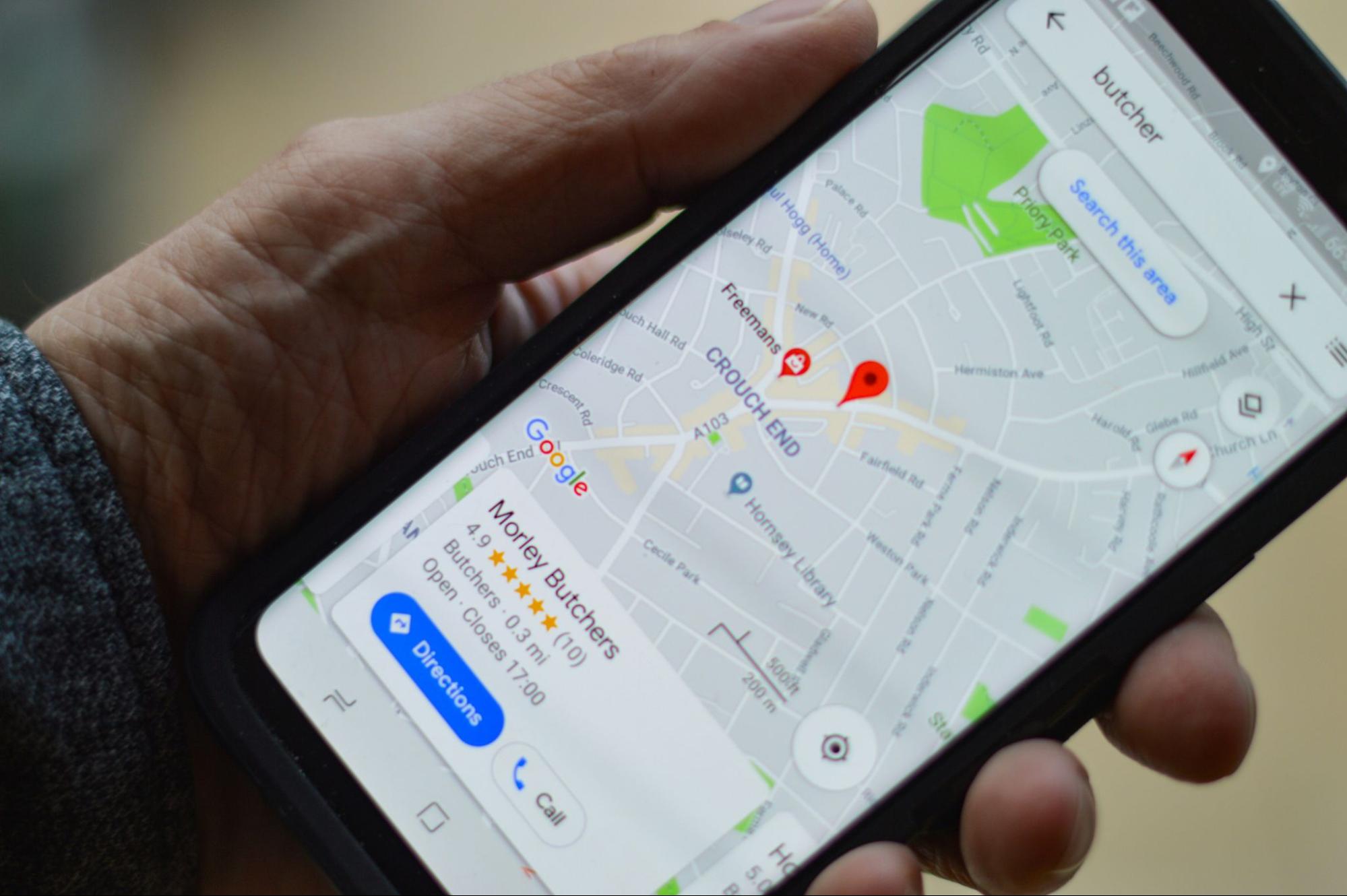
Source: Unsplash
As you chart your activity across your digital presence, you make deposits of goodwill with your core audience. That goodwill erodes with every poor experience, slowly turning from an asset into decay.
A single one-star drop in your average rating, from 4.0 to 3.0, can reduce annual revenue by 5 to 9%. If three negative reviews appear on the first page of search results, as many as 59% of potential customers may never engage at all.
In this guide, we will explore how reputation shapes revenue and how businesses can recover when that balance turns against them.
TL;DR
- A negative online reputation directly drains revenue.
- Even a single one-star drop can reduce sales, push prospects to competitors, weaken SEO visibility, and increase customer acquisition costs.
- Bad reviews hurt perception, reduce trust, kill conversions, and quietly block growth.
- With fast responses, consistent review generation, and operational fixes, businesses can stop the bleed and rebuild credibility.
Part 1: The Result of a Poor Brand Reputation
Let’s paint a picture of the consequences that follow a negative online reputation.
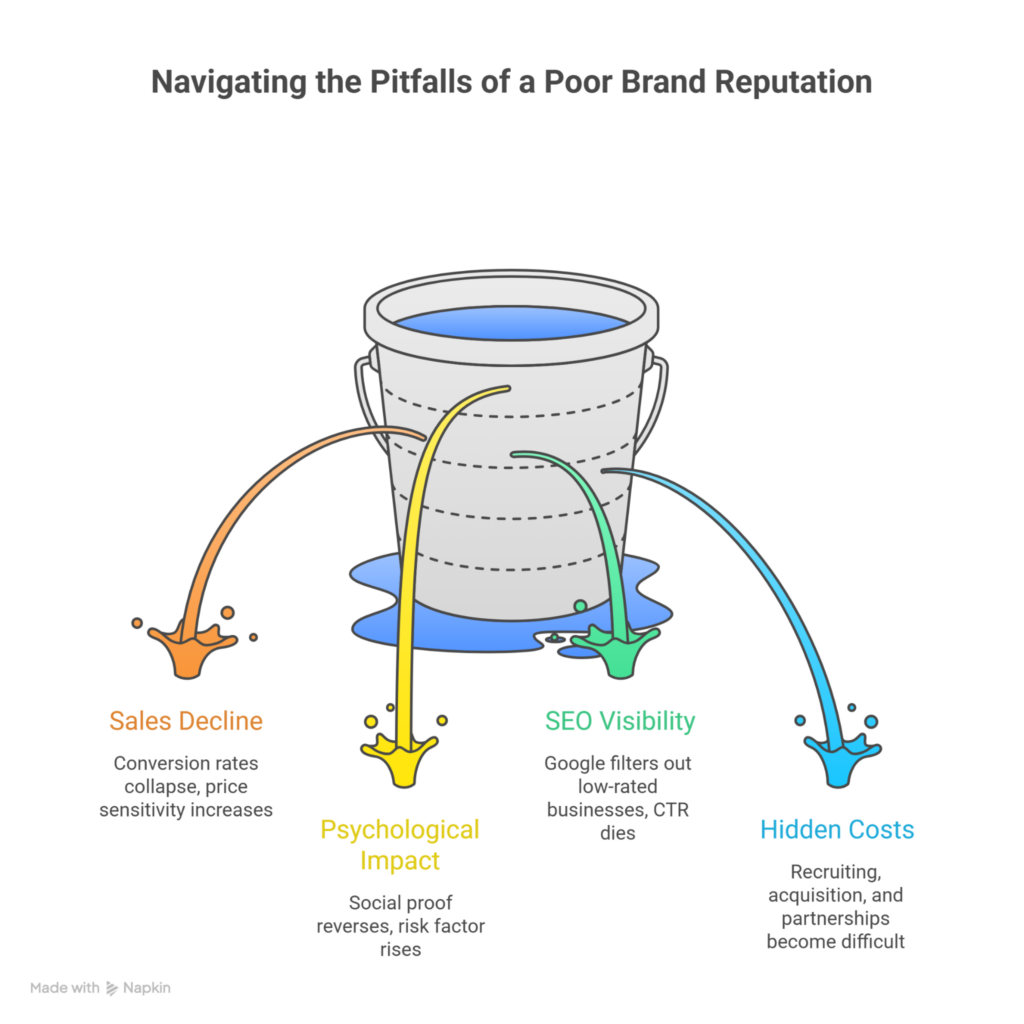
1. How Bad Reviews Affect Sales
Conversion Rate Collapse
The sweet spot for buying confidence sits between 4.2 and 4.5 stars. Dip below 4.0 and trust begins to erode quickly. By 3.5, the damage accelerates into free fall. Of course, some industries are held to stricter standards than others. 84% of consumers will refuse to visit a healthcare provider rated below four stars, even when that provider comes personally recommended by their own doctor.
While positive reviews draw people in, negative reviews exert a far stronger pull in the opposite direction. It can take as many as 12 positive reviews to offset the damage of a single negative one, because in consumer psychology, negativity carries disproportionate weight.
People are often looking for reasons not to buy. Your reputation should never give them one.
Price Sensitivity
A strong reputation gives you pricing power because you have earned the right to command it. A weak reputation forces brands into discounts. When trust is present, customers are more comfortable paying more.
When cracks begin to show, you stop distinguishing yourself. You are simply the cheaper option, and that comes with thinner margins and far more room for error.
In high-ticket B2B services such as consulting, legal, healthcare, and construction, this effect is especially severe. Prospects will almost always choose to pay more for a 4.7-star provider over a 3.4-star alternative.
The “Lost” Customer
Here’s the most dangerous part: you’ll never even know who you lost.
When someone searches “best [your service] near me” and sees your 3.3 stars beside a competitor’s 4.6, you are not getting that visit. And you’re left with nothing to retarget.
This is exactly what this restaurant owner began to notice after a handful of negative reviews.
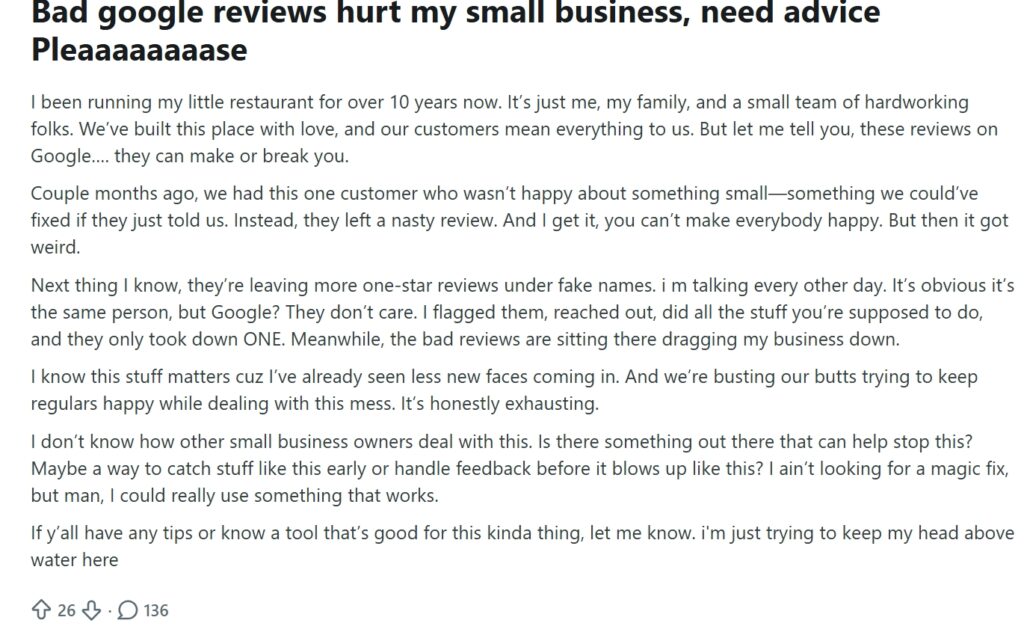
2. The Psychological Impact on Perception
Social Proof in Reverse
Reviews function as word of mouth from strangers. When those strangers describe unreliable service or slow support, prospects regard it as a personal warning rather than a distant opinion.
Many consumers sort reviews by recency, and some even deliberately scan the lowest-rated ones because they’re looking for obvious red flags.
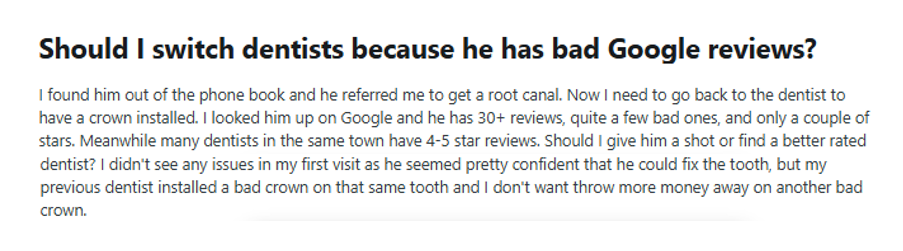
The “Risk” Factor for High-Ticket Decisions
For expensive purchases (B2B software, medical procedures, home remodeling, legal services), a bad reputation has an impact more insidious than reduced conversions. Here, it eliminates consideration entirely. Nobody wants to risk a $50,000 decision.
When a prospect hesitates on a high-ticket decision, they inevitably find a safer alternative.
Confirmation Bias
Strong brands get forgiveness. Weak brands get confirmation. When a trusted business messes up, customers think, “That’s unusual.” When a poorly rated business messes up, customers think, “Knew it.”
This is the goodwill we mentioned earlier, the accumulated credit that earns you forgiveness when things go wrong.
For agencies managing client reputations, this matters even more. You are not just managing perception. You are building or draining the buffer that determines whether a client can withstand inevitable missteps.
3. Impact on SEO and Visibility
Google’s Unofficial 4.0-Star Filter
The top three local results in the Map Pack (the only ones most people see) average 4.1 stars. Drop below that, and you’re already filtered out.
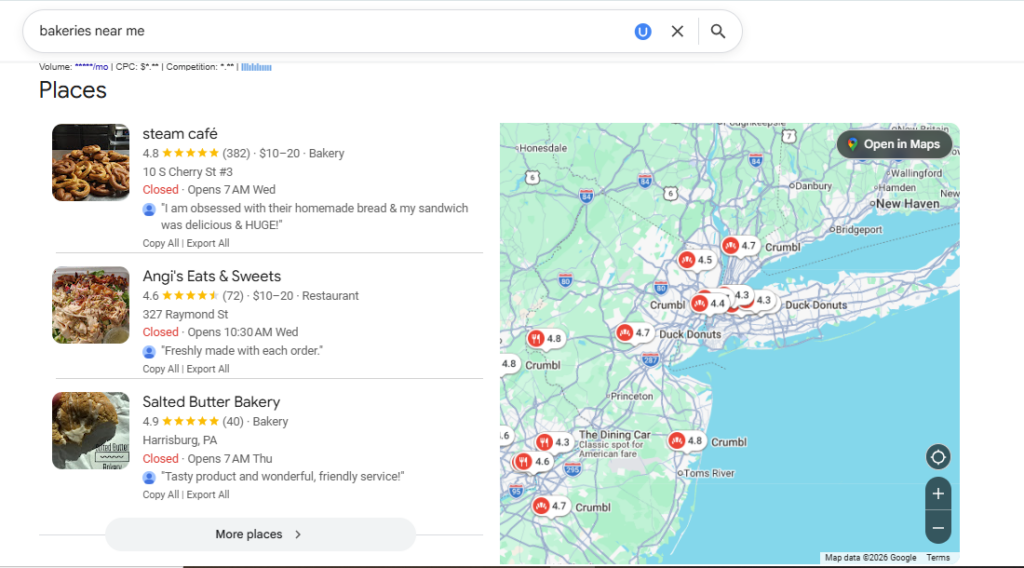
For businesses relying on “near me” searches (restaurants, dentists, plumbers, attorneys, salons), the local pack is everything. Most users never scroll past the map results. If you’re sitting at 3.7 stars, you might as well be invisible.
Click-Through Rate (CTR) Death Spiral
Even when you rank organically, your star rating appears beside your listing. Low ratings lead to fewer clicks. Fewer clicks signal to Google that your result is less relevant, and rankings begin to slip.
This creates a compounding effect. Negative reviews lower your star rating, which reduces click-through rates, rankings, and impressions in sequence.
This is why reputation management is SEO. You cannot optimize your way out of a 3.2-star rating. The rating itself becomes a ceiling on visibility.
Part 2: How to Fix Negative Brand Reputation
If you are starting to see gaps in your strategy, here is how to push back against what can feel like an immovable force.
1. Acknowledge and Respond
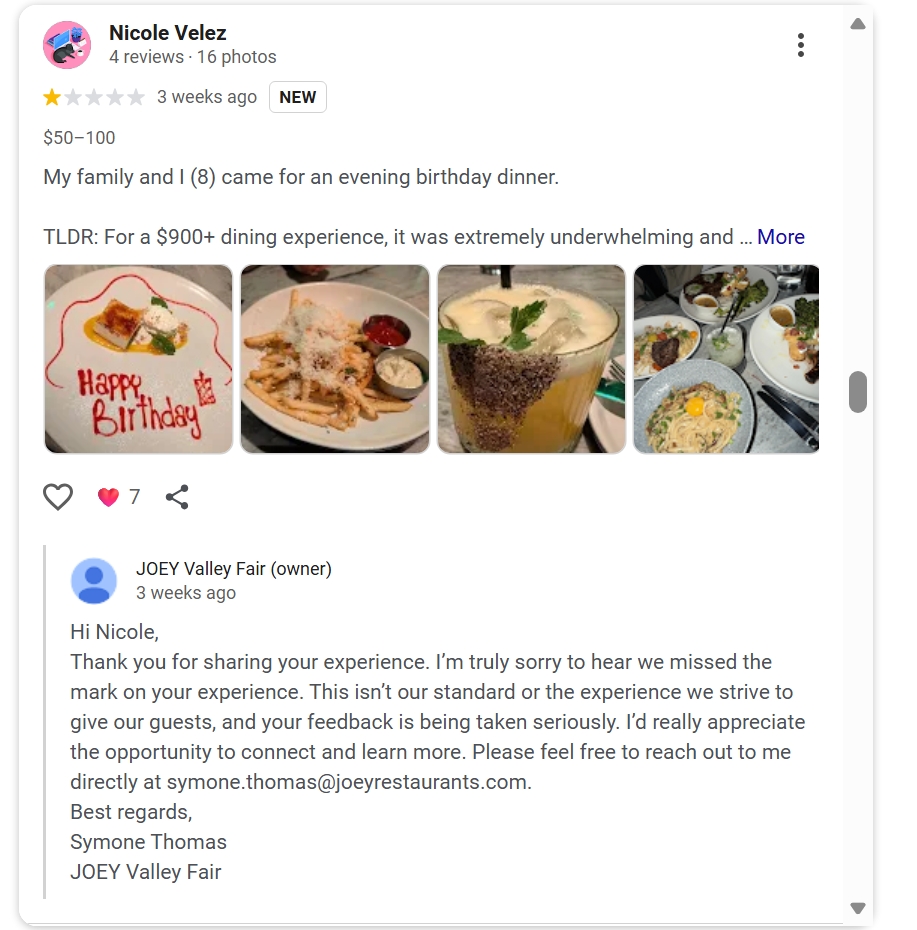
67% of unhappy customers will still feel positively after a poor experience if you respond quickly. What they expect (at minimum) is accountability when a mistake is made.
A thoughtful response does far more than a defensive or apologetic one, while silence is often taken as an admission of guilt.
Best practices for responding:
- Respond to every review (positive and negative)
- Respond fast. Speed signals that you care.
- Be specific, not generic. Reference details from their review to show you actually read it.
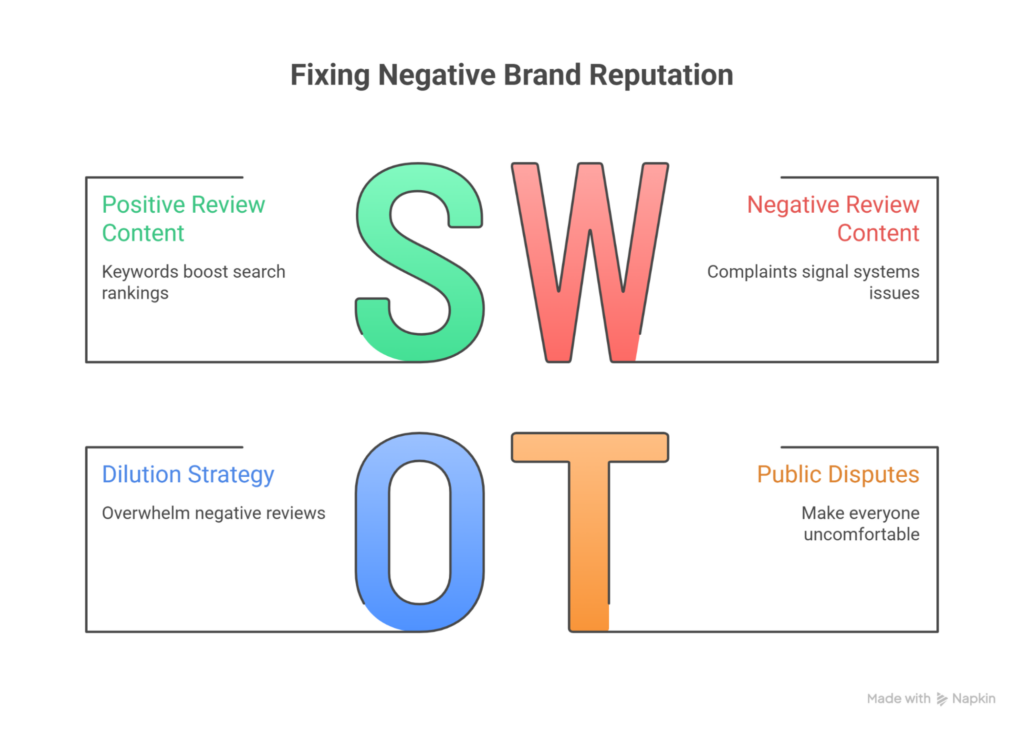
- Take it offline when necessary. Provide a direct phone number or email to resolve complex issues privately. Public disputes make everyone uncomfortable.
- Sign your response with a name. Unsigned responses feel corporate and cold.
Read: 50 Google Review Reply Templates for Different Industries
2. Review Content as Ranking Signal
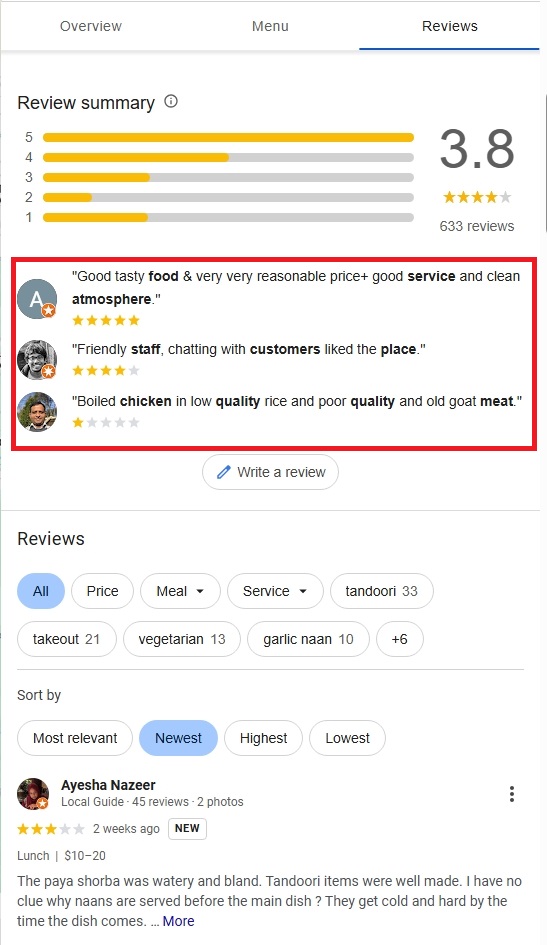
Here’s a ranking factor most businesses completely overlook: The actual text of reviews contains keywords that boost your rankings for those specific terms.
When customers praise specifics (“great with nervous patients”), those phrases help you rank. When they complain (“overpriced,” “unresponsive,” “never again”), Google associates those terms with your brand.
3. Dilution Strategy: You Can’t Delete, But You Can Bury
You can’t remove legitimate reviews, but you can overwhelm them.
Most people read 3–5 reviews to form an opinion. If those are positive, older negatives lose power. Fresh reviews signal relevance to customers and to Google.
The dilution strategy works like this:
- Systematically request reviews from happy customers.
- Make it absurdly easy. Include links to your Google Business Profile review page.
- Time it right. Request reviews when customer satisfaction is highest.
- Use multiple channels: Email, SMS, in-person requests, and QR codes at the point of sale.
Getting new reviews regularly also signals to Google that your business stays active and relevant.
Read More: Review Recency: Why Businesses Need New Reviews for Success
4. Operational Fixes: Sometimes the Reviews Are Right
Unfortunately, sometimes the reputation problem is the truth about the business.
If the same complaints show up repeatedly, you cannot write it off as bad luck. Reviews are free diagnostics. Ignore them, and you’ll keep paying for the same mistake.
Create a systematic process:
- Tag and categorize complaints
- Quantify the pattern
- Fix the root cause
- Publicize improvements. Customers do notice.
The best reputation management strategy is delivering excellent service consistently. Everything else is damage control.
Also Read: 7 Examples of Online Reputation Management Done Right (And What Agencies Can Learn From It)
Conclusion: Reputation is Revenue
Behind the perception of a negative online reputation lies a very real revenue problem.
A single star loss can translate directly into lost revenue. Negative reviews drive buyers away. Below a 4.0-star rating, visibility drops, advertising efficiency declines, hiring becomes harder, and trust steadily erodes.
The brands that manage negative reviews successfully respond quickly and transparently, and they consistently request reviews from satisfied customers at the right moments. The currents of public opinion are powerful, but they can be redirected.
Also Read: Top 13 White Label Reputation Management Software in 2026
FAQs
- How to handle negative online reviews?
Respond fast and publicly. Acknowledge the issue, take responsibility where warranted, and move the resolution offline. Silence looks like guilt, but defensive replies look worse. Remember, the response is for the hundreds of prospects who will read it later.
- How can I improve my online reputation?
You can improve your online reputation by fixing real issues, responding consistently, and getting more fresh reviews than bad ones.
- Can a bad review be removed?
Only when the review violates platform rules (spam, fake accounts, harassment, conflicts of interest) can it be removed through reporting.