9 Solid Reasons to Convince Clients to Invest in Local SEO

You’ve probably been here before.
You pitch local SEO to a small business owner, and their eyes glaze over. They nod politely while you talk about “optimizing citations” and “Google Business Profiles.” But you can tell: they’re not sold or even close to it.
From vast experience working with agency founders and small business owners, here’s what they really want to know: “Will this bring me more paying customers?”
Short answer? Yep. Long answer? Read on.
We’ve helped thousands of local businesses figure this out. We work with over 600,000 businesses globally, and most of these are small to mid-sized brands that serve people in the suburbs.
If your client’s still not convinced, here’s all you’ll need to persuade them to commit to a local SEO investment.
TLDR: 9 Solid Reasons to Convince Clients to Invest in Local SEO
- High Conversion Potential: Data shows nearly one-third of local searches lead to a purchase within 24 hours, making them far more valuable than generic queries.
- Cost-Effective Marketing vs Ads: Unlike paid ads that stop when the budget stops, local SEO delivers compounding returns over time.
- Hyper-targeted Leads = Higher Intent: Local SEO attracts buyers already nearby, ready to act, which improves lead-to-sale ratios and reduces wasted time.
- Build Trust & Credibility Locally: 88 percent of consumers trust online reviews as much as personal recommendations, and customers spend up to 22 percent more with trusted businesses.
- Dominate “Near Me” & Map Pack Visibility: Data shows 44 percent of local clicks go to Google Map Pack results, where local SEO can secure placement.
- Level Playing Field vs Big Brands: Google prioritizes proximity and relevance, enabling small businesses to outrank larger brands in local search.
- Improve Inbound Traffic Efficiency & ROI: Local search CTR is up to 50 percent higher than broad search, translating to better ROI for marketing budgets.
- Compounding Benefits Over Time: Reviews, citations, and content improve over months, creating long-term growth with lower upkeep.
- Data-Driven Insights for Strategy: Tools like Google Business Profile Insights track calls, directions, and keyword data, for smarter campaigns and upsells
Reason 1: High Conversion Potential: Local Searches = Buyers
Most clients couldn’t care less about keywords, backlinks, or citations. They’re not hiring you to teach them SEO. They want customers, sales, and cash in the bank. Small business owners only care about what’s going to put money in their pocket.
So ask them this:
“If someone’s standing five minutes from your shop searching for what you sell, do you want them to find you or your competitor?”
Because that’s what local SEO does.
Let them know how 28% of local searches lead to a purchase within 24 hours and how you’re optimizing for prospects seeking their goods or services.
Local searches aren’t passive. They are action-driven. Someone Googling “emergency dentist near me” or “best falafel in [suburb]” is ready to act now.
- “Best pizza near me”
- “24-hour locksmith in [suburb]”
- “Hairdresser open now”
These are high-intent queries. The person is already in buying mode: phone in hand, wallet ready or ready to drive to a location for immediate patronage.
So, if your client isn’t showing up in those moments, they’re literally giving money away to whoever is showing up on Google.
So here’s how you drive it home:
“How are you getting customers today? By walk-ins, word of mouth, or paid ads? How reliable is that?”
“What happens when someone searches for your service nearby? Do they find you, or the guy down the street with 100 reviews?”
Then show them. Pull up their live search results for their suburb. Check their Google Business Profile (or lack of one). Search their service category and show them where they rank. If they’re not even on the map, there’s your opening.
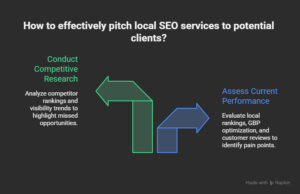
If you want to get even more specific, run a test using Google’s keyword planner or Synup’s Local Grid Ranking Tool and say:
- “There are 1,500 monthly searches for ’dentist [suburb]’ in your area”
- “If you rank for the term in your neighbourhood, that’s 75 potential bookings a month if convert even 5% of them”
- “Your average service is $120; that’s $9,000 in monthly revenue from one keyword group.”
That’s what shifts the conversation.
You sell local SEO with outcomes, not buzzwords you have to keep explaining.
Also Read: Most Profitable Industries to Get Local SEO Clients for Your Agency
Reason 2: Cost-Effective Marketing vs Ads
It can be helpful to think of ads like renting a nice, big billboard. Turn off the budget, and the billboard disappears.
But local SEO is like owning the shopfront on Main Street. Once you’re there, people keep walking by. You keep getting noticed. And you’re not paying Google a cent every time someone looks at you.
If your client’s still married to paid ads, pull up the data. If they’ve got decent analytics, do this:
- Check what search terms they don’t rank for (but should)
- Estimate how much traffic they’re missing
- Work out their average conversion rate
- Multiply that by their average sale value
- Show them how much money they’re leaving on the table
- Then calculate the return on that investment
If the maths adds up, it’s hard for them to argue.
Reason 3: Hyper-targeted Leads = Higher Intent
Here’s what most clients don’t realise: traffic means nothing if it’s the wrong people.
Running Meta ads to a broad audience is like paying to throw flyers into the wind and hoping someone catches.
Yes, you’ll get a lot of clicks, but most of them are accidental, irrelevant, or just plain curious.
Local SEO flips that on its head.
It doesn’t interrupt but intercepts the journey when a prospect enters the funnel.
It puts your client in front of someone who’s already searching for exactly what they offer in their area, on their schedule, ready to act.
Let’s put numbers to it:
- 76% of people who search for a local business on their smartphone visit a business within 24 hours. That’s according to Google itself.
- Over 50% of “near me” searches result in a store visit.
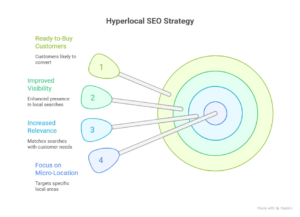
These aren’t passive users browsing from their couch. These are local, high-intent buyers. A new homeowner searching for “plumber in Pasadena” or a dad on a Sunday morning Googling “urgent care open now near me.”
Explain to your client how local SEO filters out:
- The low-intent tyre-kickers they’re probably frustrated with from Meta ads.
- The spammy bots from out-of-area traffic
- The time-wasters who’ll never convert
Instead, it delivers qualified leads of people already looking, already comparing, already halfway sold.
It also means your client’s sales team will spend less time chasing and more time closing.
If they’ve got a physical storefront or service radius, this is how you help them dominate their patch with less ad budget, better leads and more conversions.
Reason 4: Build Trust & Credibility Locally
Have you ever checked Google reviews before trying a new café? Of course you have. Over 92% of your clients’ customers do it too, according to online review statistics.
In fact:
- 88% of consumers trust online reviews as much as personal recommendations
- 72% of people say positive reviews make them trust a local business more
- Customers are willing to spend up to 22% more at businesses with strong trust signals.
Source: Freepik
So what does trust look like online?
It’s not only a 4.9-star rating. It’s the full package:
- A fully completed and verified Google Business Profile
- Accurate business hours (especially holiday or weekend updates)
- Fast replies to reviews, especially the 1-stars (Learn How to Make the Most of Your Customer Reviews)
- Photos that show the real shop, team, and vibe
- Consistent directory listings (Yelp, Bing Places, Apple Maps, etc.)
- Weekly updates or promos that show the business is alive and not abandoned.
This is what local SEO helps with. Clients who neglect this come off looking shady, outdated, outcompeted, or closed.
Reason 5: Dominate “Near Me” & Map Pack Visibility
If your client wants more foot traffic, calls, or service bookings, they need to rank in Google’s local 3-pack for their service niche and area. That’s the set of three map-based listings that appear above organic results when someone types “near me.”
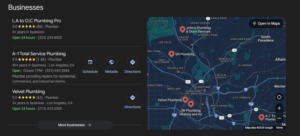
Source: Google Search
And this matters a lot.
This is because almost half of the clicks on local searches go to results in the Map Pack. That’s before anyone even sees the regular blue links.
So, if your client is not listed there, they’re invisible, especially on mobile.
The good thing is, they don’t need a massive budget to show up. With the right mix of:
- An optimized Google Business Profile
- Consistent NAP citations
- Location-based content
- Active review generation
They can earn that visibility without competing on ad spend.
That’s a huge edge for any service-based business, clinic, or retailer trying to attract local buyers.
Local SEO makes sure they show up not when people are browsing, but when they’re ready to buy.
Learn More: Key Ranking Factors for Google Maps in 2025
Reason 6: Level Playing Field vs Big Brands
Your clients might assume they can’t beat the big national brands.
But in local search, size doesn’t always matter.
Google gives strong weight to proximity, local relevance, and profile quality. That means a well-optimized local business can outperform a large chain in specific suburbs or zip codes.
Completeness and accuracy of local listings often outweigh brand authority in nearby searches.
So if your client runs a family-owned HVAC service in, let’s say, Phoenix, they can absolutely outrank national competitors in targeted local searches like:
- “Emergency HVAC [suburb]” – high-intent searches where users are looking to book service within hours, not days.
- “Best cooling company in [area]” – searches that often trigger review-heavy Map Pack results, where social proof matters as much as ranking.
- “AC repair near me,” which gets over 10,000 monthly searches in Phoenix alone, according to Ahrefs data.
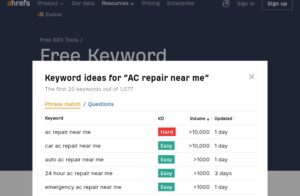
Source: Ahrefs
Here’s why it’s possible: Google’s local algorithm prioritizes relevance, proximity, and prominence over sheer brand size. That means a nearby HVAC business with a fully optimized local presence and good reviews can appear above national brands, even if those brands have bigger websites or larger marketing budgets.
They need to nail three critical areas and keep them maintained:
- Accurate, Up-to-date Local Listings
Ensure Name, Address, and Phone (NAP) data matches exactly across Google Business Profile, Yelp, Bing Places, Apple Maps, and local directories.
Even small inconsistencies (like “St.” vs “Street”) can impact trust signals in Google’s local algorithm.
Add service hours, emergency availability, service radius, and verified categories to their GBP profile.
- Targeted Location Pages
Create separate landing pages for each suburb or service area (e.g., “Emergency AC Repair in Tempe” or “HVAC Installation in Scottsdale”).
Each page should have locally relevant content, including neighborhood references, unique service details, and customer reviews from that area.
They should also include embedded Google Maps, local schema markup, and optimized meta titles/descriptions to increase click-through rates.
Here’s what you should also know:
- Reviews That Mention Their Service Areas
Actively request reviews that include the location and service type (e.g., “Great AC repair in Mesa!”).
Google uses review keywords as a relevance signal for local rankings.
Businesses with 50+ recent, high-quality reviews mentioning location often outperform competitors with higher total review counts but no local keywords.
When all three elements are in place, even a single-location HVAC company can consistently appear ahead of multi-million-dollar national competitors, especially in the Google Map Pack.
Reason 7: Improve Inbound Traffic Efficiency & ROI
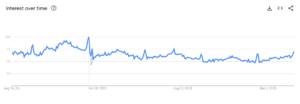
Local searches have a 50% higher click-through rate than broad, non-local queries. Searches that include “near me” have risen sharply. In July 2021, these searches peaked with an interest over time (IOT) score of 100, the maximum on Google’s 0-100 scale.
At the time of writing, the interest score remains high at 70.
People searching “accountant near me” or “urgent care open now” are far more likely to take action than someone searching “financial advice.”
This high intent ensures better ROI.
Because your client is:
- Targeting users closer to conversion
- Receiving fewer unqualified clicks
- Wasting less time on irrelevant leads
That translates into:
- Lower cost per acquisition (CPA)
- Higher lead-to-sale ratios
- Less ad waste and better use of internal resources
Let’s say your client runs a chain of fitness studios. Ranking for “gyms in Miami Beach” means they’re getting people ready to book a tour or sign up, and not people looking for just fitness advice.
This local SEO strength brings better traffic, not only more traffic.
Reason 8: Compounding Benefits Over Time
Unlike paid ads, which vanish when the budget runs dry, local SEO builds equity.
Think of it like compound interest. The work you do in month one (like setting up the GBP, fixing citations, and starting review requests) becomes the foundation for long-term gains.
Over the next 3 to 6 months, you start to see:
- Better rankings
- More calls and clicks
- A snowball effect from positive reviews
- Increased trust and visibility in multiple map zones
The best part is that once listings are established and maintained, local SEO requires less upkeep than ongoing ad campaigns.
It’s not passive, but it scales well. And when clients stop having to run promo after promo just to be found, they feel the difference.
For consultants and agencies, this is a huge selling point. You’re not offering one-time visibility. You’re helping them build a long-term asset and even foster brand loyalty in the local market.
Reason 9: Data-Driven Insights for Strategy
One of the biggest client objections is:
“How do I know this is working?”
Local SEO answers that with real data.
Modern tools like Google Business Profile Insights and Synup’s reputation management dashboard provide:
- Phone call volumes
- Click-to-directions counts
- Website taps
- Bookings
- Requests for direction
- Keyword discovery data
- Customer actions on listings

Source: Google Business Profile
You can track footfall impact, peak call times, and even which zip codes drive the most leads.
Layer that with call tracking tools or CRM data, and you can prove revenue links from local search performance.
You’re not just saying “traffic is up.” You’re showing:
- How many people found the business
- What they clicked on
- What time they called
- What city they were in
And most importantly: where the next opportunity is.
This level of insight doesn’t just justify your services. It helps you refine campaigns, pitch add-ons, and scale results.
Clients love seeing their visibility turn into action. And with platforms like Synup feeding in real-time insights, it’s easier than ever to show value.
Conclusion & Next Steps
Local SEO is one of the most reliable, cost-effective ways to bring in ready-to-buy customers.
Clients who invest now build a long-term presence. Clients who delay lose traffic to faster-moving competitors.
The next step is to start with a local visibility audit, then build out the essentials: GBP, reviews, citations, and location content.
Show them the numbers. Show them the map pack. And then show them how local SEO converts quietly, consistently, and profitably with far less paid ads required. Of course, once you land the client, we cannot understate the benefits of integrating a local SEO tool like Synup that helps you handle your clients’ business profiles, especially businesses with multiple locations. Start with a demo today.