
Really, they’re missing untagged social mentions, niche directories, forgotten Yelp pages stuck at 2.8 stars, and complaint threads that are, horrifyingly, ranking on page one.
This ignorance is expensive: Research shows that 93% of consumers read online reviews to inform purchasing decisions. If you’re sitting at 3.6 stars where it matters, you’re losing revenue daily.
For agencies handling clients’ reputations, that’s among the biggest concerns. And the solution isn’t hoping clients suddenly become more reputation-aware. It’s running a proper reputation audit during onboarding. One that shows them exactly where they stand, why it’s hurting them, and what you’re going to do about it. That audit becomes your foundation and your proof of value as an agency.
TL;DR
- Most businesses are blind to their real online reputation.
- One bad Yelp or Facebook page with hidden reviews and complaints can quietly kill conversions.
- Check Google, Yelp, Facebook, niche sites, and page-one results.
- Audit reviews, social chatter, and untagged complaints first.
- Track stars, review volume, recency, and responses.
- Benchmark competitors and use findings to fix issues and prove ROI.
Why a Comprehensive Reputation Check is the First Step in Client Onboarding
Most agencies skip the audit and jump straight into campaigns.
When you audit first, you establish baseline reality. That way, you can prove progress. “You started at 3.8 stars with 47 reviews. Six months later, you’re at 4.3 with 142 reviews. That’s a measurable increase in qualified inbound leads.”
That’s ROI clients understand.
Regular audits also surface issues early. Businesses that track reputation consistently spot problems faster and deal with smaller messes, not full-blown reputation fires that require damage control.
There’s also the SEO angle clients never expect. Case in point:
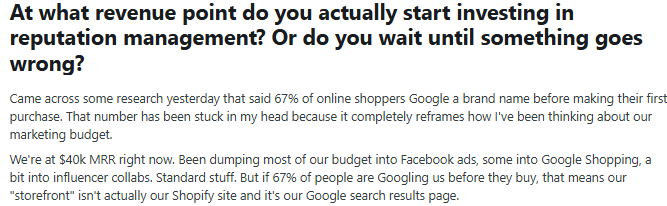

Reviews aren’t just social proof; they influence local rankings.
- Quantity,
- recency,
- velocity,
- and diversity
…all matter.
A mediocre rating actively suppresses visibility in “near me” searches. Top local pack results almost always sit north of 4.1 stars.
And then there’s crisis prevention. Imagine launching a $10K ad campaign. Traffic flows. Prospects Google the brand before converting (because most do). They land on a dusty Yelp page with unanswered complaints and a 2.3-star average. The result: you just paid to send leads to competitors.
A reputation audit catches that before ads ever go live. You fix the landmines first. Then you turn on the ads and scale.
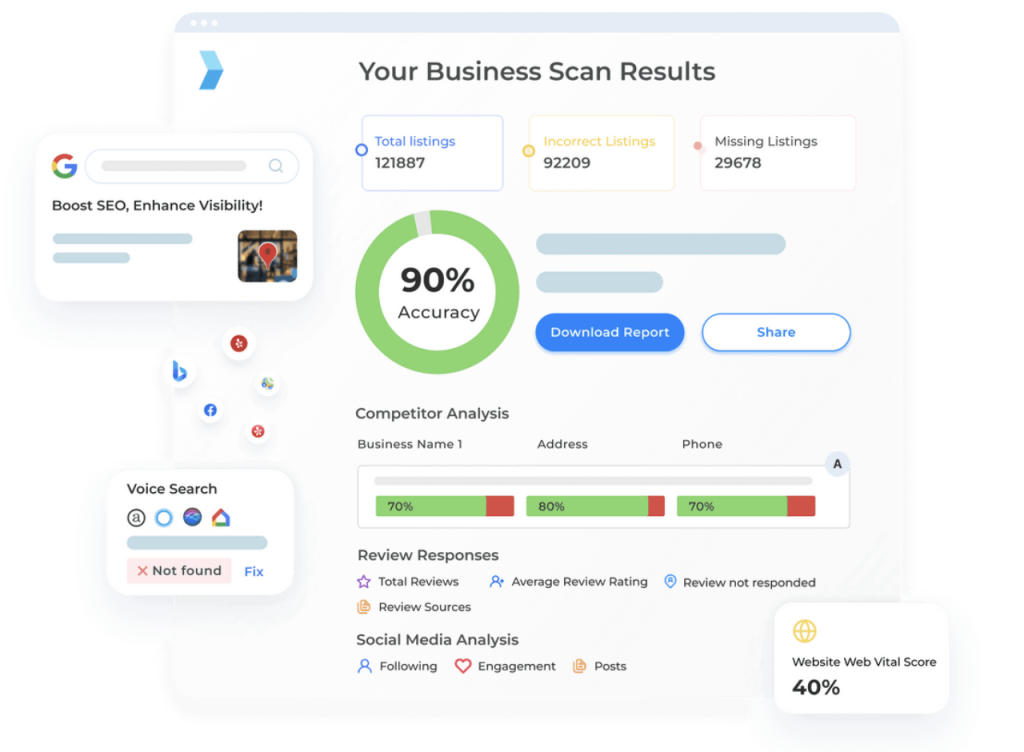
One way to do this quickly is to use Synup’s Scan tool. It provides an instant snapshot of a local business’s online presence and reputation across key platforms. Within a few seconds, you can find issues that might take you hours to find manually. Even better, agencies can white-label this scan tool to generate leads for their own business.

Also Read: Impact of Negative Online Reputation on Sales & Customer Perception
Step 1: Which Search Engines and Review Sites Must Be Audited?
An online presence can be pretty vast. Here’s how to get started with your efforts:
The “Big Three”: Universal Platforms Every Client Needs
Start with the essentials!
-
Google Business Profile (The Most Critical)
A Google Business Profile is non-negotiable. It’s the foundation of local visibility.
Here’s what you must audit:
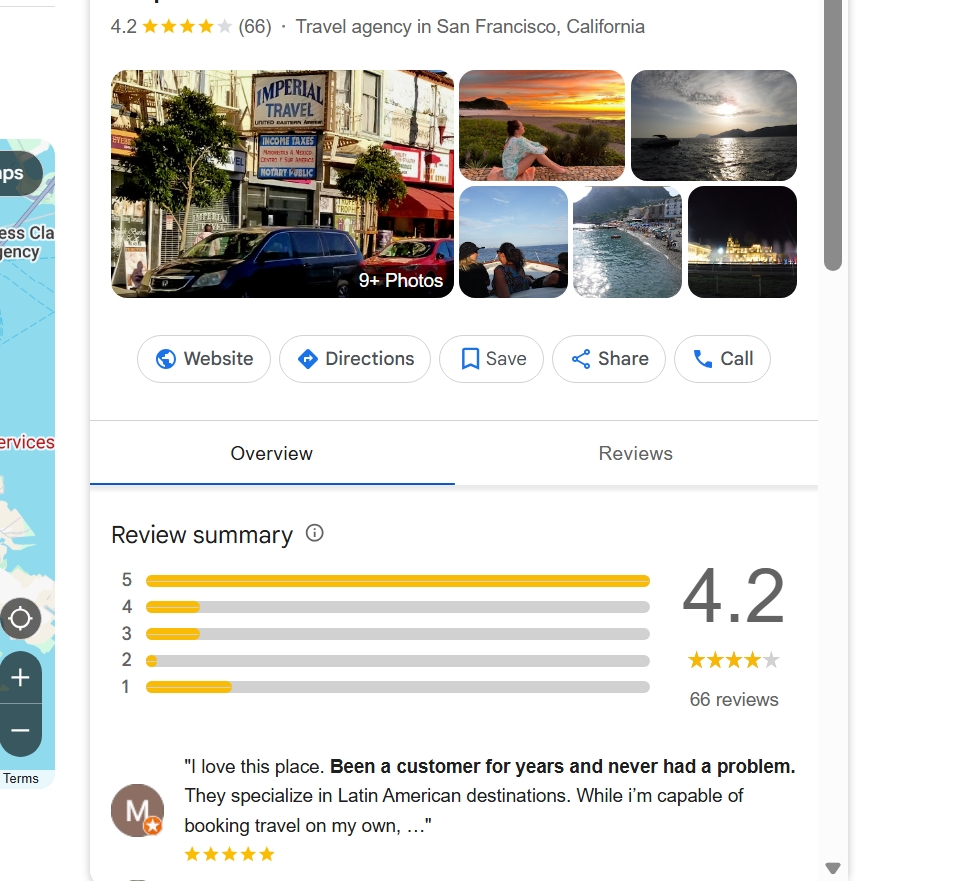
- Star rating and total review count: Is the client above or below the 4.1-star threshold for top-three ranking?
- Review velocity: Are they getting new reviews monthly, or is the last one from six months ago?
- Response rate: Has the client responded to any reviews? A 0% response rate is a massive red flag (and easy quick win).
- Profile completeness: Hours, phone number, website, photos, business description, or any such missing elements hurt local SEO.

-
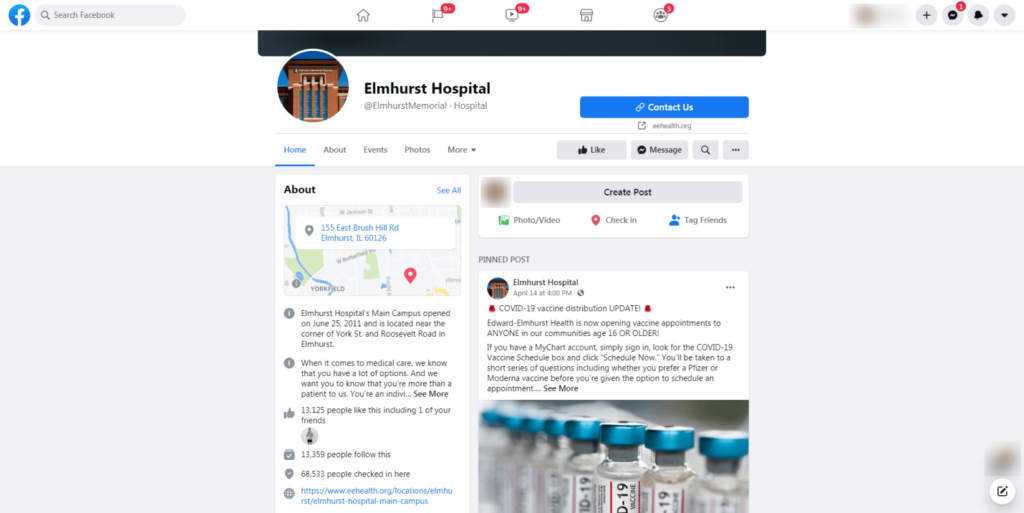
Facebook/Meta (For Social Proof)
Facebook may not be as influential for SEO, but people absolutely use it to judge legitimacy.
What to audit:
- Page rating and recommendation count
- Review recency
- Response rate to messages and comments

-
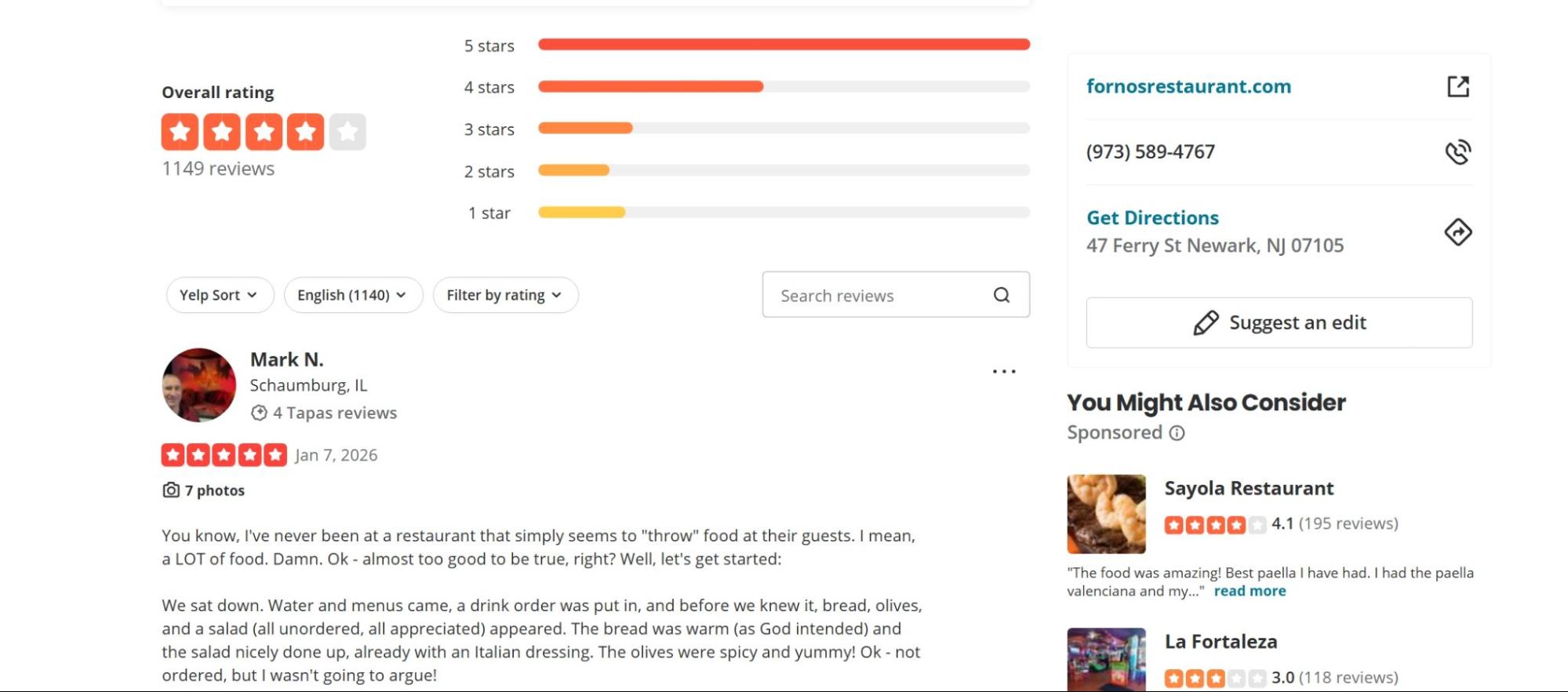
Yelp (For Legacy Trust)
Yelp’s consumer usage has declined slightly. But in industries like healthcare, home services, restaurants, and automotive, it still carries weight.
On Yelp, audit:
- Overall star rating – Yelp’s algorithm is notoriously strict; anything below 4.0 is problematic.
- Filtered reviews – Yelp hides reviews it suspects are fake or suspicious. High filtered review counts can indicate underlying issues.
- Business claimed status – Is the client’s Yelp page even claimed? Unclaimed pages can’t respond to reviews.

Industry-Specific Platforms
Now come the niche platforms; the ones generic audits miss. Your audit must go deeper based on your client’s vertical.
- Healthcare: Healthgrades, Vitals, RateMDs, WebMD Physician Directory
- Legal: Avvo, Lawyers.com, Martindale-Hubbell, FindLaw
- Home Services: Angi (formerly Angie’s List), HomeAdvisor, Thumbtack, Porch
- Hospitality/Travel: TripAdvisor, Booking.com, Hotels.com, Expedia
- Automotive: Cars.com, Edmunds, DealerRater
- B2B/SaaS: G2, Capterra, TrustRadius, Software Advice
The SERP Test: What Does Page 1 Actually Show?
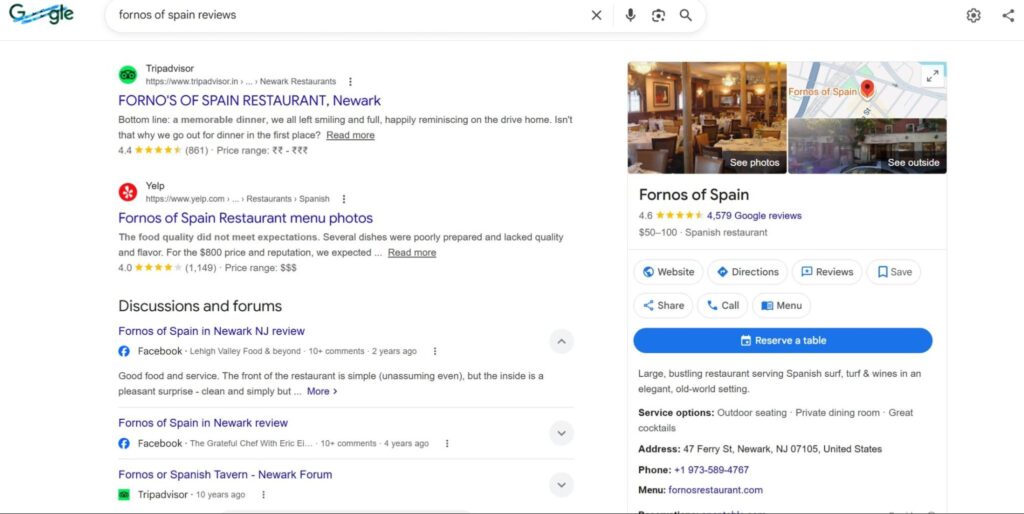
This is the most important test: what shows up when someone Googles the brand?
Perform these searches in incognito mode (to avoid personalized results):
- “[Brand Name] + Reviews”: This reveals which review platforms Google prioritizes for the client.
- “[Brand Name] + Scam” or “[Brand Name] + Complaint”: This uncovers the dark corners prospects might discover. Even if there’s no actual scam, negative forum posts and complaint sites often rank surprisingly well for these queries.
- “[Brand Name] + [City/Service]”: This shows local pack positioning and whether competitors outrank the client for their own branded + service searches.
Document everything with screenshots. Clients need visual proof of what prospects are seeing.

Also Read: 10 Risky Online Review Practices To Avoid
Step 2: How to Perform Social Listening Beyond Reviews
Review platforms are structured. Social media is not. It’s chaotic and unfiltered, which is why it’s dangerous.
Direct Mentions vs. Untagged Mentions
When someone tweets “@BusinessName your service is terrible,” the business gets notified. When someone tweets “Avoid XYZ Company – worst experience ever,” with no tag? Silent killer.
Most brand mentions aren’t tagged. People complain without notifying the business. That’s how brands get blindsided. You need social listening tools that track untagged mentions across platforms.
Platforms to Watch (And What to Look For)
X (Twitter) exposes real-time frustration. One ignored complaint can snowball fast. Reddit is where people go when they want the unfiltered truth. Prospects actively search “Brand name + Reddit” to bypass marketing fluff. LinkedIn matters for B2B credibility, and silence there signals stagnation. Instagram and TikTok comments reveal experience gaps polished websites hide.
X (Twitter)
- Brand name mentions (tagged and untagged)
- Common misspellings of the business name
- Competitor comparisons (“Why is [Client] so much worse than [Competitor]?”)
- Product/service-specific complaints
- Subreddit mentions in relevant communities (r/smallbusiness, r/legaladvice, industry-specific subs)
- “What do you think of [Business Name]?” threads
- Anonymous employee reviews (often surface on r/antiwork, r/careerguidance)
LinkedIn (For B2B Clients)
- Company page engagement
- Employee activity
- Competitor mentions
Instagram/TikTok Comments (For Consumer Brands)
- Comment sentiment on posts
- User-generated content
- Influencer mentions
You need to look for patterns like repeated complaints, pricing confusion, service issues, employee culture red flags, and yes, missed wins. Look for organic praise that clients never capitalized on. They could become case studies or brand advocates.
Step 3: What Key Metrics Define “Reputation Health”?
If you’re feeling pulled in different directions, here’s how to begin quantifying a good reputation:
Star Rating
Star rating is the obvious metric to track. Anything under 4.0 is a conversion problem. Research consistently shows purchase intent drops dramatically below this line. But a perfect 5.0 with only six reviews signals “fake” to savvy consumers. The sweet spot is believable excellence: mid-4s with real volume.
Platform-specific differences:
- Google: Most forgiving platform. 4.3+ is strong.
- Yelp: Harshest algorithm. 4.0+ is solid.
- TripAdvisor: 4.0+ is acceptable; 4.5+ is excellent.
Review Volume & Velocity
Review volume matters, but recency matters more. A business with more recent reviews often outranks one with hundreds of old ones. Dormant profiles signal neglect to both Google and humans.
Benchmarks by business type:
- Restaurants: 100+ reviews is baseline; 300+ is competitive
- Healthcare: 50+ reviews build credibility
- Professional services (legal, consulting): 20-30 reviews is pretty solid
- Home services: 40-75 reviews are normal
Read More: What is Review Recency: Does it Matter for Local SEO?
Response Rate
Response rate is the fastest win. Most clients respond to almost nothing, which consumers notice. Replying to every review (yes, even positive ones) dramatically increases trust.
Best practices:
- Target: 100% response rate
- Speed: Majority of customers expect responses in 2-3 days
- Personalization: Reference specific details they mentioned rather than a generic “Thank you”.
Also Read: 5 Ways To Automate Review Management For Your Clients
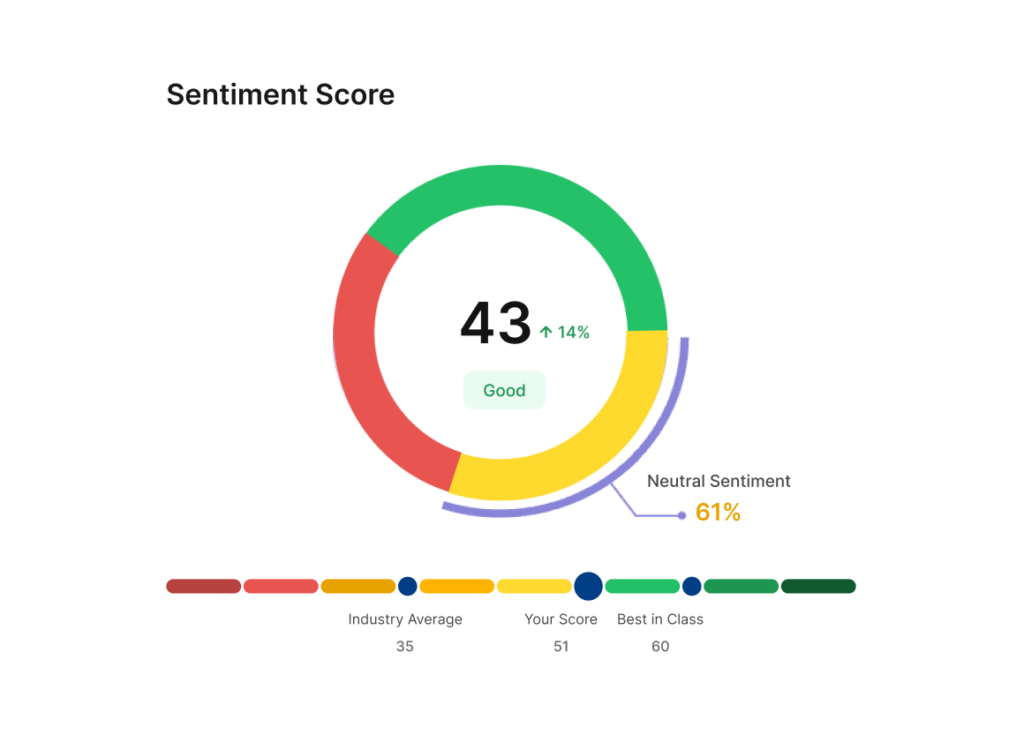
Sentiment Score
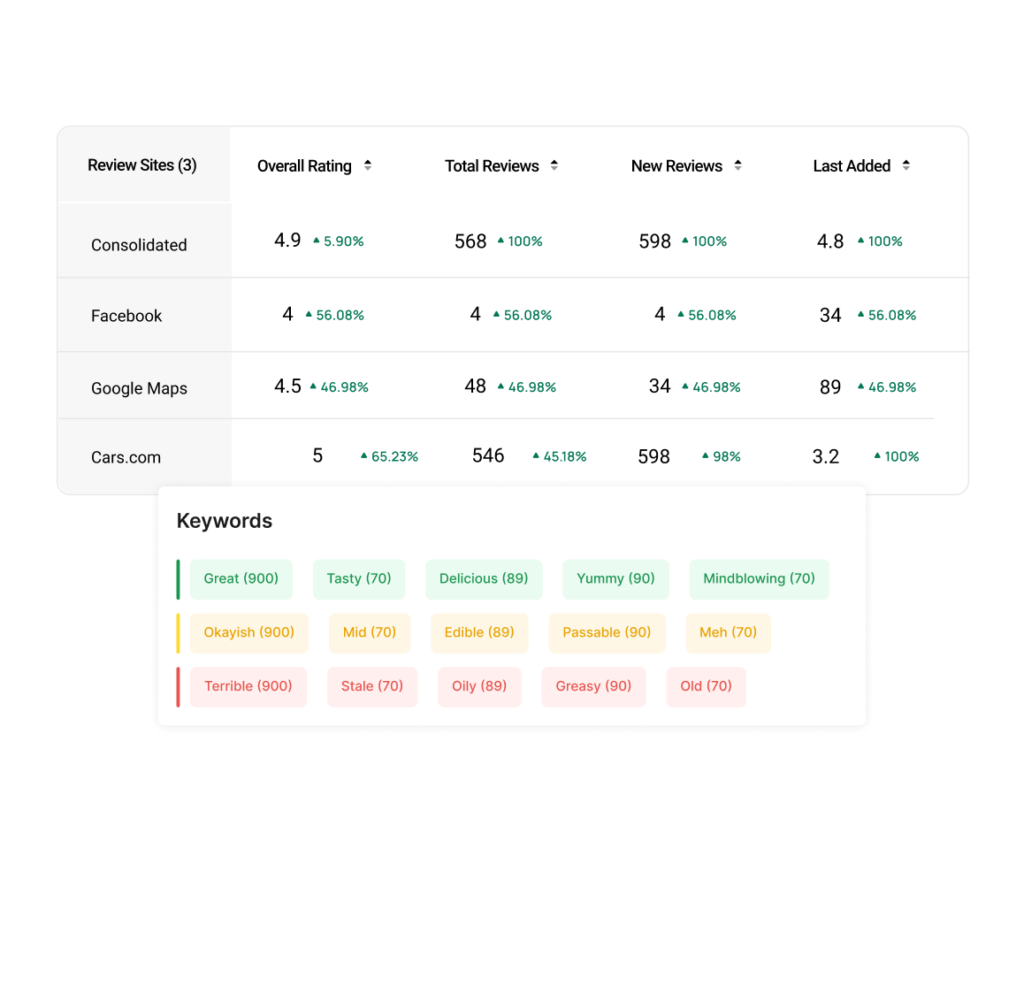
Finally, there’s sentiment. Two businesses can share the same rating while having completely different problems. Sentiment analysis shows whether people hate the product, the service, the pricing, or something deeper. That’s how you know what to fix, not just that something’s broken.
Sentiment analysis tools like Synup parse review text to identify themes like product quality, customer service, value for money, delivery/timeliness, and more.
Read More: How Our New Scan Tool Unlocks Your Agency’s Converting Potential

Step 4: How to Present the Reputation Report to Clients
Once you’ve conducted the audit and found problems, the hard part begins: presenting findings in a way that motivates action without overwhelming or offending the client.
The “Good, Bad, and Ugly” Framework
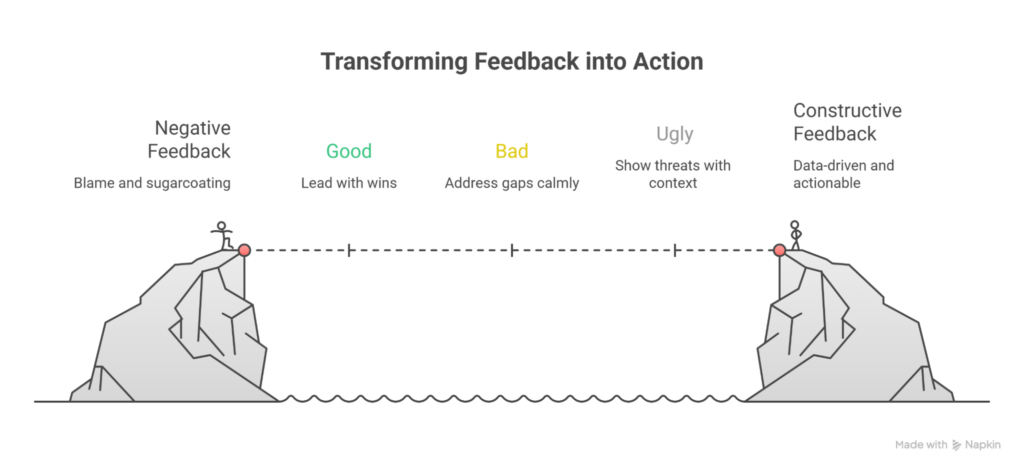

Start with the good. Everyone has something positive. Lead with wins to establish credibility and show you’re not just attacking them.
Then move to the gaps calmly and clearly without blame. Present problems as opportunities.
Finally, show the ugly with context. Don’t sugarcoat threats and use data to demonstrate severity.
Competitor Benchmarking: Show Them What They’re Losing
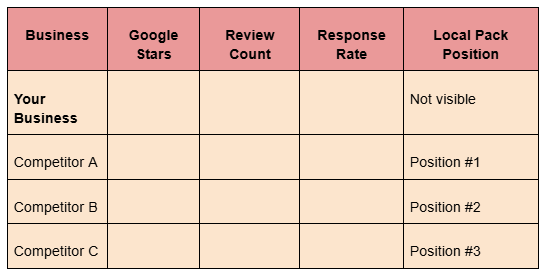
Competitive comparisons do the heavy lifting. Clients don’t panic over numbers. They panic when they see competitors outranking them, out-rating them, and stealing demand.
Present a table like this:

Action Plan: Conclude With Clear Next Steps
Finally, give the client a roadmap. Include immediate fixes, short-term improvements, and long-term systems. No vague promises. Clear outcomes.
When clients see how reputation ties directly to visibility, trust, and revenue, the conversation shifts. You’re no longer “doing marketing.” You’re fixing a business problem.
A phased approach can look like this:
Phase 1 (Immediate – Week 1-2):
- Claim and optimize all unclaimed profiles (Yelp, Facebook, industry directories).
- Respond to 100% of existing reviews (starting with the most recent negative ones).
- Update business information for consistency (NAP – Name, Address, Phone).
Phase 2 (Short-term – Month 1-2):
- Implement an automated review request campaign for recent customers.
- Create response templates for common review types.
- Set up monitoring alerts for new reviews and social mentions.
Phase 3 (Ongoing – Month 3+):
- Generate 15-25 new reviews monthly to improve volume and velocity.
- Track sentiment trends to identify emerging issues early.
- Quarterly competitor benchmarking to maintain competitive positioning.
Also Read: Top 13 White Label Reputation Management Software in 2026

Conclusion
Most agencies sell execution, but smart ones sell diagnoses.
A proper reputation audit establishes baselines, uncovers problems clients didn’t know existed, and positions you as a strategic partner, not a task vendor.
Reviews aren’t soft metrics. They decide whether a business gets found, trusted, or ignored. Whether prospects call or keep scrolling.
Run the audit, show the reality, and fix the gaps. That’s how agencies move from “we do marketing” to “we drive revenue.”
Read More: Examples of Online Reputation Management Done Right (And What Agencies Can Learn From It)
FAQs
- How do you check your online reputation?
To verify your brand’s online reputation, conduct a Google search, check review sites, scan social mentions, and see what shows up on page one. Look at ratings, reviews, complaints, and untagged mentions. That’s your reputation!
- How do you maintain your online reputation?
To maintain a strong online reputation, consistently monitor reviews and mentions, and respond thoughtfully to all feedback. Encourage happy customers to leave reviews, keep your profiles updated, and address concerns before they escalate.
- Which review sites should be included in a reputation audit?
Include Google Business Profile, Facebook Reviews, and Yelp in every reputation audit.
Also review industry-specific sites relevant to the business, such as Healthgrades for healthcare providers, TripAdvisor for hotels and restaurants, or G2 and Capterra for B2B SaaS companies. Auditing both general and niche review platforms ensures you capture all feedback that influences buying decisions.


