



Running an SEO agency can feel like wrangling a beast. You consult for clients who live and die by foot traffic, local leads, and engagement, and what works one day might fall flat the next.
Whether you’re an amateur, a pro, or someone looking to break into the industry, SEO often comes across as a mysterious force operating beyond reason. If you really want to catch lightning in a bottle, you have to be ready to learn…and keep at it. Ask yourself, “What’s the best way to learn SEO?” at least 3 times a week.
The field evolves constantly: AI, voice search, listings, reviews, and now AEO are all reshaping the landscape. You simply can’t afford to take a low-stakes approach.
If you want to help clients rank, you need the right insights from people and tools that stay ahead of Google’s sometimes erratic changes.
At Synup, we’ve been helping global businesses grow through brand building, reputation management, and local search visibility since 2014. We’ve seen what works, what’s outdated, and what’s a plain old waste of time. This list pulls together local SEO courses and resources to sharpen your skills and deliver results you and your clients can appreciate.
TL;DR
- If you’re looking to begin with SEO or remain updated about changes, you can use the following resources:
- Moz’s Local SEO Guide
- LocalU webinars
- Synup Learning Hub
- Sterling Sky’s blog
- Whitespark’s blog
- BrightLocal Academy
- Search Engine Land resources
- Near Media
- SEO Signals Lab Facebook group
- Google Business Profile Help Center
- Clare Carlile’s blog
- Greg Gifford’s YouTube playlist
- ChatGPT
- Ahrefs local SEO courses
- Semrush Academy course
- Local SEO Tactics podcast
- Local SEO checklist
1. Synup’s Learning Hub

If you’ve ever lost hours bouncing between blogs, YouTube videos, and outdated LinkedIn posts trying to learn the latest in local SEO or social marketing, Synup’s Marketing Guides and Learning Hub feels like fresh air. It’s a centralized knowledge base updated for marketers, agencies, and business owners who want clear, up-to-date, platform-specific guidance without digging through clickbait.
If you’ve got that hyper-specific “How To..” question that you can’t find an answer to even after tacking that “reddit” at the end of your search query, chances are, you’ll find it in Synup’s Marketing Guides.
And if you want a detailed guide to get in-depth insights on a local SEO topic, refer to our Learn section articles.
Why It Stands Out
- Filter by Category: You can zero in on exactly what you need here. No vague “digital marketing” bundles:
- Google Maps & GMB: Optimization checklists, review strategies, and ranking factors.
- Yelp, Trustpilot, Angi: Tips to handle reviews and boost local credibility.
- Social Platforms: From Facebook and Instagram to TikTok, Snapchat, and Pinterest.
- PPC & Search: Google Ads, Microsoft Ads, and campaign ROI tactics.
Just click on any platform on the sidebar, and your learning resource lists will open up automatically.
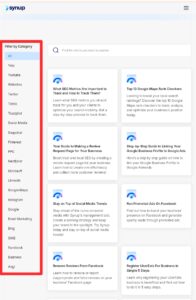
Source: Synup
- Search That Works: Ah, the frustration that comes with poor navigation and search function! Not here, though. Type in “Google Business Profile posts” or “TikTok ads” and get targeted guides immediately.
For local SEO and social media growth, it’s one of the few free resources that feels like it was prepared for people actually doing the work, not students skimming through theory that should work but just doesn’t.
2. Moz Local SEO Guide

Source: Moz
SEO will inadvertently become a journey of self-discovery and informed assumptions, but if you want to get a local business ranking faster without drowning in random or bad SEO advice, Moz’s Local SEO Guide is a good place to start. It’s been around for years, gets updated often, and cuts straight to the stuff that matters for local rankings.
This is a full learning hub, not a one-page “SEO tips” article. It’s perfect if you run a café, manage a tradie business, or handle marketing for a multi-location brand.
What’s Inside
- Essential Local SEO Strategy Guide: This guide walks you through setting up accurate NAP details (Name, Address, Phone) across the web, building citations, optimizing your website for location-based searches, and managing reviews.
- Local SEO Cheat Sheet (Free PDF): A printable checklist to help you remember tasks like updating Google Business Profile categories and chasing fresh customer reviews.
- Local Search Ranking Factors: Breaks down what Google really looks at, backed by actual industry studies.
- Local Listings & SEO: Explains why missing or inconsistent listings can tank your visibility and how to fix them.
- Business Reviews & Ratings: Six practical ways to turn reviews into both trust and better rankings. Example: replying fast, even to bad ones, can improve your click-through rate.
- Google Business Profile Safeguarding: Tips for spotting and fixing dodgy edits or false info before it hurts your traffic.
They also run Whiteboard Friday videos and blog posts with fresh tactics, like how AI search changes local results or why local link building is still essential.
3. LocalU: Webinars Where You’ll Find the Local SEO Pros
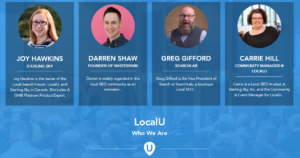
If you’re serious about local SEO, LocalU is where you’ll find the good stuff. Not theory or recycled blog posts. The local SEO webinar resources here are straight from Google Product Experts and agency owners who’ve done the work, solved the problems, and lived to tell the tale.
Instead of “10 tips you’ve read before,” the LocalU delves into actionable issues like fighting fake reviews, surviving brutal Google updates, and squeezing results out of tricky niches like legal or home services.
What You’ll Find
- Conference recordings & case studies: Think of it as sitting in on an SEO war story, where you see the before, after, and every tactic in between.
- Free & live webinars: Practical sessions where you can ask questions in real time.
- Expert guest line-ups: Experts like Joy Hawkins, Rand Fishkin, Wil Reynolds, Barry Schwartz, and Kyle Roof: people who truly know their field and don’t gatekeep what works.
The best part of LocalU (that’s Local University!) is how interactive and fresh it feels. You don’t just watch and forget. Most sessions give you something you can put into action that very week, whether that’s updating your service pages, changing how you handle reviews, or restructuring your site’s internal links.
4. Sterling Sky Blog: Joy Hawkins’ Local SEO Deep Dives
If you want to stop guessing at how Google’s local search really works, the Sterling Sky blog should be on your bookmarks bar. It’s run by Joy Hawkins, one of the most trusted names in Local SEO (also featured on those LocalU webinars). Just check out her and her team’s list of credentials! It’s basically a running log of her team’s testing, research, and hard-earned wins (and mistakes) in the field.
Some Favorites to Check Out
- Google Review Policy Violations, Guidelines & Reporting Secrets: Breaks down exactly what Google counts as a review violation (e.g., competitor sabotage, irrelevant rants, profanity).
- Case Study: Does Review Recency Impact Ranking?: Actually tests the theory that newer reviews help your rankings. The verdict is that recency matters, but only in certain contexts, like when you’re in a neck-and-neck race with a competitor.
- Does Google Allow Two Business Profiles at the Same Address?: Clears up a big point of confusion for shared offices, co-working spaces, and multi-service businesses.
- Starting a Local SEO Agency?: Joy gives seven no-nonsense tips, like why you shouldn’t promise Page 1 rankings to close a client, and why contracts need clear deliverables from day one.
Pro tip: Don’t just read the posts. Cross-reference them with discussions in Local Search Forum (also run by Sterling Sky). It’s where agency owners, in-house marketers, and business owners swap results from the trenches.
5. Local SEO Checklist
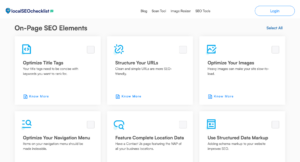
Even seasoned marketers skip steps when they’re under pressure. The local SEO checklist keeps you honest and ensures you don’t miss low-hanging to-dos that shape success with an easy-to-digest checklist.
What You Will Like
- It’s basically a toolkit where you can track and tick off key optimizations needed for local SEO
- This includes On-page elements like meta descriptions, images, and more
- You can also find all relevant optimization steps related to Google like business categories, Google webmasters setup, Google analytics, and more.
- You will in-depth explainers for each of the checklist items listed on this tool
- You can log in and save your project to keep track of your local SEO progress
Example in practice: You can start a project in tool for your local client, and start optimizing every item in the checklist without searching multiple places for what to do.
6. Whitespark Blog & Tools

Whitespark’s blog is great for understanding citation building, rank tracking, and review generation. The company crafts tools and services that help agencies and businesses untangle the web of local search marketing.
If you’ve been around local SEO circles, you’ve probably heard of Darren Shaw. He’s the guy behind Whitespark, and his advice carries weight because he’s constantly testing, sharing data, and calling out what actually works.
Whitespark also provides free tools to support some initial hands-on learning, such as a review checker, review link generator, and local ranking checker.
Where To Start
- The Blog: This is where you’ll find deep breakdowns of local ranking factors, case studies, and commentary on Google’s latest curveballs. They dig into real numbers, test scenarios, and tell you precisely what they found.
- The Tools: If you manage local listings for clients, their Citation Finder will save you hours. Their Local Rank Tracker lets you monitor positions in specific postcodes or suburbs. And if reviews matter to your niche (of course, they should), their Reputation Builder makes asking for and tracking reviews a breeze. Note that these are their paid tools.
- The YouTube Channel: Perfect if you prefer watching short, sharp explainer videos on algorithm changes, Google Business Profile (GBP) hacks, and local SEO experiments.
Tip: If you manage multiple locations or clients, set aside one morning a month to scan their latest blog posts and tool updates. It’s one of those resources where a single new insight can make you look like a genius in front of a client.
7. BrightLocal Academy: Free, Expert-Led Local SEO Courses
There’s a reason BrightLocal dominates conversations surrounding SEO and its mastery. BrightLocal Academy is a 100% free training platform for marketers, SEO specialists, business owners, and agencies who want hands-on, step-by-step guidance in local SEO.
Every local SEO course is led by recognized industry experts and includes optional certifications to boost credibility with clients and potential employers.
Key Highlights
- Expert Instructors: Courses taught by seasoned local SEO practitioners (and some of the best in the business) sharing proven, real-world strategies.
- Free Certification: Earn recognized certificates to showcase on LinkedIn, proposals, or your portfolio.
- Specialized Learning Paths: Beginner, Advanced, Agency, and Multi-location SEO tracks tailored to different skill levels and business needs. There’s no one-size-fits-all approach here.
- Curated Course Bundles: Logical progression from core local SEO fundamentals to advanced, revenue-driving strategies.
- Anytime, Anywhere Learning: Mobile app for on-the-go lessons, ideal for busy professionals.
BrightLocal Academy caters to every stage of a local SEO career, from landing your first client to managing SEO for hundreds of business locations. It’s also directly integrated with BrightLocal’s own local SEO tools, giving learners a chance to practise using industry-standard software while training.
Pro Tip for Learners: If you’re starting out, complete these courses first:
- A Beginner’s Guide to Local SEO
- How to Create Website Content for Local SEO
Then move on to advanced modules like link building, competitor analysis, and multi-location audits to build a full-service skill set.
8. Search Engine Land: Local SEO Section

Another juggernaut on the list, Search Engine Land’s local SEO resource page is a dedicated hub of news, guides, and expert commentary on local SEO, covering everything from Google Business Profile updates to citation management. Content is produced by Search Engine Land’s in-house editorial team and guest contributors from leading agencies. You’ll find some familiar names here, so this is truly a comprehensive resource.
But forget about Search Engine Land’s authority in the industry for a while. Here’s why it’s truly valuable:
- Explains core local SEO tactics from GBP optimization to local keyword targeting, review management, and Google Maps ranking.
- Shares advanced strategies like using local schema markup and tracking location-based ranking factors.
- Breaks down trends shaping local SEO in 2025, including mobile-first indexing, voice search adoption, and hyper-personalized search results.
- Offers practical examples for boosting visibility in the Google Map Pack, improving “near me” rankings, and converting searchers into paying customers.
Extra Perks
- SearchBot: an interactive tool for deeper local marketing insights.
- Free Daily Newsletter: Delivers breaking updates and tactics straight to your inbox.
Best For: Small business owners, local marketers, and SEO pros who want up-to-date, actionable insights without sifting through generic marketing advice.
9. Near Media: Your Weekly Local SEO Intel
If you’re serious about keeping up with local SEO changes, The Near Memo podcast is another good resource. It’s run by Greg Sterling, Mike Blumenthal, and David Mihm, who sit down (sometimes with guests) to discuss “the intersection of local, search, and local search”. Here’s why it’s worth your time:
- Weekly chats: Short, sharp episodes packed with what’s really changing in local search.
- No theory but all field insights: From Google Business Profile (GBP) quirks to AI’s role in maps and reviews.
- Multiple listen options: Apple, Spotify, YouTube, Amazon, or Stitcher.
What You’ll Learn
- Google Business Profile updates: How to handle suspensions, new verification hoops, and feature roll-outs like “Ask for Me.”
- AI Overviews impact: Why clicks from Google may be dropping and how to protect your traffic.
- Review strategy: Spotting fake reviews, keeping your score clean, and responding like a pro.
- Brand power in rankings: Why branded searches dominate and how to build your name.
- Real behavior studies: Data on how users scan, trust, and click in AI-driven results.
Example topics covered recently:
- Will Scott on Barnacle SEO in the AI era.
- Cindy Krum on hyper-personalized AI search journeys.
- Darren Shaw on review diversification and YouTube SEO.
Pro tip: Choose the free subscription to Near Media. You’ll get full show transcripts for reference, access to the episode archive, and links to tools or case studies mentioned.
10. SEO Signals Lab (Facebook Group)
You can probably tell at this point that the key to learning local SEO is to gather a blend of theory and practical insights. In addition to guides and resources, it can be invaluable to seek spaces where marketers, agency pros, and in-house SEOs dissect what’s really working right now.
SEO Signals Lab is a Facebook group consisting of 73,000+ members and SEO specialists. It’s built for people who want tested tactics, not recycled advice. Expect heated discussions, live experiments, and hard data from split tests.
The focus is on breaking down Google’s ever-shifting algorithms. Sharing real-world case studies. And turning experimental SEO into predictable results.
What’s Inside
- Case Study Vault: Members share before-and-after ranking data from local campaigns.
- Split-Test Results: Learn what changes actually move rankings up or down.
- Algorithm Watch: Early signals on Google updates and how they affect local packs.
- Ranking Factor Debates: No guesswork. Only strategies (and fun conversation!) backed by numbers.
Here’s why it works: It’s not run like a content mill. It’s more like a vessel with a clear purpose. Each post is a field report from those doing the work, giving you a chance to connect with fellow crew members as well as the captains guiding the navigation.
11. Google Business Profile Help Center
There’s no shortage of SEO training material out there, but you’ve got to measure it against the master sheet. If you want to learn local SEO straight from the source, Google Business Profile Help Center is the place to start. It may not be as expansive as some of the other resources on this list, and it won’t give you those handy tips, but it’s Google’s own documentation on how their system works, so you’re building on the right foundation.
What You Can Learn
- Add & verify your business: Step-by-step guides on claiming your profile, transferring ownership, and verifying through methods like phone, postcard, or even video recording.
- Profile management: Instructions on updating hours, categories, services, and ownership settings. For agencies running multiple client accounts, these tutorials are essential to avoid mistakes that can lock you out.
- Engagement tools: Best practices for responding to reviews, publishing posts, and using the Q&A feature effectively. Remember, Google treats review management as a ranking signal, not just a reputation play.
- Optimization tips: Insights on photos, attributes, and product/service listings that directly influence click-through rates from the Map Pack.
- Troubleshooting: Fixes for suspended listings, duplicate profiles, or guideline violations; common issues that can derail a client campaign overnight.
- YouTube tips: Short official videos showing how to set up features. Great for training junior staff or clients.
12. Reddit: r/GoogleMyBusiness & r/SEO
You know it by now: the best insights often come from the places where real marketers gather to share what’s working and troubleshoot without the fluff.
This feels like a no-brainer, but one of those places is the r/GoogleMyBusiness subreddit. With nearly 20,000 members, it’s a community where small business owners, marketers, and agency pros trade war stories and practical advice on keeping a Google Business Profile healthy.
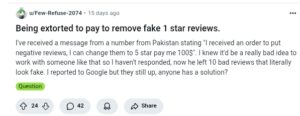
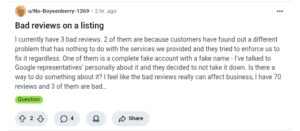
You’ll see real cases, like a café owner getting slammed with fake 1-star reviews from a sacked employee’s mates, and how the community walked them through reporting, documenting, and getting them removed.
Sources: Reddit
It’s raw, real, and packed with practical advice you can use the same day.
Then there’s r/SEO.
You won’t find theory talk here. There are 410,000 members sharing live experiments, traffic wins, and face-plants. You’ll find threads on structuring a pillar page so it ranks in local search, creative ways to earn local backlinks, or breaking down how a 1M-pageview site can squeeze more conversions without hurting rankings. People post screenshots, data, and even their outreach templates.
13. Claire Carlile’s Local SEO Training
If you want practical, tailored Local SEO learning, Claire Carlile’s training courses are worth bookmarking.
She’s a Google Business Profile Silver Product Expert and a recognized figure in the local SEO industry, known for her highly customized approach. She’s also associated with Whitespark and LocalU. Every course is tailored to your market, location, and competitors, so you walk away with actionable strategies you know will work.
If you’re a marketer or part of an agency and serious about driving results, Claire’s training courses are a great investment in your local SEO toolkit.
What You’ll Learn
- Personalised Training: Content molded by the characteristics of your business, not generic slides.
- GBP Mastery: Setup, optimisation, and conversion tactics that drive results.
- Citations & Local SERP: Why they matter and how to manage them.
- Review Management: Generating, responding, and leveraging reviews for trust and ranking.
- User-Generated Content: Turning customer content into local visibility wins.
- SPAM Detection: Identifying and reporting fake or misleading listings.
- Tracking & Reporting: Measuring rankings, calls, and other KPIs.
- Local Landing Pages: Structuring pages for higher visibility and conversions.
Training can be a focused two-hour session or a multi-day workshop. Each includes Q&A time. Claire often uses your own business, niche leaders, and competitors as live examples, making it directly relevant.
14. Greg Gifford’s YouTube Course
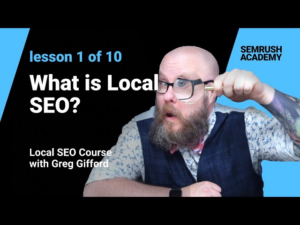
If you really need to learn local SEO, the local SEO course with Greg Gifford from Semrush Academy (more on their other courses later) is another resource you can jump on. It’s free, designed for visual learners, and led by Greg Gifford, a widely respected industry veteran with almost 18 years under his belt.
The YouTube course breaks complex concepts into short, punchy lessons you can binge in a weekend. Greg goes beyond definitions. He shows you the ranking factors, the role of citations, how local links work, and why reviews can make or break your visibility.
What’s Included
- Local SEO basics: What it is, why it matters.
- Local ranking factors: From relevance to proximity and prominence.
- Local link building: Practical ways to earn credible backlinks.
- Citations: What they are, where to get them, and why NAP consistency matters.
- Local content: On-site signals that push you up the SERPs.
- Review management: Boost rankings and trust with smart review strategies.
- Google Business Profile optimization: Get found faster by local customers.
- Google Posts & Q&A: Keep your profile fresh and engaging.
- Other local search signals: Social, behavioral, and more.
- Reporting: Present your wins in a way that matters.
In short, if you want real, actionable local SEO skills, this course delivers. Watch it, take notes, and start applying tactics that get local rankings moving.
15. ChatGPT & Prompt Recipes for Local SEO
AI’s not here to replace your SEO work. But it can speed up the grunt work if you know what to ask.
You can look at it as an assistant who never sleeps or a tireless intern. But it needs clear, precise instructions.
Try these prompts next time you’re planning a client’s local strategy:
- Local keyword research: “Generate a list of local SEO keywords for a [business type] in [city, state] with search volume, intent, and competition level.” Now, cross-check the list in a proper keyword tool before you trust it.
- Content ideas: “Suggest 10 blog post ideas for a [business type] in [city] that attract locals searching for [service].” Pick the ones that match seasonal demand or local events.
- Competitor audit: “List strengths and weaknesses of the top 3 businesses ranking for [keyword] in [city]. Focus on backlinks, content, and Google Business Profile.” Use this to see what’s realistically beatable.
- Quick GBP audit: “Review [business name]’s Google Business Profile and give 5 actionable optimizations.” Then do the fixes, don’t just note them.
- 90-day plan: “Create a 3-month local SEO roadmap for a [business type] in [city].” Refine it so it matches your client’s actual budget and resources.
Pro tip: Never copy-paste outputs into client work without verifying. AI will give you structure, but not the strategy.
16. Local SEO Course by Ahrefs Academy
If you want a free, structured learning path, Ahrefs Academy’s local SEO course collection is an easy one. It’s pulled straight from their YouTube channel, so there’s no signup form and no paywall.
The SEO courses here are best for:
- Owners who want more calls from Google Maps without hiring an agency.
- Marketers who already run ads or general SEO, but need the local edge.
- Freelancers wishing to turn small wins into monthly retainers.
What’s Included
- Complete A-Z Local SEO Tutorial
- Local Keyword Research
- Link Building for Local SEO
- Finding Citations
17. Semrush Academy Local SEO Courses

If you’re serious about improving your local SEO skills, Semrush Academy offers free courses that are well worth your time. Each one is short (usually an hour or less) but packed with practical, step-by-step guidance. Plus, they come with certifications, giving you a neat credential to showcase. Here are three (apart from Greg Gifford’s course) that you can check out:
Local SEO Essentials with Semrush
This course walks you through the basics of dominating local search. You’ll learn how to:
- Optimize your Google Business Profile so it appears in the Map Pack.
- Run local keyword research using Semrush tools.
- Build citations on directories that Google actually cares about.
- Track local rankings by ZIP code or neighborhood.
Many agencies fail because they don’t separate national SEO from local. If you’ve ever seen a client rank nationally for broad terms but still be invisible in their own suburb, this course shows you how to fix that.
International SEO with Aleyda Solis
This one’s not strictly local. But it’s vital if your clients operate across borders. Aleyda is a leading SEO consultant who’ll show you handle global business from a different perspective. Here’s what she’ll show you:
- How to use hreflang tags properly (a common mistake).
- Structuring websites for multi-country or multi-language targeting.
- Handle localization and tackle cultural nuances, all while remaining regionally compliant.
- Avoiding duplicate content that kills rankings in global campaigns.
How to Outrank Your Competition in Local Search
This one’s designed for agencies in crowded markets like law firms in New York, realtors in Miami, or dentists in Los Angeles. Led by Wes McDowell, a web strategy expert with nearly half a million YouTube subscribers, it teaches:
- What pushes a site into the local Map Pack ahead of bigger players
- How to analyze competitors’ GBP activity and spot weaknesses.
- Simple tweaks to reviews, categories, and Q&A that drive more calls.
Tip in practice: Adding a secondary GBP category like “emergency plumbing” can instantly bring in late-night leads for a client in Phoenix. The course shows how to spot and use those opportunities.
If you’re managing multiple client accounts, taking these courses gives you both credibility and tactical playbooks you can apply the same week.
18. Local SEO Tactics Podcast
This is the kind of resource you can listen to while driving between client meetings and still walk away with an actionable to-do list.
With well over 200 episodes to listen to, the hosts talk like marketers, not professors, which makes it easy to translate ideas into deliverables.
What To Queue
- On-Page SEO Essentials for Local Business Growth: Checklists for making service pages rank in a specific city.
- Do Citations Still Matter? Spoiler: they do, but only if you get them right.
- Mastering Google Reviews: Covers both getting more reviews and replying in a way that boosts trust signals.
- Optimizing Google Business Profile: Step-by-step tweaks that often improve visibility in under two weeks.
- 12 Tools Every Local Business Needs: Includes rank trackers that go down to the ZIP-code level.
Conclusion
Local SEO isn’t a one-time project but a habit. The resources here will help you keep learning the moves that push a business into the Map Pack.
Start simple: pick a resource today to learn about local SEO or social media marketing, and courses to sharpen your own unique strategy. Then, set aside an hour this week to use a local SEO tool and put what you’ve learned into practice. Better yet, commit to working through this entire list. Seeing the same concept from different perspectives can spark insights you didn’t expect.
Because in the realm of SEO, the clients who keep ranking are backed by agencies that never stop learning and never stop using the right tools. If you’re ready to get a handle on your SEO, book a demo and explore our sophisticated local SEO and reputation management platform.
Frequently Asked Questions
-
What’s the fastest way for a beginner to start learning local SEO?
If you’re starting from scratch, keep it simple: pair a trusted industry guide with hands-on practice. Begin with Google’s Google Business Profile Help to understand how search engines think, then use Synup’s Local SEO Learning Hub to see those ideas applied in real-world local campaigns. From there, test on a live Google Business Profile. Update categories, add fresh photos, and collect reviews.
-
Are free resources enough to master local SEO, or should I invest in paid courses and tools?
Free resources like Synup’s Local SEO resource and Localseochecklist.org are great for learning fundamentals and keeping up with changes. You can build a strong base without spending a cent. However, if you’re handling multiple client accounts or operating in competitive industries, paid tools and structured programs help you scale faster.
-
How do I know if a local SEO resource is up-to-date and worth my time?
Look for three things. First, recent updates. Anything older than 18–24 months risks being outdated due to Google’s local algorithm changes. Secondly, it’s a good idea to consult recognized platforms like Synup, Google, Moz, and SterlingSky. These are less likely to give you bad advice. Finally, you need actionable steps. Good resources give you tactics you can test immediately.