

Everyone who has tried to reach out to small business founders knows one thing…
Reaching out to SMB prospects is more like trying to hit a moving target. Owners are busy with payroll, suppliers, and customers. They’re rarely sitting behind a desk waiting for your call. For agencies, consultants, and sales teams, this creates a big question: how do you run an outreach campaign that breaks through all the noise and strikes the target for SMB prospects?
Here it is: you need a systematic framework that fits the unique rhythm of SMBs. Forget the old spray-and-pray method. What works is focused research, a precise prospect profile, and a workflow that respects their time while maximizing yours.
That’s what this guide is all about. You’ll walk through a step-by-step blueprint for building outreach campaigns that get noticed, earn replies, and open doors with SMBs.
TL;DR: Quick Facts for Busy Agency Leaders
- Understand SMBs: Small and medium businesses operate on tight margins and compressed sales cycles. Respect their time, learn and target their pain points, and build value fast.
- Define an Ideal Prospect Profile (IPP): Filter by industry, revenue, location, and pain points to build a precise prospect list.
- Use multiple channels: Omnichannel outreach (email, social, phone) drives 287% higher engagement than single‑channel efforts, and it often takes eight touches to earn a meeting.
- Personalize deeply: Campaigns that include context about the prospect’s business achieve more replies and deliver higher ROI. Use data such as their tech stack and reviews to tailor messages.
- Measure and improve: Track open, reply, and conversion rates, run A/B tests, and iterate quickly. Automation tools and dashboards help you scale without losing a personal touch.
Part 1: The Foundational Research (Before You Outreach)
Before you send a single email or LinkedIn message, you need some context to work with. Outreach to SMBs without research is like showing up uninvited to a neighborhood BBQ. You’ll stand out in all the wrong ways!
One small agency owner shared his dilemma online:
He was trying to reach local retailers where the owner only showed up once or twice a week. Employees often had no idea when the decision-maker would be around. He wondered if pitching the employee and following up with an email might at least spark something.
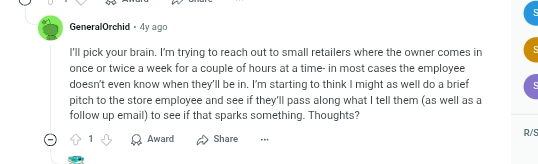

This frustration should be familiar if you’re a B2B agency with SMBs as targets. Unlike enterprise accounts with known hierarchies, SMBs are unpredictable. Owners are busy, schedules are irregular, and employees aren’t always looped in. The first step is understanding them and their schedules.
Understanding the SMB Prospect
Let’s break down what makes SMB prospects different:
- Time-poor: According to Forbes, nearly 60% of small business owners work over 50 hours a week. They don’t have long attention spans for generic outreach.
- ROI-driven: SMBs don’t run year-long pilot programs. They want to see measurable impact, often in the first 30 to 90 days.
- Practical over flashy: Fancy tech stacks and complex funnels don’t impress them. You need to show them some clear, easy-to-implement solutions.
If you’re approaching SMB outreach the same way you’d pitch an enterprise client, you’re speaking the wrong language.
Building Your Ideal Prospect Profile (IPP)
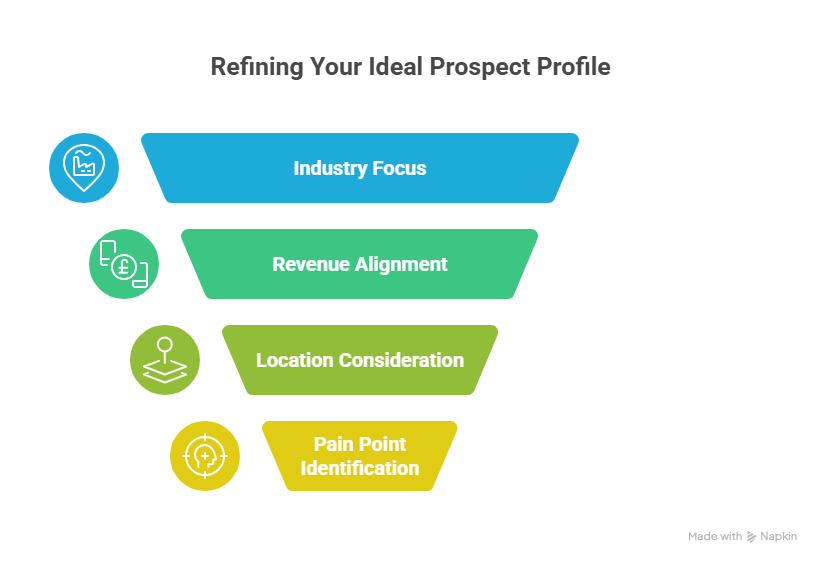

Source: Napkin.AI
Random outreach wastes time and credibility. Instead, build a focused Ideal Prospect Profile (IPP).
Here’s a four-part framework that works:
- Industry: Pick industries you know well. For example, if your agency has helped fitness studios increase memberships, double down there.
- Revenue range: Target businesses with the budget to afford your service tier. A small coffee shop making $100k yearly is not your audience for $1k/month retainers.
- Location: Locality matters. A dental clinic in Dallas has different needs than one in rural Idaho. Tailor outreach to their regional realities.
- Pain points: Identify clear problems. For SMBs, common ones include poor local visibility, inconsistent lead flow, or time wasted managing marketing themselves.
The tighter your IPP, the easier it becomes to craft messaging that resonates.
Part 2: Phase 1 – Prospecting & List Building
Once your IPP is defined, you’re ready to build a list that actually matches it. This is where most outreach efforts collapse. Too many teams confuse quantity with quality.
Sourcing the Right Leads
Don’t worry: traditional methods like LinkedIn, industry directories, or trade shows still work. But it all lies in how you use them.
One key strategy to leverage is LinkedIn hashtag searches. For instance, searching #marketingautomation not only surfaces people posting, but also uncovers commenters interested in the same topic. That doubles the pool of relevant prospects.
Many businesses use common B2B lead tools like Apollo, ZoomInfo, and LinkedIn Sales Navigator. While these are solid platforms, the kind of insights you need for SMB prospects are very different. Since they use LinkedIn as their primary source for pulling this data (where many SMB owners aren’t present), the insights aren’t very tailored to SMBs.
Instead there are a few SMB prospecting tools in the market that utilize use data specific to local businesses. For instance, the Synup OS Lead Platform curates SMB data into one place.


Instead of working across five tabs, you can filter by industry, region, GBP presence, review ratings, social profile presence, directory presence, tech stack, etc. What used to take a week of prospecting can be cut down to an afternoon, freeing you to focus on messaging and follow-ups.
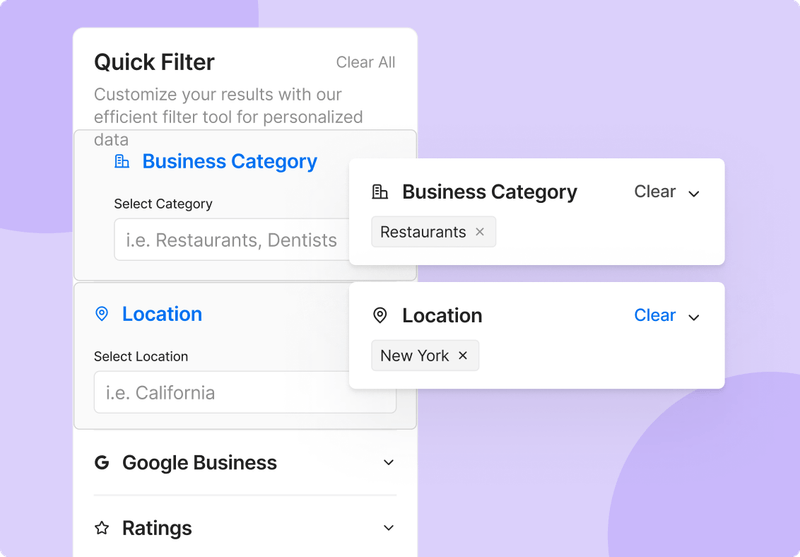

Even better, you can give the built-in AI a simple prompt by specifying the business category, location, and any other filters you’d like. The Leads AI will then generate a targeted list of prospects in seconds.


Also Read: How to Find Your Target SMB Prospects: A Guide for Digital Agencies
Data Enrichment & Hygiene
Clean data is the lifeblood of successful outreach. That’s not a small hit. Dirty lists lead to:
- Bounced emails
- Wrong job titles
- Wasted touches
- Lower sender reputation
To avoid this, build a hygiene workflow:
- Verify emails with deliverability tools before loading sequences (like ZeroBounce)
- Cross-check titles against business website/LinkedIn to confirm decision-making authority.
- Refresh quarterly because SMB staff turnover is higher than in enterprises.
Think of this as preventative maintenance. Just like changing the oil keeps a car running smoothly, maintaining clean prospect data keeps your outreach engine from breaking down.
Part 2: Phase 2 – Crafting Your Message
Most of the “how to write the perfect cold email” advice you’ll find online is, frankly, nonsense. You know the type.
They’ll tell you that if your email is three sentences too long, you’ll lose the deal. Or that using “Hi John” instead of “Dear Sir” is the magic key to success. Some even argue that your campaign failed because you emailed the VP of Marketing instead of the EVP.
That’s all noise.
This rabbit hole ends up trapping sales teams. They psychotically re-write subject lines twenty times or trim off a sentence here and there, praying that they’ll suddenly make prospects reply.
But here’s the reality check: none of that matters if you’re barking up the wrong tree. The real questions you should be asking are:
- Does this business actually have a problem I can fix?
- Is it urgent enough for them to care right now?
- Am I talking to someone who can (or wants to) do something about it?
If you answer yes to these, your outreach has a chance. If not, no subject line in the world will help.
Now let’s look at the parts of messaging that do move the needle.
The Delicate Art of Hyper-Personalization
Personalization isn’t about dropping their first name into a template. That’s entry-level. Real personalization is when you show them you’ve done your homework and spotted something specific about their business.
Think about this:
You’re reaching out to a boutique gym. Instead of writing the same tired opener: “We help businesses like yours grow online”, you go in with:
“Noticed your Facebook page gets plenty of likes, but your Google reviews are stuck at 15. The last one you got was in 2022.
That’s a problem because most people check reviews before booking a class. We can help you double that number in 90 days.”
There’s a difference here. The second one actually proves you paid attention. It connects their real-world pain point (low reviews) to a clear result (more members). That’s the kind of line that makes an owner stop scrolling.
Now, sure, doing that kind of research by hand is challenging. You can’t spend half an hour digging on every prospect. That’s the prospecting tool in Synup OS helps with. It surfaces info like online reviews, tech stack, and digital presence in seconds. So instead of guessing, you can personalize with specifics that hit home.


Here’s How to Do This: How To Do A Prospect Audit For Your SMB Clients And Win More Leads
Writing Subject Lines and Body Copy That Don’t Get Ignored
If your email doesn’t get opened, the rest doesn’t matter.
Subject lines are the gatekeepers. They need to be short, snappy, and tied directly to something the business owner cares about.
Here’s a formula that works:
[Problem or trigger] + [Hint of solution]
Examples:
- “Struggling with empty tables on weekdays?”
- “Simple fix for missed calls at your clinic”
- “Your reviews look great, but…”
Notice these aren’t clickbait. They’re relevant and curiosity-driven.
Then there’s the body. Forget long-winded intros. Nobody has time. Use a three-part structure:
- Acknowledge their reality: “I saw your roofing company is getting solid word-of-mouth locally.”
- Call out the problem: “But your website doesn’t show up when I search ’roof repairs near me’.”
- Offer a next step: “We help businesses like yours fix that. Would you be open to a 15-minute chat next week? You can grab a slot here: [scheduler link].”
That’s it. No jargon, no bragging, no essays. Just their reality, their gap, and an easy next move.
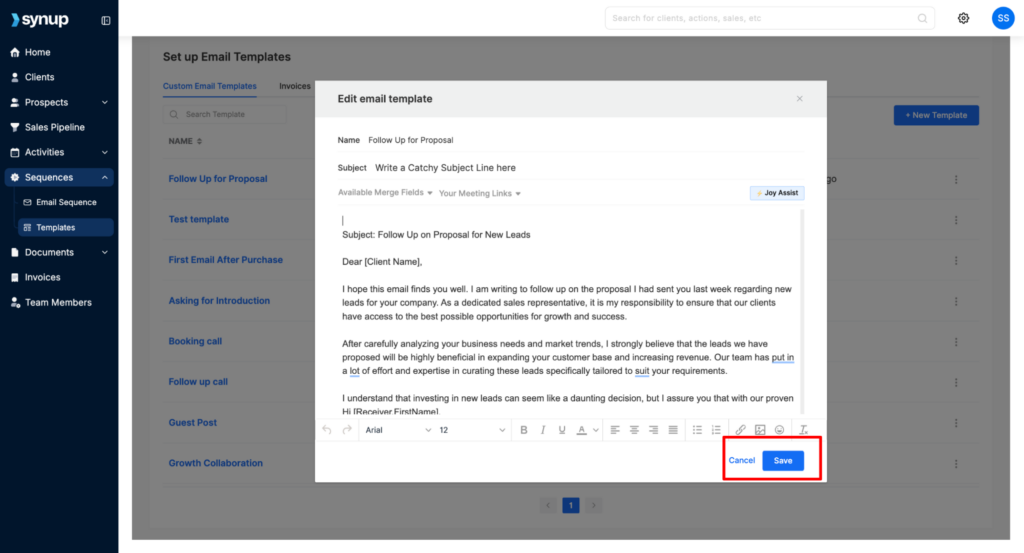
Here’s where technology can really elevate your efforts. Synup’s JoyAssist AI email writer quickly generates drafts in this structure. The OS also offers a variety of email templates that you can add to with JoyAssist. Simply use the chatbox to describe your tone (and even language), and you have the perfect outreach email tool.
Pair that with a meeting scheduler synced to your calendar/email, and you’ve taken all the friction out. No back-and-forth, no “what time works for you,” it’s just one click to book.

Keep It Skimmable
Remember this: your email is probably being read on a phone, between customer calls, or at the counter while they’re ringing someone up. That means walls of text signal death.
So, make your emails skimmable:
- Keep sentences tight.
- Break into short paragraphs.
- Highlight numbers or outcomes.
Think in terms of text messages, not essays. A busy owner should be able to skim your email in under 15 seconds and get the point.
Why Simplicity Wins Every Time
The majority of small business owners prefer vendors who “make it easy to understand solutions.”
That’s your cue to cut the corporate-speak. Instead of saying, “Our omni-channel platform enables cross-functional integrations,” try, “We help you get more customers without adding extra work.”
Part 3: Execution & Multi-Channel Approach
You’ve done your research. You know who you’re targeting. You’ve got a clear idea of their pain points. Now comes the hard part: actually getting in front of them.
Most agency teams get confused here because they rely on a single channel. They’ll send one cold email, maybe drop a LinkedIn message, and then wonder why nothing comes back.
With SMB prospects, one shot almost never works.
Owners are constantly in motion. Some spend their mornings on the shop floor, afternoons chasing suppliers, evenings doing admin. If you want to reach them, you need persistence and variety.
That’s why you need a sequence that’s structured, multi-touch, and multi-channel; that is, a cadence.
Building Your Outreach Sequence (Cadence)
In outreach and sales, cadence simply means the planned rhythm of your touches with a prospect.
It’s simply the rhythm of your outreach. It’s how often you touch a prospect, and through what channel.
Too aggressive, and you’ll irritate them. Too timid, and you’ll be forgotten.
Think of it like a playbook that maps out:
- How many times you reach out (emails, calls, LinkedIn messages, etc)
- In what order (email first, then LinkedIn, then phone)
- At what spacing (every 2 days, every 3 days, etc.)
It’s the structure that keeps you consistent and stops you from either ghosting a lead after one try or pestering them every single day.
The goal is steady persistence, spaced well enough to keep you on their radar without tipping into spam.
Here’s a seven-touch sequence that consistently performs for small business outreach:
- Day 1 – First email: Keep it short, clear, and problem-focused. Example: “I noticed your plumbing company has great reviews, but doesn’t show in the top three results on Google Maps. That gap costs you calls every week. We help local businesses close fast.”
- Day 3 – LinkedIn connection request: Keep it simple and human. “I enjoy connecting with local business owners who are building strong brands. Would be good to connect.” There’s no pitching here. You’re simply planting seeds.
- Day 5 – Second email: Reference your first message and layer in some insight. “A 2023 survey found 63% of consumers read Google reviews before calling a local business. If you’re not visible, most won’t find you. We can fix this.” This educates your prospect while staying relevant.
- Day 7 – Phone call: Keep it under 30 seconds if it goes to voicemail. “Hi, this is Jenna. I sent you a quick note about helping with local visibility. We’ve seen strong results for businesses like yours. Happy to share. My number is…”
- Day 10 – LinkedIn interaction: Like or comment thoughtfully on one of their posts. If they’re not active, use LinkedIn to engage with someone else in their company or simply prepare your next touchpoint by email or phone instead.
- Day 12 – Third email: Shift tone. “This might not be a top priority right now. Should I check back later in the year?” This shows respect and often prompts replies.
- Day 15 – Break-up email: Close with courtesy. “I don’t want to keep bothering you. If things change, I’ll be here.” Funny enough, this last note often gets replies from people who don’t want the door closed.
These seven touches give prospects multiple chances to engage when their schedule opens. The messages start assertive, then soften, then close politely. You’re not a pest, you’re a professional.
Remember: It takes about eight touches or interactions to secure a first meeting. Most reps quit after two. That’s like leaving the field before the second quarter.
The Role of Automation in Scaling
You can run the sequence we showed you earlier for 20 prospects by hand. But for 200, just forget it. Without structure, you’ll miss follow-ups, send the wrong email, or lose track of who’s where. That’s how deals die.
Here’s how automation makes all the difference:
- Follow-ups on autopilot: If there’s no reply in three days, the next email goes out automatically. This alone can double your reply rate because most responses come after the second or third touch.
- Open and click tracking: If someone opens your email five times in one day, that’s your signal to call. Without tracking, you’d never know.
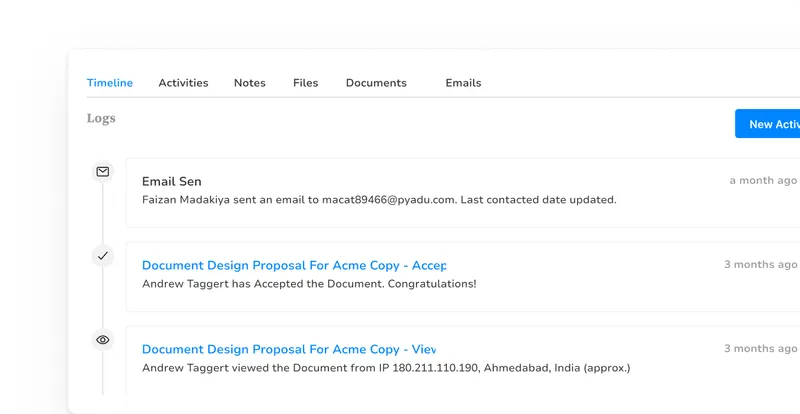
- Centralized activity logs: Calls, emails, notes, and tasks all in one place. That way, you’re not scrambling through spreadsheets to see what’s been done.
This is where tools like Synup’s sales pipeline management platform come in handy:
- Keep every deal visible. What’s been done, what’s pending, what’s overdue; all in one dashboard. Your proposals, emails, and reports: a single source of truth.
- Share your calendar link with prospects instead of emailing back and forth. They book instantly, it syncs with Gmail or Outlook, and reminders cut down on no-shows.
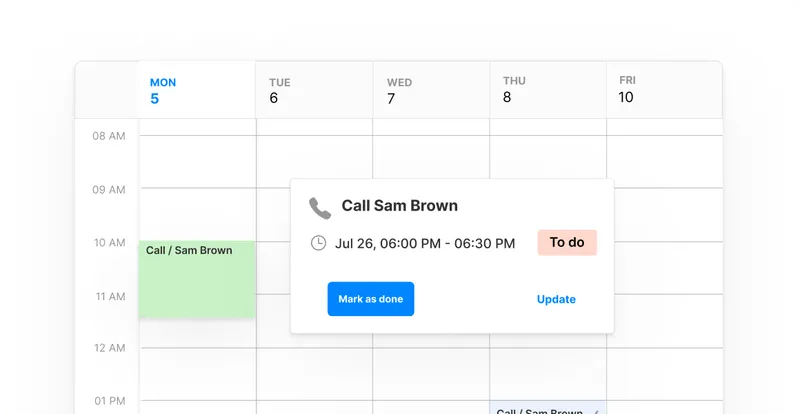
- Create different meeting types (a quick 15-minute intro call, a 30-minute demo, a 60-minute onboarding) and let prospects pick what they need.
Automation won’t replace personalization. It will stop you from dropping balls. And in outreach, missed follow-ups kill more opportunities than bad emails ever do.
Part 4: Tracking, Measuring & Optimizing
Sending emails is easy. Knowing if they’re working is what separates the pros from amateurs. Without tracking, you’re driving blind. Without optimization, you’re stuck repeating the same mistakes.
You can think of outreach as a cycle: send, measure, adjust, repeat. The agencies that treat it like a lab are the ones that build predictable pipelines.
Key Performance Indicators (KPIs) for Outreach Success
Once you start outreaching, there are three core numbers you should measure every week:
- Open rate: Tells you if your subject lines grab attention. Benchmarks for cold email sit around 20 to 25%. Under that, you’re off-target or bland. Over 30%? You’re doing well.
- Reply rate: Opens don’t pay bills. Replies do. For SMB outreach, 5 to 10% is a good reply rate. If you’re at 1 to 2%, the issue is either bad targeting or a weak hook.
- Meeting conversion: This is the real KPI. Out of replies, how many turn into scheduled calls? A healthy number is 30 to 40%. Lower than that means your CTA isn’t strong enough.
Other numbers can help, like phone connect rates or LinkedIn acceptance rates. But if you track these three consistently, you’ll know exactly where your funnel is leaking.
For instance, if you realize your open rate is strong (32%) but reply rate lags (2%). The problem isn’t the subject lines but the body copy. So, you can rewrite the emails to focus more on ROI than features. Expect your reply rates to jump by at least 7% if you do it well.
A/B Testing Your Campaigns
Once you’re tracking, you can start improving. And the easiest way to improve is to test.
Keep it simple. Change one thing at a time. Run it with at least 50 to 100 prospects before calling a winner.
Here are easy tests to start with:
- Subject lines: “Struggling with weekday bookings?” vs “Quick fix for empty tables.”
- Length: Short email (70 words) vs longer one (140 words). SMBs are busy, but some problems need context.
- CTA wording: “Schedule a 15-min call” vs “Pick any time that works for you.”
Remember that when testing and tracking, even a small 2 to 3% increase in replies matters. Across 1,000 emails, that’s 20 to 30 extra conversations. And those conversations often mean real revenue.
Continuous Optimization & The Feedback Loop
Markets shift. Owners change priorities. Competitors appear. What worked six months ago might flop today. That’s why outreach must be continuously tuned.
Here’s the loop to run:
- Launch your sequence.
- Track opens, replies, and meetings.
- Spot weak points (low open = subject problem, low reply = copy problem, low meeting = CTA problem).
- Adjust and re-test.
- Repeat.
The more cycles you run, the better your outreach gets.
Synup’s leads dashboard makes this process easier by giving you one view of every campaign:
- Which lists perform best?
- Which messages land?
- Which channels pull the most meetings?
You know exactly what to fix or double down on. That visibility is the difference between guessing and knowing.
It’s like tuning an engine. Each adjustment makes the machine run smoother. Over time, your outreach stops being luck and starts being predictable.
Wrapping Up
A strong outreach campaign for SMB prospects isn’t built on a “perfect cold email.” It’s built on structure: a cadence that mixes channels, automation that keeps you consistent, and tracking that tells you what’s working.
Small‑to‑medium businesses drive global economies and present a massive opportunity for marketing agencies. Yet winning their business requires respect for their time, an understanding of their unique constraints, and an outreach strategy that feels personal, not automated. The blueprint is researching your ideal prospect, building a clean list, crafting hyper‑personalized messages, executing a thoughtful multi‑channel cadence, and optimizing based on data. By following this, you can turn your cold prospects into loyal clients.
Tools like Synup OS Leads help streamline prospecting and list building, provide deep insights for personalization, and centralize outreach analytics. However, technology alone isn’t a silver bullet. It’s your agency’s empathy, creativity, and discipline that ultimately drive success.
If you’re ready to see how a purpose‑built platform can change your outreach for good, you can explore the Synup OS SMB leads feature or book a demo to get a hands‑on walkthrough.
Frequently Asked Questions
1. What’s the difference between SMB and enterprise outreach campaigns?
Enterprise outreach often involves longer sales cycles, multiple stakeholders, and complex pricing negotiations. SMB outreach needs to be concise, value‑driven, and quick because owners bear too many responsibilities. SMBs are time‑poor and need immediate proof of value, whereas enterprises may require months of relationship building and procurement steps.
2. How many touchpoints should an SMB outreach sequence include?
Research suggests it takes about eight touches to secure a first meeting with a prospect. Combining email, social media, and phone calls leads to significantly higher engagement than sticking to a single channel. An effective sequence might span seven to ten days with two‑ to three‑day intervals.
3. How do you personalize outreach messages for SMBs?
Go beyond names. Reference specific business details like their latest review, website ranking, or technology stack. Mention industry‑specific challenges and position your solution in concrete terms (“two more bookings per day”) rather than vague percentages. Use tools like Synup OS to gather context (ratings, online presence) and incorporate that data into your copy.


