

Most agency owners treat pricing like a taboo subject. They locked a plumber or a local bakery in at $150 a month in 2019 and are terrified to touch that number in 2026.
The email you dread sending the most is probably the price increase announcement. You stare at the screen, worrying that your clients will pack up and leave the moment you ask for more money. But the reality is:
- Your software costs have gone up.
- Your rent is higher.
- Your employees need raises to keep up with the cost of living.
- You also need to add value to your customers and catch up with what the competitor down the street is offering.
If you don’t adjust your rates, your agency will continue to lose margin until you are working twice as hard for half the profit.
The goal of this guide is to show you how to raise your prices without losing customers by framing it as a value upgrade rather than a penalty.
- Audit & Segment
- Quantify specific client wins (revenue/time saved).
- Categorize accounts: Call VIPs personally; email low-margin tiers to minimize friction.
- Craft the Structure
- Avoid “inflation” excuses; cite specific tech and service upgrades.
- Use Good/Better/Best tiers to offer choice rather than ultimatums.
- Anchor expectations by raising public rates first.
- Communicate Clearly
- Give 60–90 days’ notice to allow budget adjustments.
- Align internal teams on script and confident, non-apologetic language.
- Offer Options
- Propose grace periods or annual pre-payment discounts to lock in retention.
- Implement & Review
- Normalize small, annual 5% increases.
- Accept healthy churn. Higher margins with fewer clients often lead to better profitability.
Step 1: Audit Your Value and Strategically Segment Clients
Before you even think about drafting an email, you have to get your mindset right. If you approach a price increase with an apology, you have already started losing customers.
You are not asking for a favor. You are realigning your compensation with the value you provide.
A major mistake agencies make is blaming inflation. “Sorry, gas is expensive, so your SEO costs more.” That doesn’t fly with business owners who are also struggling with inflation. They feel like you are just pushing your problem onto them.
Consider the approach of a gym owner who shared their method. They decided to raise their membership fees by not writing a long sob story about their electric bill.
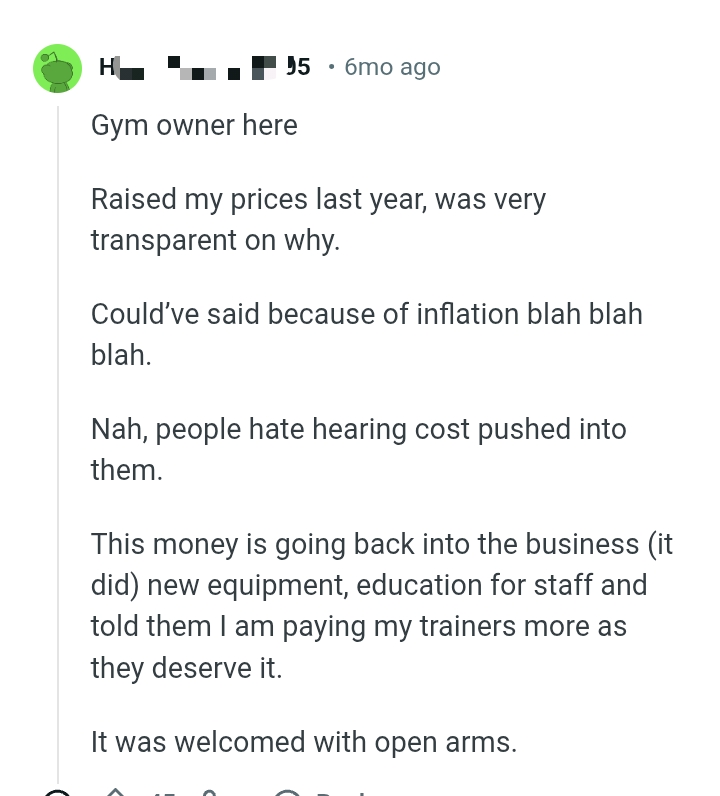

Instead, they were transparent about reinvestment. They told their members that the extra money was going directly into new equipment, better facility maintenance, and most importantly, higher pay for their trainers so they could retain the best talent.
The response was overwhelming. Members welcomed it. Even from a consumer perspective, the logic holds up.
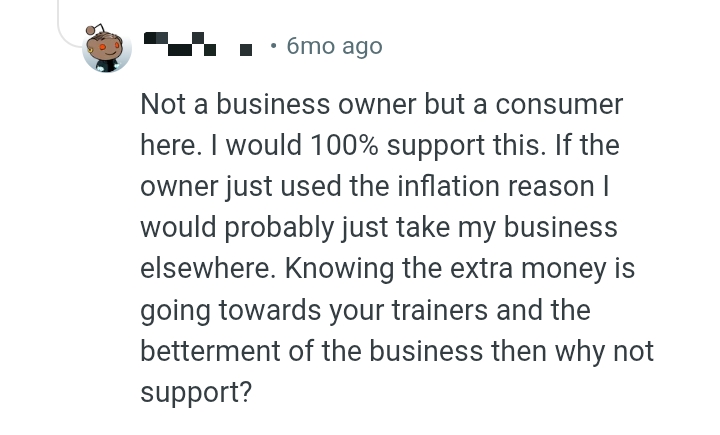

If your business tells people prices are up because of “inflation,” they might look for a cheaper option because they feel the cheaper one might be better.
But if you tell your customers their extra $20 is ensuring the best trainers stay employed and the equipment you use gets upgraded, they’re happy to pay it. Of course, they want the business to succeed so they can keep getting great results.
The Value Audit
You need to do the same for your agency. Sit down and list exactly what you do for your clients now compared to when they signed up.
Maybe three years ago, you were just doing basic directory submissions. Besides that, now you are likely doing reputation management, responding to reviews, tracking local rank, and providing monthly reporting dashboards. You are using better tools, and you have more experienced account managers. Quantify this.
- Time Saved: Are you saving the office manager 10 hours a month? That is worth $200+ right there.
- Revenue Generated: Did you help them rank for “emergency plumber,” which drove 15 extra calls last month?
Strategic Segmentation
Not every client deserves the same approach, though. If you send a generic “prices are going up” blast to everyone, you will cause unnecessary churn. You need to segment your roster.
Open up your spreadsheet and tag your clients:
- Tier 1 (The VIPs): These are your high-value retention targets. They pay on time, they buy multiple services (SEO + Ads + Social), and they refer others. You cannot afford to lose them.
- Tier 2 (The Standard): Good clients, steady income, low maintenance.
- Tier 3 (The Anchors): These clients pay the least (perhaps they are on a legacy $99 plan), complain the most, and eat up your support team’s time.
Your strategy changes for each group. Tier 1 gets a white-glove transition. Tier 3 gets a strict new standard. This is actually an opportunity to “fire” unprofitable clients without having an awkward conversation. If a Tier 3 client leaves because you raised their rate from $100 to $175, you have freed up operational capacity to find a new client who is happy to pay $250.
According to a McKinsey research on B2B profitability, a 1% increase in price can translate to an average 8.7% increase in operating profits, as long as sales volume remains stable. Even if volume drops slightly, the profit gains usually outweigh the revenue loss from low-margin clients.
Step 2: Determine the “Why” and Craft the New Pricing Structure
Once you know who you are talking to, you need to solidify your reasoning. We already established that “inflation” is a weak excuse. You need a narrative that connects the price to product quality.
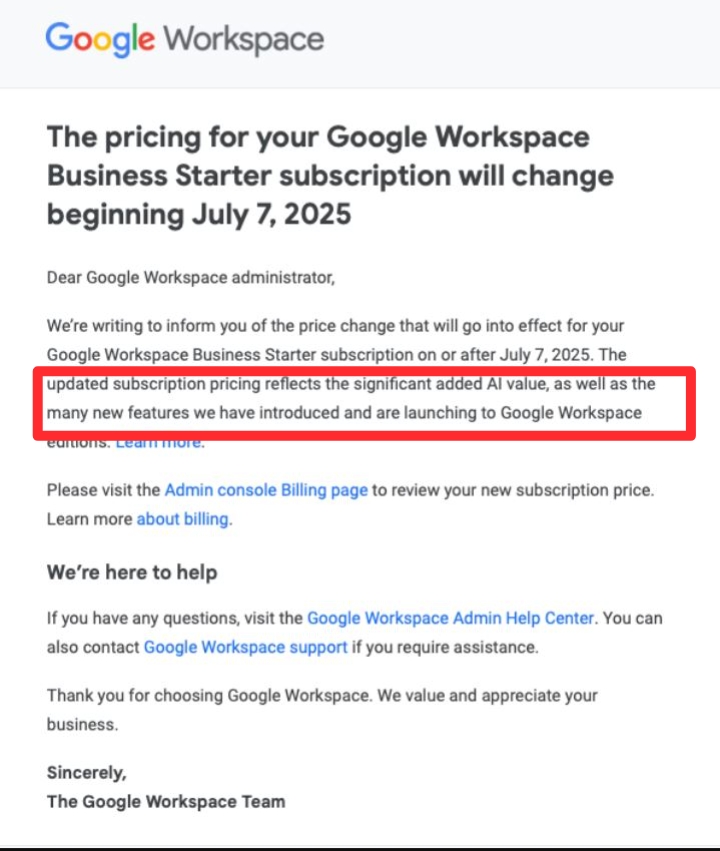
Back in 2019, G Suite increased prices for the first time in a very long time.
But they were very transparent about the “why.”
They didn’t just say, “We want more money.” They sent out detailed communications explaining everything that had been added to the platform since the original price was set years ago. They listed new collaboration tools, security updates, and integrations.
Users were reminded that the product they use today is vastly superior to the one they bought years ago. Because the value was clear, the backlash was minimal. They survived the increase and grew.
Today, G Suite has been rebranded as Google Workspace, with several price increases since then. But the strategy remained the same:

Identifying Your “Why”
Write down the external factors, but frame them as internal improvements.
- Tech Stack: “We have upgraded our reporting and analytics platforms to give you faster, more accurate data.”
- Talent: “We are adjusting rates to retain top-tier account managers who understand your local market.”
- Scope Creep: “We have added monthly Google Business Profile posts and Q&A monitoring to your standard package, which were previously billable add-ons.”
Creating Pricing Tiers
Another thing to consider is avoiding a binary “take it or leave it” increase. Psychology plays a huge role here. If you just say, “Your price is now $250,” they might shop around. If you give them choices, they are more likely to stay.
Create a Good / Better / Best structure:
- Legacy Lite ($150/mo): This is their current price (or slightly higher), but with a reduced scope. Maybe they lose the monthly strategy call or detailed reporting. This keeps them as a client but reduces your workload.
- Standard ($225/mo): This is the new price for their current level of service.
- Growth ($350/mo): A new, higher tier with added bells and whistles.
This is anchoring. By showing the $350 option, the $225 option looks reasonable.
The New Client Anchor
Along with that, you must change your public pricing immediately. Before you notify existing clients, your website and sales decks should reflect the new rates (e.g., starting at $250/location).
When you eventually talk to your existing clients, you can honestly say: “Our standard rate for new partners is now $250/location. However, because you have been with us for two years, we are moving you to a preferred rate of $200.” You are not raising their price; you are giving them a discount relative to the market rate.
Step 3: Communicate Effectively and Transparently
The execution of the communication is where most agencies fail. You cannot automate this entirely, and you cannot spring it on them at the last minute.
Internal Alignment
In addition to planning the external message, you have to prep your team. Your account managers are the ones who will field the angry phone calls. If they are apologetic or unsure, the client will push back.
Hold a training session. Give your team a script. Explain the “why” to them so they believe it. If your staff understands that this price increase means better job security and tools for them, they will defend it confidently.
Timeline and Notice
SMB owners run on tight margins. If you hit them with a price hike effective “next week,” they will panic. You need to give them a runway.
A 60 to 90-day notice is the sweet spot.
- Day 1: Send the notification. “Rates will be adjusted effective [Date 60 days out].”
- Day 30: A reminder and an invitation to discuss their account strategy.
- Day 50: Final reminder.
This removes the shock factor. It also gives them time to adjust their own budgets.
The Medium Matters
For your Tier 3 (low value) clients, a well-crafted email is sufficient. It is efficient and sets a clear boundary.
For your Tier 1 (VIP) clients, do not send an email. Dial their number or schedule a Zoom call. A personal conversation shows respect. You can frame it as a strategy review. “Hey Bob, we are doing our annual operational review. I wanted to walk you through some changes we are making to improve our service for next year and what that means for your billing.”
Language Choice
Words matter. Avoid “Price Hike” or “Increase.” These sound aggressive.
Instead, use:
- Rate adjustment
- Fee schedule update
- Pricing alignment
- Investment revision
Never apologize. Do not say, “I’m so sorry we have to do this.” Say, “To continue delivering the level of results you expect, we are updating our fee schedule.” Confidence signals competence.
Step 4: Justify the Increase with Value and Options
When you deliver the news, you must immediately pivot to value. Do not let the price hang in the air by itself.
The “Value Update”
Start the conversation with what they are getting, not what they are paying.
“Over the last year, we have secured X number of top rankings for your locations and managed over Y reviews. To further enhance this, we are upgrading our local listings solution to ensure faster sync times across 50+ publishers.”
You are connecting the fee to a tangible tool or result. You can also mention that you are implementing some powerful SEO solutions that will allow for deeper competitor tracking, something you couldn’t offer at the old price point.
The “Grace Period” Option
If a client pushes back hard, you can have a negotiation lever ready. Do not lower the price. Instead, extend the timeline.
“I understand budgets are tight right now. Tell you what, I value our partnership. I can keep you at the current rate for another 3 months as a grace period, but after that, we will need to move to the new structure.”
This makes them feel like they won a concession, but you still get your price increase eventually.
The Pre-Payment Discount
On top of that, you can use this as a cash flow generator. Offer to lock in their old rate if they pay for 6 or 12 months upfront.
“The monthly rate is going up to $200. However, if you want to prepay for the year, we can lock you in at the legacy rate of $150.”
Many SMBs will prefer to write one check to save money. You get a massive injection of cash, reduce churn risk (they are locked in for a year), and avoid the administrative headache of chasing monthly invoices.
Speaking of administration, this is a great time to streamline your back office. If you are asking for more money, your billing needs to be seamless. Using a single operating system rather than 5 different tools helps you look more professional. Clients are willing to pay more when an agency presents itself in a clear, structured, and professional way, rather than relying on disorganized or hard-to-follow materials.
Step 5: Implement and Review Regularly
Once the letters are sent and the calls are made, you have to stick to your guns.
Update Everything
On the effective date, ensure every invoice is accurate. Nothing looks more amateurish than telling a client prices are going up and then accidentally billing them the old amount. It undermines your authority. If you use automated billing, double-check your settings. You want to invoice seamlessly without manual errors causing friction.
Make it a Habit
The first price increase is the hardest. The second one is easier. The best way to avoid a massive, painful 40% hike is to do small, palatable 5-10% increases every year or every 18 months.
Put a clause in your new contracts that states: “Rates are subject to an annual review and adjustment of up to 5% to account for inflation and operational improvements.”
When the client signs that, they expect it. It becomes a non-event.
Also Read: Sample SEO Contract Templates for Marketing Agencies
The Churn Reality
Finally, analyze the aftermath. You will lose clients. That is okay.
Let’s look at the math.
- Scenario A: You have 10 clients paying $100 ($1,000 revenue). You do nothing. You keep 10 clients and $1,000.
- Scenario B: You raise prices to $150. Two clients leave angry. You now have 8 clients paying $150.
- Total Revenue: $1,200.
- Workload: Reduced by 20%.
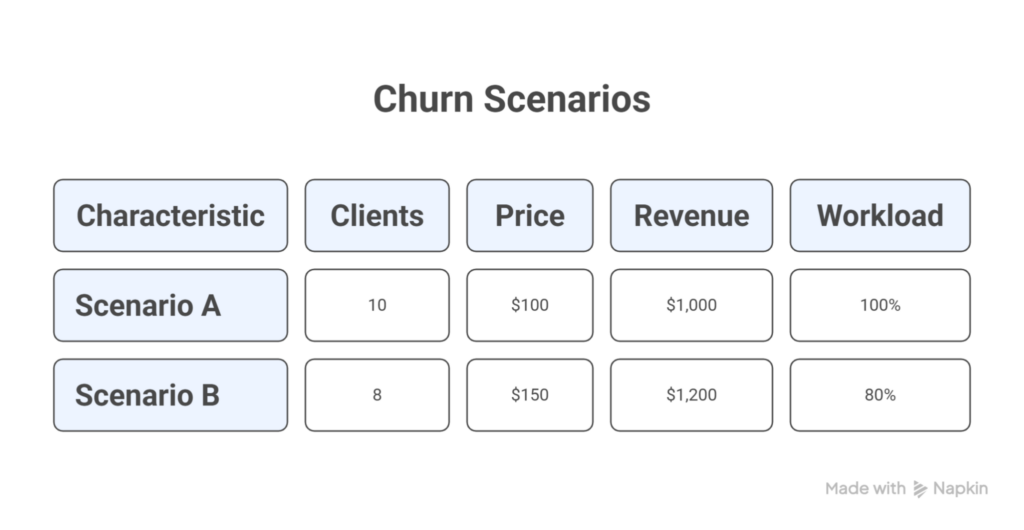

You are making 20% more money for 20% less work. You have also shed the clients who were likely the most price-sensitive and demanding. This creates space in your agency to focus on the 8 clients who see your value, or to go out and sell to new prospects at the new $150 rate.
Equally important is monitoring the feedback. If 50% of your clients leave, you didn’t explain the value well enough, or your service wasn’t good enough to justify the hike. Use that data to fix your operations.
Also Read: 7 Fixes to Reduce Client Churn for Your Agency
Conclusion
Raising prices is a natural part of a healthy agency lifecycle. It signals that you are growing, improving, and confident in the results you deliver. By auditing your value, communicating with empathy and clarity, and providing options, you can turn a scary financial conversation into a partnership-building moment.
Remember, the goal isn’t just to charge more; it’s to build a sustainable business that has the resources to serve your clients better. Don’t let fear dictate your margins. Plan your strategy, segment your list, and take the step to secure your agency’s future. You now know how to raise prices without losing clients. The only thing left is to send that email.
FAQs
1. When is the best time for an agency to raise its prices?
Raise prices when your value has clearly gone up, and clients can feel it day-to-day. For example, if you’ve added paid tools, hired senior talent, or are booked solid three months out, you’re already undercharging. Another good signal is when new leads say “yes” too quickly; pricing should create a little friction.
2. How can I justify a price increase to long-term clients?
Don’t hide behind just a “cost adjustment” email. Walk them through the upside. Show them what’s changed: faster turnaround, better reporting, fewer fires to put out. If Synup automation replaced 40–50 hours of manual listing and review work each month and lifted conversions from 5% to 8%, put those numbers on the table so the increase makes sense.
3. Should I raise prices for all my clients at once?
No. Start with clients who drain time, constantly scope-creep, and sit at the bottom of your effective hourly rate list. Bump prices 15–20% for those accounts first; if a few walk away, you free up serious bandwidth while protecting your best, long-term clients with smaller 5% increases.


