7 Types of In-Demand SEO Services Agencies Can Offer to Clients
Running a multi-client marketing agency can be incredibly fulfilling, but there is always that little itch in the back of your brain reminding you that money still matters. With different billing models, varied contracts, and constantly changing scopes of work, the math can start to look ugly pretty fast. By the time you pay your account manager and SEO executive, and shell out for software subscriptions, what is left can look very different from what you had in mind.
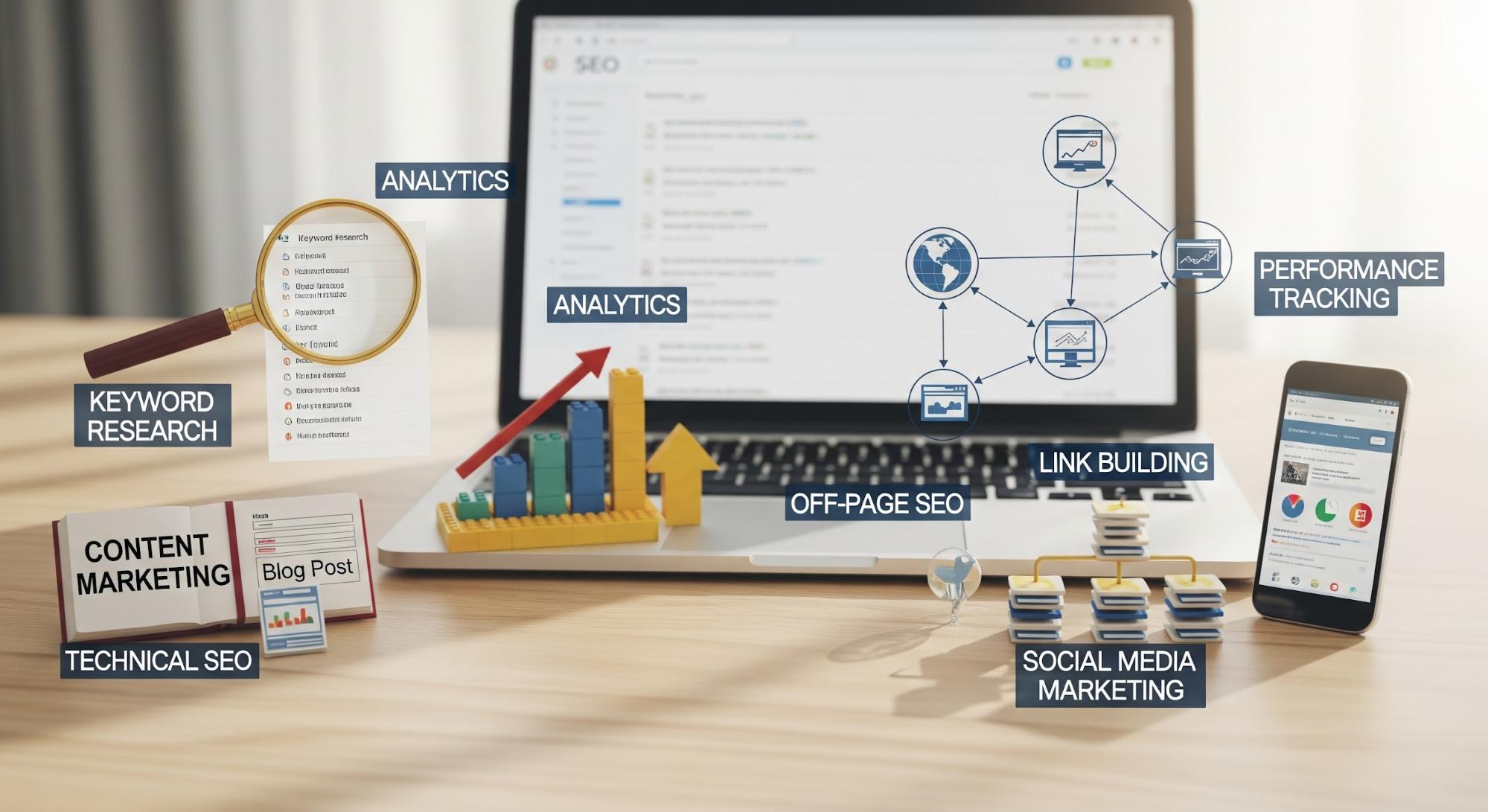
Right now, most agencies are barely scraping by with a 15% profit margin. And that sucks. If you want to push that number to 30 or even 40%, this guide will walk you through the essential and popular SEO services that help small businesses grow while making your agency far more profitable.
**TL;DR: In-Demand SEO Services Agencies Can Offer to Clients**
-
**Core SEO services every agency should offer:**
-
- Technical SEO
- On-page SEO
- Off-page SEO
-
**Strategic services that increase retainers:**
-
- SEO content strategy: maps keywords to TOFU, MOFU, and BOFU content instead of publishing random blogs.
- Workflow automation: automates reporting, audits, listings, and monitoring so teams don’t waste 20–30 hours per month.
- CRO: improves conversions with better CTAs, layouts, and forms. Small UX fixes can double lead volume without more traffic.
-
**Specialized services that differentiate agencies**
-
- Local SEO management
- Reputation management
- Social media management
- E-commerce SEO
- Video SEO
-
**Future-facing services:**
-
- AI engine optimization + structured data to help content get understood and cited by AI systems.
- Cross-channel integration so SEO insights feed paid ads, email, and landing pages.
-
**If you’re starting or scaling an agency:**
-
- Start with local SEO, content, or social. They’re easier to deliver and easier to sell.
- Local businesses like gyms, restaurants, clinics, and small e-commerce stores are ideal early clients.
- Automate early, or margins disappear fast.
- Platforms like Synup help manage listings, reviews, SEO, and social in one workflow.
**The Foundational SEO Services (The Big Three)**
The problem is that most agencies sell “SEO” as if it were a giant, mysterious box of unknowable stuff. When you tell a client you’re “doing SEO,” they don’t know what that means.
If the phone doesn’t ring by week six, they start thinking you’re just a line item they can cut to save a thousand bucks.
Every client thinks they need a firehose of new traffic, but usually, they’re trying to run that water through a leaky bucket.
If the foundation is trash, your high-level strategy will fail every time. These three types of SEO services are non-negotiables. They are the baseline for every single client who wants to stay in business.
**Technical SEO Audits & Implementation**
Technical SEO isn’t only about clicking a button in a plugin; it’s about making sure Google’s crawl spiders don’t get trapped in a dead end. For a local client, say, a dental practice with 12 offices across a metro area, technical debt can pile up fast.
They might have old “ghost” pages from a website move back in 2021 that are still live and sucking up crawl budget.
If Google is wasting time crawling 400 “Page Not Found” errors from an old blog, it’s not spending its limited energy indexing the new “Invisalign special” page you just spent three weeks building.
In 2025, search engines are obsessed with efficiency. If your site is bloated, Google treats it like a slow, unreliable employee and stops giving it shifts. The deliverables can include:
**1\. Core Web Vitals (CWV) Surgical Strikes**
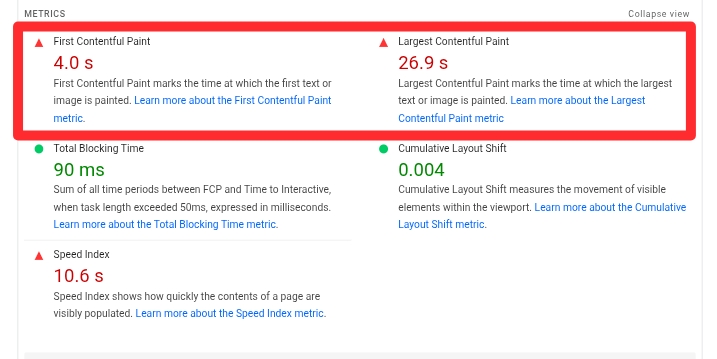
Run the client’s URL through Google PageSpeed Insights or any other SEO audit tool. Look specifically at the first and largest contentful paint (LCP). If it’s over 2.5 seconds, you’re in the red.
Source: Google PageSpeed Insights
For local businesses, the culprit is almost always a 4MB “hero image” of the storefront. Don’t just tell the client; go into their CMS (like WordPress), download that image, run it through a compressor like TinyPNG to get it under 150KB, and re-upload it with WebP formatting. Additionally, set “lazy loading” for images below the fold so the top of the page pops up instantly. Shaving 2 seconds off load time can drop bounce rates by 20%.
**2\. Crawl Budget Management**
For a site with 60+ pages, you need to use the robots.txt file to tell Google to stop looking at “Search” result pages or “Employee Login” portals.
Go to Google Search Console and check the “Crawl Stats” report. If you see Googlebot hitting “wp-admin” folders or internal search result URLs (URLs with a ? in them), you’re wasting your budget.
Open the site’s robots.txt file (usually yourdomain.com/robots.txt). Add “Disallow” lines for /wp-admin/, /search/, and any /login/ portals.
Not just that, make sure your sitemap.xml is linked at the bottom of your robots.txt file. While it does not force bots to ignore low-value pages, it helps guide them toward your most important service URLs instead of wasting crawl budget on pages that do not drive revenue.
**3.** **Schema Markup Architecture**
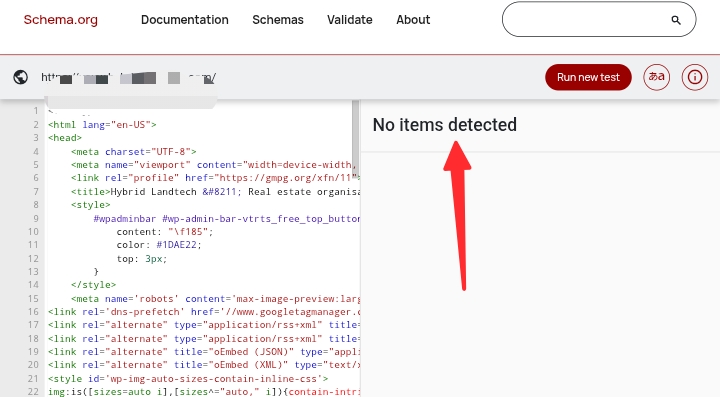
Use the Schema Markup Validator to see what’s currently there. Most local sites either have nothing or just a generic, useless “WebPage” tag.
Source: Schema Markup Validator
You need to get specific to the niche. Move beyond the basic “LocalBusiness” tag. If you’re working for a doctor, use the “Physician” schema. If it’s a plumber, use “HomeAndConstructionBusiness.”
This tells Google’s AI exactly who is in the building, their phone number, and which neighborhoods they serve. It’s like giving Google a direct map to the client’s front door.
**4.** **Mobile-First Indexing Audit**
About 60 to 80% of local searches happen on a phone.
Open the client’s site on your own phone. Is there a giant “Sign up for our newsletter” pop-up blocking the whole screen?
In the CMS, set “Mobile Visibility” rules. Kill any pop-ups for mobile users; they are often conversion killers. Plus, implement a “sticky” footer with one element: a click-to-call button. For a local service business, if a user can’t call with one thumb tap while sitting in their driveway, you are literally lighting the client’s money on fire.
**On-Page SEO Optimization**
On-page is where you prove you actually understand how the client’s business works. If you’re optimizing for a local law firm, you aren’t just chasing the word “lawyer.” You’re chasing “truck accident lawyer near me with free consultation.”
The goal here is relevance. Google uses a system called RankBrain to figure out what a person really wants when they type in a search. If your page title says “Lawyer” but the content is all about the history of the firm, there’s a massive disconnect. You’re the bridge that fixes that.
- Intent-Based Title Tags: Instead of a boring title like “Home – ABC Plumbing,” use “24/7 Emergency Plumber in [City] | Fast Leak Repair.” This captures the person who has a flooded basement right now. Along with that, it usually doubles the click-through rate compared to a generic title.
- The “Skyscraper” Internal Link Model: Take your high-traffic blog posts, like “How to tell if your water heater is dying,” and put a big, clear link to the “Water Heater Replacement” service page. This passes the “authority” from the blog to the page that actually sells stuff, guiding the customer right down the funnel.
- Image Optimization 2.0: Stop letting clients name their photos “IMG_9982.jpg”. Change them to “commercial-ac-repair-atlanta-ga.jpg”. This helps the client appear in Google Image Search, a massive, untapped source of leads for contractors and home remodelers.
- Header Hierarchy: You need one H1 per page, and it must match the page’s main goal. Use H2s and H3s for sub-topics so the reader can skim the page on their phone. If a guy is looking for a “roofing estimate” while standing in the rain, he needs to find that button in three seconds, not read a 1,000-word essay.
**Off-Page SEO & Link Building**
This is easily the most misunderstood of all the popular SEO services. For a local business, you don’t need a link from a huge national tech site to rank for “best hair salon in Nashville.” You need a local “neighborhood” authority.
One link from a local neighborhood blog or a “Best of the City” list is worth ten links from a generic SEO directory. Link building is just building digital “votes of confidence.” Google has gotten much better at spotting “link farms.”
Following an update a couple of years ago, Google revealed how it now combats link spam.
“SpamBrain is our AI-based prevention system. Besides using it to detect spam directly, it can now detect both sites buying links and sites used for the purpose of passing outgoing links.”
That may sound pretty intimidating for link builders and everyone using SEO to grow businesses offline and online. However, it goes to show that the quality of your outreach is way more important now than the quantity. Not just that, here are more core tasks to perform**:**
- Hyper-Local Citation Cleanup: You need to fix the business “NAP” (Name, Address, Phone) data across the web. If a client moved offices two years ago and Yelp still has the old address, Google gets confused and drops their ranking. Besides, it’s just bad for business when a customer drives to an empty building.
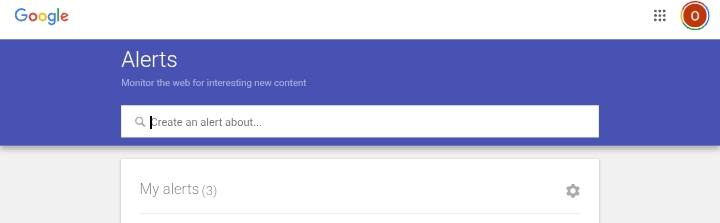
- Unlinked Mention Outreach: Set up a Google Alert for the client’s business name.
Source: Google Alert
If a local blogger mentions their charity work but doesn’t link to their site, send a quick, friendly email. “Hey, saw the shoutout! Any chance you could link that to our homepage so people can find us?” It’s the easiest link you’ll ever get.
- Community Sponsorship Links: Help your client sponsor a local 5k run or a Little League team. These local sites usually have high authority in that specific town, and they provide a “clean” backlink that tells Google, “This business is a real part of this community.”
- Digital PR for Local Impact: Create a “state of the industry” report for the local area. For example: “The 2025 Cost of Kitchen Remodeling in Vancouver.” Send this to local news reporters. They are always looking for local data to fill their stories, and you’ll get a high-authority news link in return.
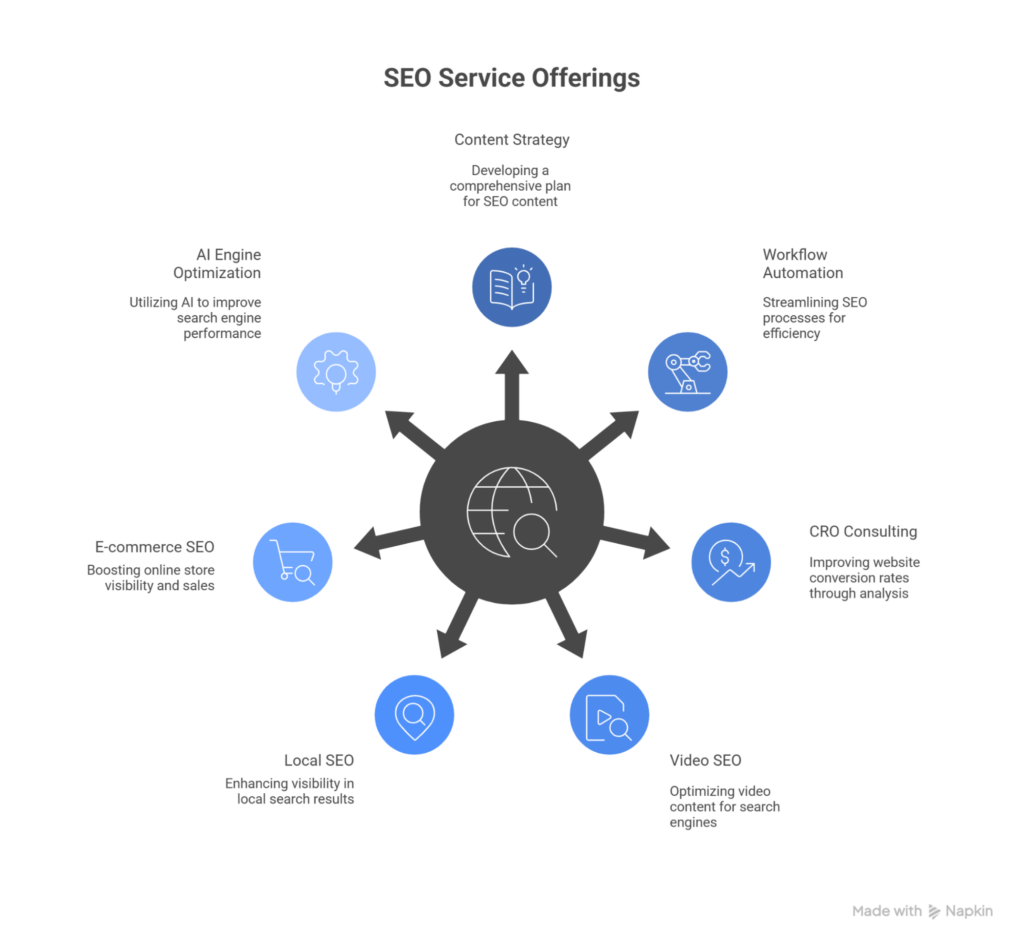
Without further ado, here is the list of SEO services you may offer your clients, starting from the strategic ones.
Source: Napkin
**Strategic Services**
Strategic services are higher-margin because they involve consulting and long-term planning.
**1\. Comprehensive SEO Content Strategy**
Content is not a commodity you buy by the word. If you’re just paying a random freelancer $50 to write “10 Tips for a Better Lawn,” you are literally flushing the client’s budget. A real strategy maps content to the buyer’s journey.
- TOFU (Top of Funnel): “Why is my grass turning brown?” These people are in research mode. They aren’t ready to buy yet, but you want to be the one who teaches them.
- MOFU (Middle of Funnel): “Organic vs. Chemical Fertilizer.” They know they have a problem and are comparing solutions. This is where you build trust.
- BOFU (Bottom of Funnel): “Best Lawn Care Service in Orlando.” These people have their credit cards out. You need to convince them why they should choose you among the sea of options. This page needs to be built for conversion.
Deliverables:
- Keyword Gap Analysis: Don’t guess what to write about. Use a tool to pull the top 500 keywords that your client’s three biggest competitors rank for. Filter out anything your client already ranks for. This gives you a hit list of content that is already proven to work in their specific city.
- Topic Clustering: Google doesn’t rank pages as much as it ranks authorities. Instead of one random page about “HVAC,” build a Pillar Page called “The Ultimate Guide to Home Comfort in [City].” Link it to 10 sub-pages about AC repair, duct cleaning, and furnace maintenance. This cluster tells Google you are the local expert on the whole topic.
- E-E-A-T Optimization: Google wants to know who is behind the advice. Add a detailed author bio to every blog post. If the owner of the plumbing company has 20 years of experience and a Master Plumber license, put that front and center. Link to their LinkedIn or local business certifications. It’s a huge signal of trust.

Source: Synup
**2\. SEO Workflow Automation**
This is the “Agency Operating System” part of the equation. If your team is manually checking 100 Google Business Profiles every morning, that’s not operational efficiency. You should be automating the “busy work,” so your team can focus on the “thinking work.”
Statistics show that agencies using automation tools can manage up to 3x more clients with the same headcount. This is the difference between a struggling boutique and a scaling powerhouse.
Deep-Dive Deliverables
- AI-Assisted Metadata Generation: Use AI to draft the first version of meta descriptions for 1,000 product pages, then have a human spend 30 seconds refining them.
- Automated Rank Tracking & Reporting: Set up real-time dashboards using tools like Synup’s SEO solutions. This replaces the 10 hours a month your account manager spends building PowerPoint decks.
- Automated Lead Alerts: Set up a system where if a client’s rank for a “money keyword” drops, your team gets an alert before the client even notices.
Read More: How to Automate SEO Workflows with AI Tools
**3\. Conversion Rate Optimization (CRO) Consulting**
SEO gets them to the door; CRO gets them to walk in. If a client is paying you $2,000 a month for SEO and getting 50 leads, and you can tweak their “Book Now” button to get them 75 leads from the same traffic, you just gave them a 50% increase in value without spending a dime more on ads. Here’s how to deliver that:
- Heatmap & Click-Tracking: Use a tool to see where people are actually clicking. If you see people clicking on a picture of a “broken pipe” thinking it’s a link, turn it into a link that goes to the contact form. Stop the user frustration.
- Landing Page “Scent” Matching: Ensure the page title matches exactly what they searched. If someone searches for “emergency plumber,” the very first thing they should see is a giant red “Call Now” button and a “24/7 Service” headline, not a 300-word history of the company’s founding in 1984.
- Form Simplification: For every field you add to a contact form, your conversion rate drops. Do you really need the customer’s zip code, middle name, and “how did you hear about us” right now? Probably not. Cut it down to Name, Phone, and Problem. You can get the rest of the info when they pick up the phone.
**Specialized & Niche SEO Services**
Local businesses have different needs than a Shopify store or a YouTuber. If you can specialize, you can charge more and work less.
**4\. Local SEO Management**
If you’re serving local businesses, Local SEO Management is crucial. The first strategy here involves helping clients feature in the “3-Pack” and Google Maps.
For a brand new website, this is the very first thing we’d recommend. If they don’t have a Google Business Profile (GBP), they don’t exist.
Local SEO is about proximity, relevance, and prominence. It’s about making sure that when someone nearby searches for “tacos near me,” your client is the first thing they see.
What you’re delivering:
- GBP Optimization: Not just setting it up, but posting updates, answering Q&As, and uploading fresh photos every week.
- Review Management: Helping the client get more five-star reviews and, more importantly, responding to the negative ones professionally. You can use Synup’s Reputation tool to keep track of all this in one place.
Check Out: 5 Ways To Automate Review Management For Your Clients
- Local Citations: Getting them listed on Yelp, Yellow Pages, and those hyper-local neighborhood directories.
- Geo-Specific Content: Writing about the town they’re in, the local events they sponsor, and the landmarks near their shop.
Pro Tip for Solopreneurs: If you’re just starting out, stick to local SEO and social Media management. It’s much easier to show a client a “before and after” of their Google Maps listing than it is to explain why their organic ranking for a competitive keyword hasn’t moved in three months. And a lot of other agencies agree to this.

Source: Reddit
Local businesses are the best “starter” clients here. They need the help. They see the value quickly, and they’re less demanding than a big enterprise brand.
**5\. E-Commerce SEO**
E-commerce is a game of technical scale. If a client has 5,000 products, you can’t write a custom meta description for each one. You need template-driven SEO and a deep understanding of site architecture.
- Faceted Navigation Fixes: Filters (size, color, price) can create millions of duplicate URLs that confuse Google. You need to implement “canonical tags” or “noindex” to tell Google which version of the page is the “real” one.
- Product Schema: Use structured data to show “Price,” “In Stock,” and “Review Stars” directly in the Google search results. This can increase Click-Through Rate (CTR) by up to 30%.
- Internal Site Search Analysis: Look at what people are searching for inside the client’s site. If they’re searching for “heavy-duty winter boots” and the site has zero results, that’s a product gap the client needs to fill.
**6\. Video SEO (YouTube & TikTok)**
Video isn’t some extra credit project anymore; it is the new front page of the internet. Roughly half of Google search results now show at least one video, and if someone is asking “how-to,” that number goes through the roof.

Source: Google
If your client is still hiding behind walls of text, they are essentially invisible to half their potential customers. For a local roofing crew, a 30-second clip of a guy on a ladder pointing out actual hail damage is ten times more persuasive than a 2,000-word blog post.
It builds that “know, like, and trust” factor instantly because the homeowner sees a real human face before they ever let them onto their property.
What to offer:
- YouTube Keyword Mapping: Start by hunting for the specific “How-to” phrases that force Google to show a video carousel. For example, instead of just targeting “Plumbing,” we go after “How to unclog a kitchen sink without a plunger.” These long-tail, “I-have-a-problem-now” phrases are the fastest way to jump to the top of the page. Create a literal map for the client that matches every service they sell to a specific question a local customer is asking.
- Video Schema & Key Moments: Use technical code to give Google a “table of contents” for every video. By setting up VideoObject schema and marking “timestamps,” we let Google show Key Moments right in the search results. If a guy is panicking and searches for “how to reset a circuit breaker,” he can click a timestamp that jumps him straight to the 45-second mark of your client’s video.
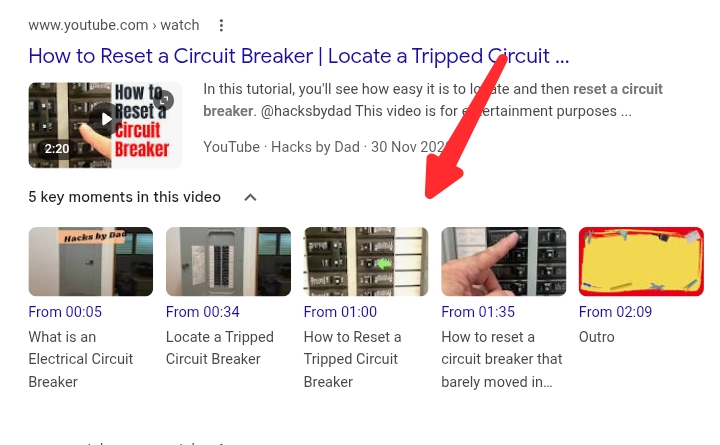
Source: Google
It makes your client look like the ultimate local authority.
- Cross-Platform Repurposing: Make sure the client gets every penny’s worth out of a single video shoot. Take one 5-minute YouTube guide, chop it into five 15-second TikToks or Reels, and then embed the full version into a blog post on their site. This creates a “content loop”: the blog post helps the video rank, and the video keeps people on the page longer. Plus, it tells Google the site is helpful, which boosts everything else.
**Future-Forward & Cross-Channel Services**
The next two years are going to be defined by who handles AI correctly and who gets left in the dust. Don’t be the agency owner saying “AI is just a fad” while the shop down the street is eating your lunch.
**7\. AI Engine Optimization (AEO) & Structured Data Consulting**
With AI Overviews (that big box at the top of Google) taking over, the search page looks totally different now. Users aren’t always clicking blue links anymore or scrolling up the SERP for answers; they’re reading a summary. Your job is to make sure the AI is quoting your client as the expert source. This requires a big shift toward “Structured Data.” If the AI bots like Gemini or ChatGPT can’t easily read and double-check your client’s info, they’ll just skip right over it.
What to offer:
- Q&A Schema Implementation: Don’t just write FAQs for the sake of it; code them so robots can read them. By putting a dedicated FAQ section on every service page and marking it up with Q&A Schema, you drastically up the odds of the client being the “featured snippet.” Focus on natural, “human” questions; the exact stuff people type on their phones while they’re busy doing something else.
- Topical Authority Audits: AI models look for consensus. If fifty different local sites, news outlets, and directories all say your client is the “best dentist in Atlanta,” the AI starts to treat that as a fact. Run an audit to see where the client’s brand is mentioned (and where it’s missing), then use digital PR to get their name into the places that matter for AI training data.
- Conversational Content Refactoring: Go through the client’s site and kill the robotic, corporate-speak. Instead of a stiff line like “Our firm provides comprehensive plumbing solutions,” change it to “Yes, we handle 24/7 emergency plumbing in the downtown area, and we can usually get a tech to your door in under an hour.” This matches exactly how AI models process information, making your client much more recommendable.
Learn More: How Agencies Are Using AI to Transform Workflows
**Conclusion**
When you can show a client exactly how you’re going to fix their site speed, dominate the local map pack, and get them ready for the AI era, the conversation changes from “How much do you cost?” to “When can we start?” Use the right tools, automate the repetitive grunt work with a platform like Synup, and keep your eye on the results that actually pay the client’s bills. Focus on the win, and the growth will follow.
Also Read: 12 Marketing Agency Management Tips to Grow Your Business
******FAQs**
1. How do you find clients for an SEO agency?
The smartest way to get new business is to show a prospect what’s broken before you even ask for a check. You can send an SEO audit of their site. You can also send a quick 5-minute video of a shop owner’s own Google profile, showing them exactly why the guy across the street is outranking them. You should also try picking one specific niche, like high-end landscapers, so you become the “go-to” expert for that one group. Plus, teaming up with local accountants or insurance brokers is a great move because they already talk to the same small business owners you want to reach.
2. What is the difference between SEO and local SEO?
SEO is about ranking a website on a global or national scale (e.g., “how to bake a cake”). Local SEO is about ranking for “near me” or city-specific searches (e.g., “bakery near me”). Local SEO relies heavily on the Google Business Profile, proximity to the user, and local citations, whereas traditional SEO is more about backlink authority and technical site structure.
3. What SEO services should I provide to a brand-new website?
If a client just launched a site, you need to stick to the “Core Three” basics: making sure Google can find the site, telling Google exactly what the business sells, and getting them on the local map. Don’t waste time on expensive links or AI stuff until the site has been live for at least 90 days and has a solid base.