




Source: Freepik
In today’s world, reviews are the modern-day courthouses, and every interaction visible on your public Google Business Profile is a gavel strike shaping your reputation. For all the weight your reviews carry, they’re also a magnet for unscrupulous attempts to tarnish your carefully built reputation.
Imagine a small business owner suddenly receiving threats like: “Someone has been ordered to post 20 negative reviews about your business.” Ignoring it isn’t always safe: these threats can become reality. One-star reviews can flood a Google profile, dragging a rating from 5.0 down to 3.6 almost overnight. Customer calls dry up, and scammers may start demanding money to remove the fake reviews. After all, would you visit a restaurant with a flood of negative comments at the top?
Unfortunately, cases like this are no longer rare. Years of hard work building a strong online reputation can be undone in a matter of hours. Even though Google has restricted over 900,000 accounts for posting fake reviews, these scams still find ways to reach businesses.
In this guide, you’ll learn how these scams operate, the red flags to watch for, and the steps you can take to protect your business.
TL;DR
- Fake review scams are no longer rare; they can damage years of reputation and revenue in just a few days.
- Scammers use different strategies like review bombing, extortion threats, false “removal services,” and selling paid reviews to harm businesses.
- Fake reviews are easy to identify when you know the warning signs. Watch for vague complaints, sudden drops in ratings, and reviewer profiles with no history.
- If targeted, don’t pay scammers. Instead, document evidence, report the reviews to platforms, and post calm public responses to protect trust.
- Strong defenses should exist before problems appear. Encourage genuine reviews, watch your ratings closely, and guide your staff.
Understanding the Different Types of Review Scams
It’s easier to fight back when you know what you’re dealing with. Let’s take a look at the common types of review scams that businesses face today. Understanding these indicators can help you detect threats before they cause damage:
1. Review Bombing
Review bombing occurs when a large number of fake negative reviews hit a business in a very short time. These attacks are usually planned and designed to pull down ratings while discouraging potential customers from choosing the business. Because more than 53% of consumers trust online reviews, even a small drop in ratings can have a serious impact on whether they choose your business.
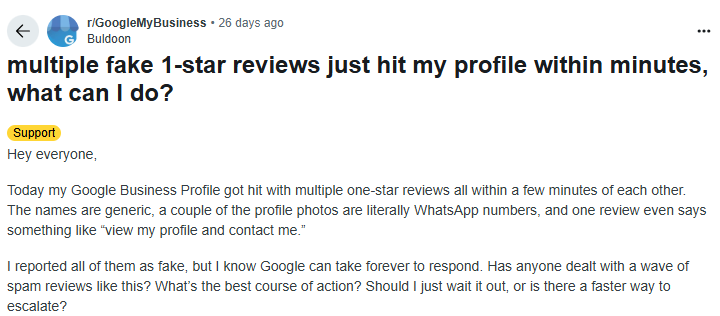
For example, in Houston, several restaurants received emails threatening daily one-star reviews unless they sent a $75 Google Play gift card. In one week, seven one-star reviews pushed one restaurant’s rating from 4.8 down to 4.5. That drop was enough to affect visibility and make potential customers doubtful.
2. Review Extortion/Blackmail
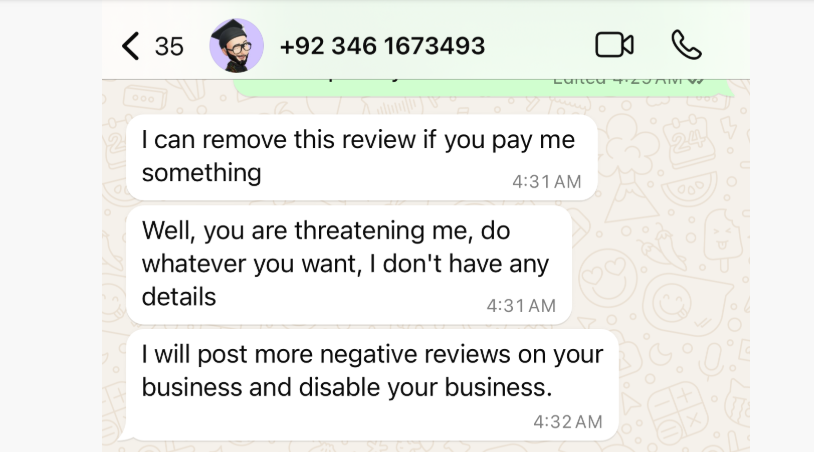
Review extortion occurs when scammers threaten to post negative reviews unless a business pays them money, provides free products and services, or even buys their services.
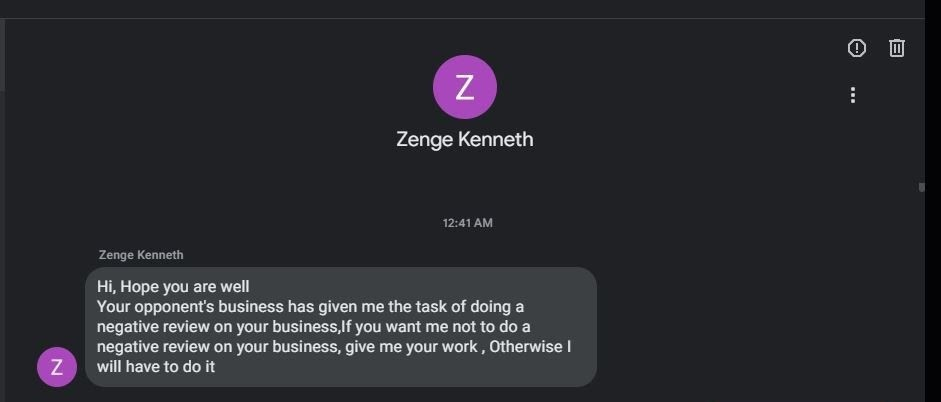
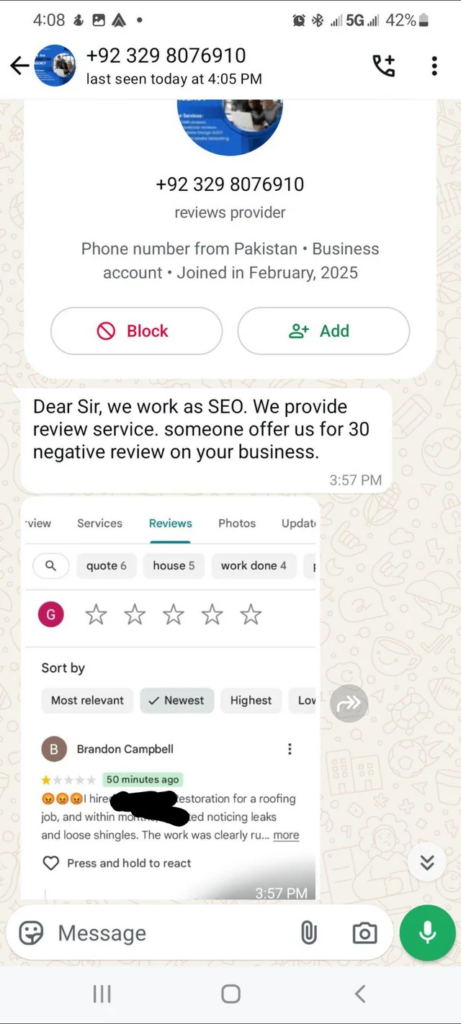
In some cases, the damaging reviews are already live, and the scammers demand payment to remove them. Their aim is to intimidate business owners, playing on the fear of losing customers and harming their reputation. Paying, however, only fuels the scam, making it more likely they’ll return or target other businesses.
For example, one business owner shared on Google’s support forum how they were threatened with negative reviews unless they paid the scammers a sum of money. The scammers posted multiple fake negative reviews while bombarding the owner with threatening messages, creating chaos and damaging the business’s reputation.
3. Fake Review Removal Scams
This scam looks less like a threat and more like a helping hand, which is why many businesses fall for it. Scammers reach out claiming they can “fix” your reputation by removing negative reviews for a fee. In some cases, they are the ones who posted the fake reviews to begin with. In others, they take the money but have no real way of removing reviews at all.
For example, a business owner shared that they were contacted by someone pretending to be from Google. The caller offered to delete a negative review in exchange for payment. When the owner refused, fake reviews started appearing, complaining about services the business didn’t even offer. The scammers then reached out again, offering to remove the reviews, convinced they had a better chance the second time.
Instead of solving the problem, these scams sell a false solution and trap businesses in a cycle of ongoing demands.
Also Read: How To Handle Fake Reviews on Your Google Business Profile
How to Spot a Fake Review (Obvious Red Flags)
Source: Freepik
Not every fake review screams “scam” right away. Some look real enough, but if you know what to look for, you can catch them before they cause damage.
1. Empty Feedback, Empty Profiles
Genuine customers usually explain their experience. They might mention what went wrong with an order, how long they waited, or how the staff treated them. Fake reviews often skip the details and use vague complaints like “Worst service ever” or “Terrible place”.
If the review feels empty, check the reviewer’s profile. Scam accounts often have no photo, no bio, and no history of real activity.
For example, in the case of the owner being extorted to remove fake reviews, the flood of fake reviews came from suspicious profiles by the names of “William Lucas”, “Jone Jon”, and “Joshua Gabriel” (cue the eyeroll) that had previously posted negative reviews for a single other company (same wording and all), revealing their malicious intent.
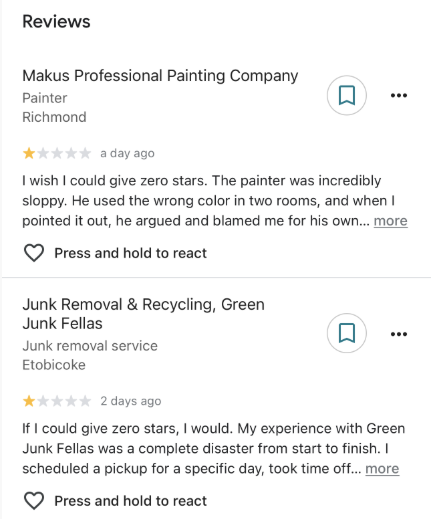
Some only post one-star reviews for different businesses that aren’t even related. A real customer’s profile usually shows a mix of feedback over time, while fake ones look blank or overly negative.
2. Anger That Feels Over the Top or…Misplaced
A disappointed customer may be upfront, but their frustration usually has some explanation. They’ll point out why they were dissatisfied and describe the issue in their own words. Fake reviews, on the other hand, often exaggerate the emotion. They throw in extreme claims like “This was the worst business in the city” or “Completely ruined my day”. The language feels more like an attack than genuine feedback, which is a strong sign that the review may not be genuine.
3. Too Many Bad Reviews All at Once
In most cases, reviews come in gradually over time. So if you wake up to a sudden wave of one-star ratings in just a day or two, that should raise suspicion. Real feedback doesn’t usually appear all at once. Scammers often post in groups to pull your ratings down quickly before you have time to react. If your score drops overnight, it’s a sign that the attack was planned.
4. Reviews That Sound Copy-Pasted
Real customer reviews usually sound unique since everyone shares their experience differently. Fake reviews, however, often look suspiciously similar. If you notice multiple reviews repeating the same phrases or complaints, that’s a sign someone is copying and pasting the same script across different accounts.
Your Immediate Action Plan: What to Do First
When fake reviews appear, stay calm and focus on the process rather than the panic. These steps will help you manage the situation and get the reviews removed:
1. Do NOT Pay the Scammer
Paying is not a solution. It only encourages scammers to come back with more demands. On top of that, selling or buying fake reviews is illegal in many places, and you may be penalized for even engaging. This means giving in is not just useless but can also put your business at risk.
2. Document Everything
Before doing anything else, collect evidence. Take screenshots of the fake reviews, the reviewer profiles, and any messages or emails you have received. Make sure dates, usernames, and links are visible. Having a clear record will help you when reporting to platforms or seeking legal advice.
3. Report the Reviews
Once you’ve saved proof, the next step is to report the fake reviews directly to the platform. Each site has its own process, and here’s how you can do it:
-
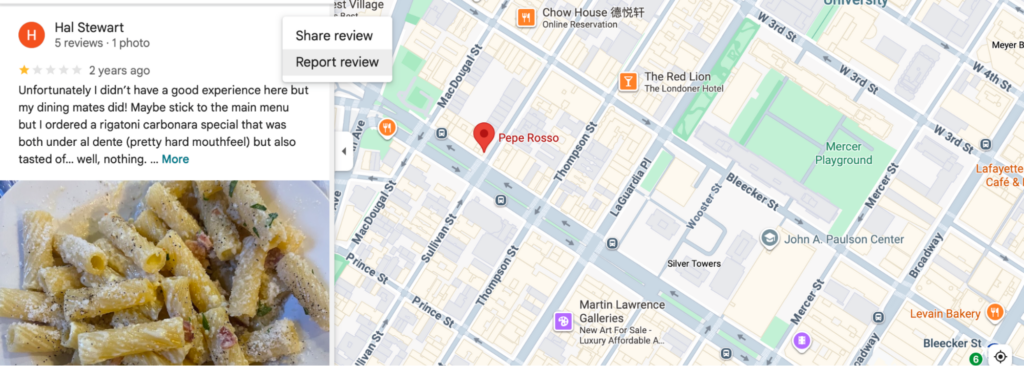
- Log in to your Google Business Profile.
- Select Read Reviews.
- Next to the review you’d like to flag, select Report.
- Select the reason to flag the review.
- Select Send Report.
-
- Sign in to Yelp for Business.
- Open the Reviews tab.
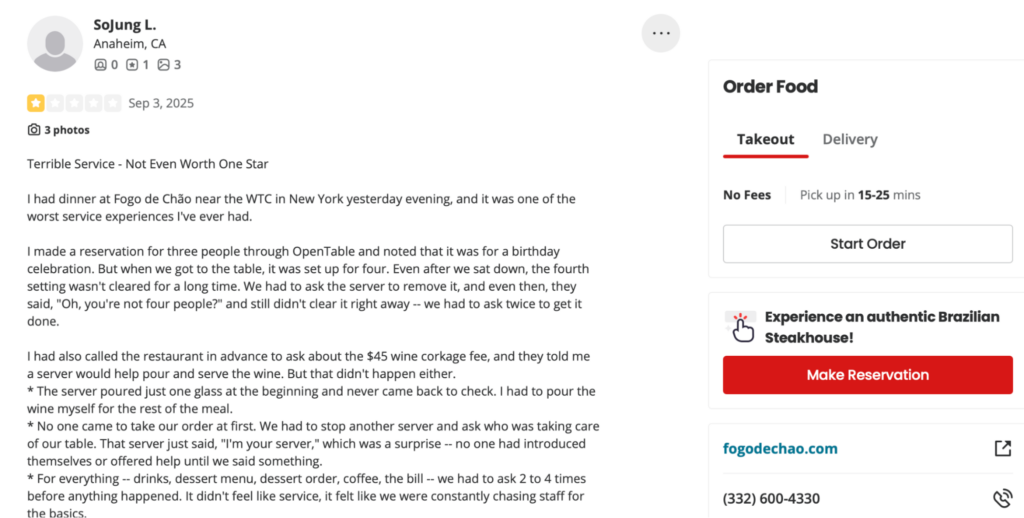
- Tap the three-dots (More Options)
- Tap Report Review.
- Give a reason for why the review is fake.
- Facebook:
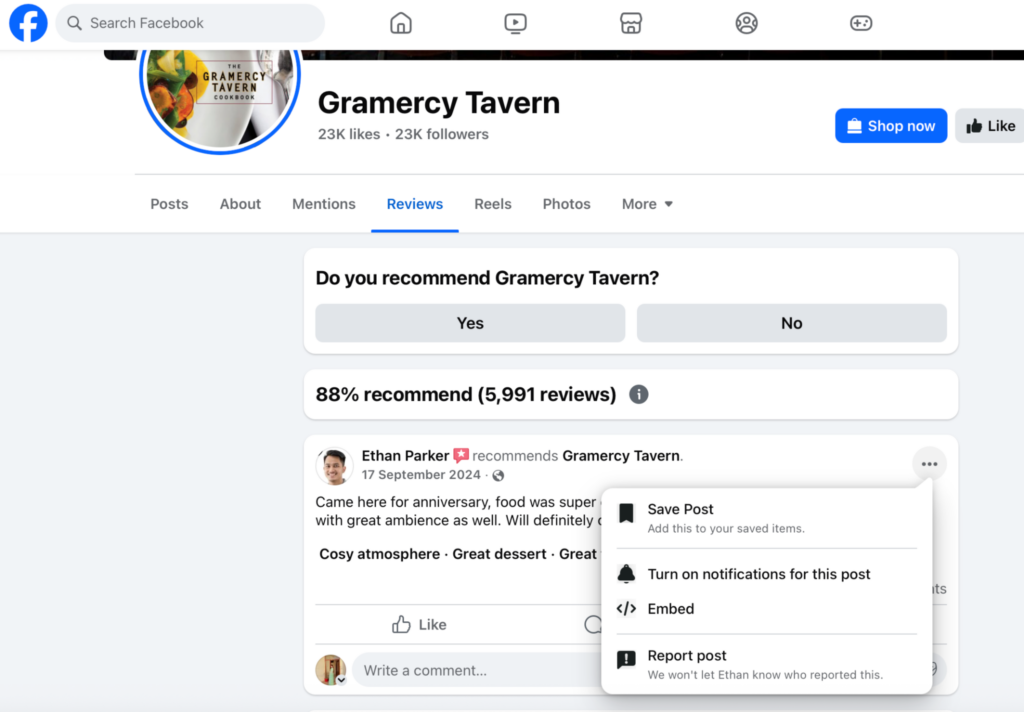
- Go to your Facebook page.
- Click Reviews below the page cover photo.
- Find the review, click on the three-dot menu beside it, and choose Report Post.
4. Respond Strategically
Even if you know a review is fake, you should still respond publicly. A short, calm reply shows potential customers that you’re paying attention. Keep it polite and avoid arguing. You can say something like, “We take all feedback seriously, but we cannot find a record of this visit. We request you to reach out to us directly so we can look into it.”
This kind of reply builds trust with real customers and subtly shows that the review may not be genuine.
Proactive Defenses: Protecting Your Business for the Long Term
Fake reviews can be stressful to deal with, but the safest move is to prepare before they even show up. Here are a few ways to keep your business protected for the long run:
- Encourage Genuine Reviews: The smartest way to protect your reputation is by letting your real customers do the talking. Their honest reviews build trust and drown out fake noise. All it takes is a small reminder, like sending follow-up emails or messages, or asking in person after a good experience.
Read: How to Get More 5-Star Reviews on GBP
- Monitor Your Reputation Continuously: Check your reviews often, not just when you suspect something is wrong. Making review monitoring part of your routine helps you catch unusual activity early. A reputation management platform like Synup makes this easier by pulling reviews from Google, Yelp, and Facebook into one dashboard so you don’t have to switch between platforms.
- Train Your Staff: Your staff is often the first to notice when something feels off. Give them the basics on how to spot fake reviews, when to report them, and how to respond to customer questions about them. Good preparation gives your team the confidence to spot fake reviews and deal with them the right way.
- Legal and Professional Help: If fake reviews keep coming back, it’s worth seeking legal advice or bringing in a reputation management expert. Having outside support gives you the tools and backup you need to protect your brand.
The Power of an AI-Powered Reputation Management Platform
Trying to manage reviews on your own can feel like a full-time job. You log in to Google, then Yelp, then Facebook, and by the time you’ve checked everything, another negative review has already slipped in. It’s stressful, inefficient, and takes away valuable time you could be spending on other things.
That’s why more agencies and business owners are turning to AI-powered reputation management platforms. Instead of switching between multiple tabs, you get one system that lets you track reviews in one place and respond much faster. Here’s how it makes life easier:
- Automate review requests: Most customers won’t review unless you ask. An AI-powered system takes care of that automatically by sending friendly reminders through email or text after a visit or purchase. This creates a regular flow of authentic reviews that build trust and make fake ones less damaging.
- Centralized monitoring: Checking reviews across different platforms every day is exhausting. With a centralized dashboard, you can view all your feedback from Google, Yelp, Facebook, and more in one place. It saves time and makes it easier to notice suspicious activity before it damages your reputation.
- Streamlined response: Replying to reviews matters, but it’s something many businesses forget when things get busy. A centralized system makes it easier by bringing all your replies in one place. With Synup, you can even use AI to draft responses, then quickly edit and post them. This keeps every reply professional and consistent, whether you’re thanking a happy customer or addressing a suspicious review.
Conclusion
Reputation isn’t built on just ads or marketing; it’s built on trust. But this trust is precarious. Fake review scams can shake those foundations faster than most businesses expect. One bad week of ratings can undo years of effort, which is why you can’t afford to only react after the damage is done.
A smarter approach is to stay prepared. Learn to identify the signs, respond in ways that protect your brand, and keep real customer voices louder than the fake ones.
This is what Synup OS is built for. For agencies, it goes beyond review management by giving you one place to monitor feedback, manage client data, generate leads, and even predict churn. Once you get the hang of these functions, the delighted reviews are sure to follow.
If protecting your reputation while scaling business matters to you, it’s worth exploring. Book a demo today and explore how Synup OS can support business growth.
FAQs
- Is paying scammers to remove reviews ever a safe option?
Absolutely not. Paying only encourages more demands and doesn’t guarantee the reviews will disappear. In some cases, scammers post even more reviews after payment.
- What should I do if Google or Yelp doesn’t remove fake reviews?
If a fake review isn’t taken down immediately, the first step is to file an appeal on the platform with clear details showing how the reviews violate their policies. If that doesn’t work, you can try reaching out directly to Google or Yelp support and include as much evidence as possible. And if the review still stays up, the best move is to outweigh it by encouraging happy customers to leave genuine feedback that pushes the fake one down.