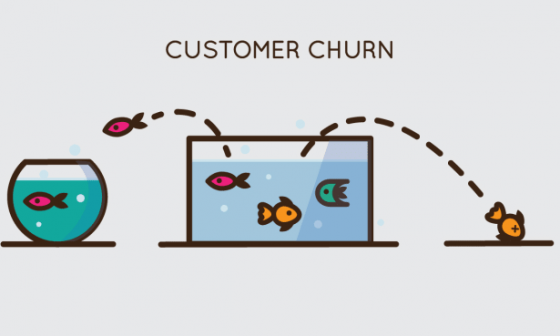




Running a marketing agency is not only about coffee-fuelled brilliant ideas and killer creatives. It’s more like painstakingly tending a garden: you’re constantly nurturing people, clients, and processes so everything grows together in balance. The truth that may be hard to accept after all your pruning is that great work alone won’t make your firm scale.
You need strong agency management discipline to scale effectively. With experience supporting thousands of businesses worldwide, at Synup, we know a thing or two about real-world growth stories.
In this guide, we’ll walk through twelve practical strategies to streamline your operations and build a motivated team. These strategies draw on data from trusted industry reports and insights from real agency owners.
TLDR: Marketing Agency Management Tips to Grow Your Business in a Nutshell
- Pick a niche and craft a clear USP that attracts ideal clients.
- Streamline workflows and automate repetitive tasks to scale efficiently.
- Track your finances by watching margins, utilization rates, and client dependence.
- Adopt tech tools like Synup OS to simplify operations and reporting.
- Hire smart and not cheap; find people who fit your culture and think strategically.
- Invest in learning, as training and conferences can keep your team sharp and loyal.
- Build a positive culture that values openness, recognition, and flexibility. Give your team clear goals and ownership while avoiding micromanaging.
- Target the right clients and create repeatable sales systems.
- Nail your onboarding by setting clear expectations, roles, and timelines early.
- Tell your success story with real case studies, results, and client reviews.
- Book a demo with Synup OS to see how automation can power your agency’s next stage of growth.
Part 1: Master Your Internal Operations
The foundation of sustainable marketing agency management is operational discipline. Creative talent will only get you so far; processes, financial clarity, and the right tools keep the wheels turning.
Tip 1: Define Your Niche and Unique Selling Proposition
Trying to be everything to everyone only leads to burnout and average results. The best agencies know that focus wins. Enterprise brands already partner with multiple specialists: one for SEO, another for social, another for branding or analytics. To truly stand out, claim your space. Choose a niche you’re passionate about, whether it’s SaaS startups, local restaurants, or B2B manufacturing, and build a clear USP that proves why you’re the go-to expert for that audience’s challenges.
One agency founder described how their breakthrough came only after they stopped taking every client who showed up. In their words, they “made all the rookie mistakes, saying yes to bad‑fit clients, undercharging, hiring and firing too fast and too slow.”
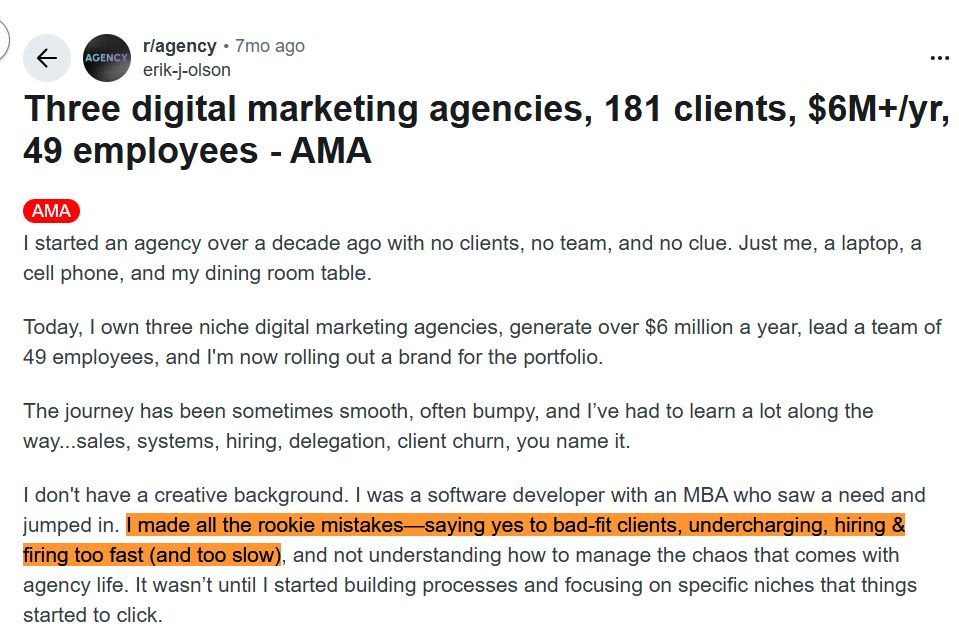
They finally saw momentum when they started building documented processes and focusing on specific niches.
Specialization attracts the right clients, simplifies your marketing, and makes pricing easier. Your USP should be more than a catchy tagline. It should have concrete benefits like “guaranteed lead growth for SaaS companies” or “local SEO that gets brick‑and‑mortar businesses on Google’s first page.”
Tip 2: Streamline Your Processes and Workflows
When every project feels like starting from scratch, growth can grind to a halt. The solution is constructing a watertight structure. Document your workflows, from proposals and discovery calls to content creation, reporting, and client communication, to bring order to the chaos. Then use project management tools and automation to cut down on repetitive tasks and allow your team to remain focused on what truly drives results.
Agencies with high recurring revenue and streamlined operations tend to command higher valuations.
Standardize client onboarding using templates for briefs, contracts, and access requests. Automate time tracking and invoicing, and create checklists for campaign launches to ensure nothing slips through the cracks. Regularly review these workflows so they evolve alongside your services and technology. A streamlined internal process frees your team to focus on creative and strategic work instead of administrative tasks.
Tip 3: Know Your Numbers: Master Financial Management
Many agencies avoid the financial side of the business until cash runs tight. Don’t fall into that trap. Profitability starts with clarity on costs, pricing, and margins. Industry benchmarks show that marketing agencies typically net between 6% and 12% profit margin.
To join the top end of that range, track your team’s utilization rate (billable hours divided by available hours), monitor the cost of service delivery, and adjust your pricing to reflect value rather than just effort.
Another critical metric is client concentration. Relying too heavily on one or two clients can put your agency at risk if a contract ends unexpectedly. Diversifying your client base not only reduces this risk but can also increase your valuation multiples when it comes time to sell or raise investment. As a best practice, aim to keep any single client’s share of revenue below 25%.
Understanding client concentration allows you to forecast cash flow accurately, plan and budget for taxes, and make informed decisions about reinvesting in key areas such as talent, technology, and marketing.
Tip 4: Invest in Technology and Automation
Manual processes feel okay when you have two clients. But once you’re handling six or ten, you’ll drown. Manual processes just don’t scale.
The right tech stack can radically boost productivity. Investing in modern CRM, marketing project management software, How to Automate, marketing automation, and reporting platforms pays dividends through saved time and improved client visibility.
Remote collaboration is another area where technology matters. Most clients prefer agencies with remote or hybrid teams. That’s because distributed teams can access broader talent pools and move faster. So, embrace cloud‑based communication tools and asynchronous workflows so your team can produce great work regardless of location.
Check Out: How to Automate SEO Workflows with AI Tools
Part 2: Build a Strong Team and Culture
People make agencies. You can have the best tools and systems in the world, but without the right crew, it all falls flat. The heartbeat of every good agency is its people: the thinkers, doers, and problem-solvers who show up hungry to make things happen.
Tip 5: Hire the Right People
You can’t build a top-shelf agency with a bargain-bin team. Skills matter, yes, but attitude, curiosity, and culture fit count twice as much.
Start simple. Figure out exactly who you need and why. Here’s the general process that most HR executives will swear by:
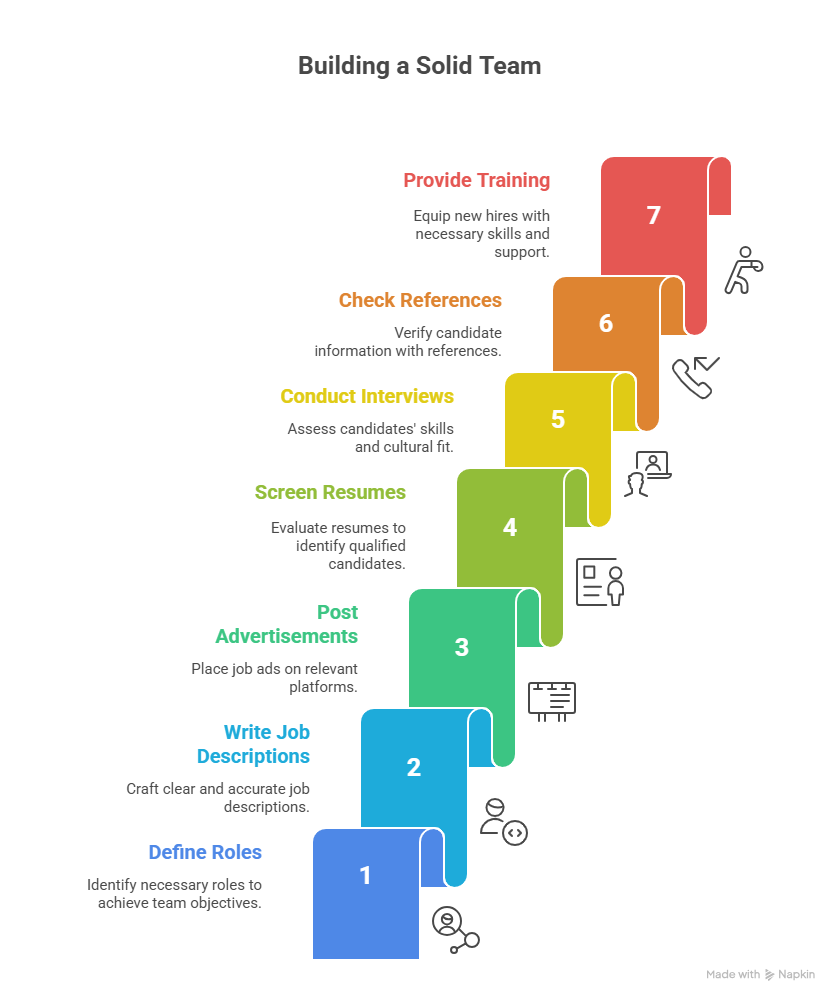
That’s the groundwork. But in this industry, where everyone’s chasing the same smart people, you’ve got to give candidates a reason to choose you. Sell your culture, not just your job titles. Talk about the kind of work they’ll be proud to show their mates.
And when you interview them, ask questions that reveal how they think:
- “Tell me about a campaign that went sideways and how you fixed it.”
- “How do you deal with a tricky client or a team bottleneck?”
- “What’s one thing you learned the hard way?”
If you’re building an SEO or PPC team, sure, you’ll need deep specialists. But don’t overlook the all-rounders; the account managers and strategists who can hold client conversations, translate data into action, and rally the team when deadlines get ugly.
Contractors and freelancers can plug short-term gaps, but your core team should share values, energy, and a clear long-term vision. Invest in people who see your agency’s success as theirs too. And here’s a perspective worth keeping front and center when you’re knee-deep in resumes:

Tip 6: Invest in Continuous Learning and Development
In agency life, the rules change fast. Google updates an algorithm, Meta changes its ad targeting, privacy laws shift, and suddenly, what worked last year stops working. That’s why learning has to be baked into your agency’s DNA.
If growth and development aren’t part of your culture, your best people will outgrow you. You can pay them well, offer perks, and throw in a coffee machine, but if they can’t stretch their wings, they’ll eventually fly somewhere else. You’ll see this culture issue everywhere:

So, make learning part of everyday. Give your team proper training budgets. Not just a token $100 for an online course, but a REAL investment in their growth. Cover certifications like Google Ads or Meta Blueprint. Sponsor tickets to conferences or local marketing meetups. These aren’t expenses; they’re retention strategies.
Tip 7: Foster a Positive and Collaborative Culture
Culture isn’t foosball tables or free snacks; it’s how people treat each other and approach work. A supportive environment encourages risk‑taking, creative problem-solving solving and honest feedback.
So, naturally, make transparency the norm. Share company goals, financial performance, and client feedback with the entire team. Recognize achievements publicly and discuss mistakes without blame so everyone learns.
Collaboration also requires tools and routines. Daily stand‑ups or weekly syncs keep projects aligned. Shared task boards and messaging apps prevent information silos. Remote agencies often use virtual co‑working sessions to recreate the energy of being in the same room.
(Here’s a great video by Simon Sinek, self-described “unshakeable optimist” on building a culture by design instead of default.)
Remember that culture shows up in small habits too: celebrating birthdays, respecting boundaries on evenings and weekends, and offering flexibility when life happens.
Check Out: 10 Must-Have Skills To Run A Successful Agency
Tip 8: Empower Your Team with Clear Goals and Roles
Ambiguity breeds confusion.
Every team member should know what success looks like in their role. For example, your SEO lead might be responsible for driving 20% more organic leads in Q2, while your content writer’s goal could be to increase blog traffic by 15%. That’s clear, simple, and trackable.
A good system to keep everyone aligned is using OKRs (that is, Objectives and Key Results).
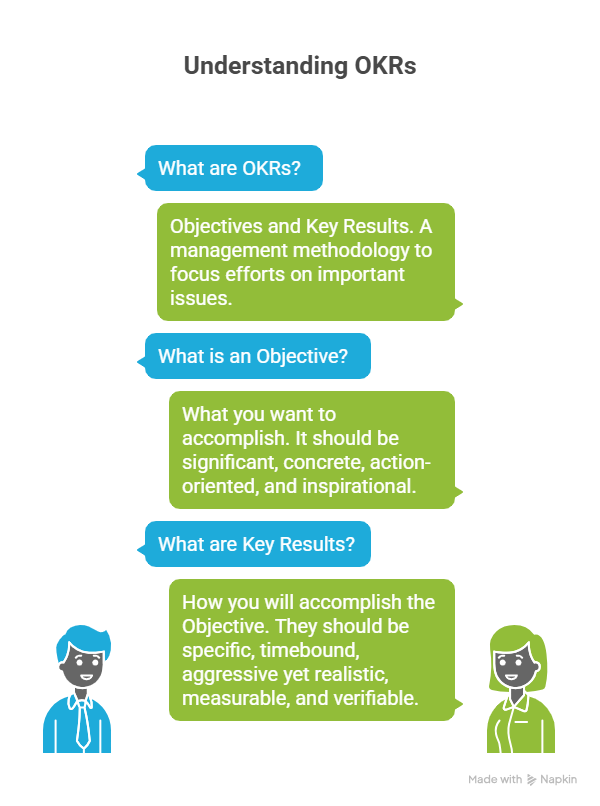
Basically, it’s a way to make sure what each person is doing ties back to what the whole agency’s trying to achieve. If the agency goal is “bring in three new enterprise clients this quarter,” then your ads manager might have a key result like “launch two pilot LinkedIn campaigns for enterprise leads.” That way, everyone’s rowing in the same direction.
But don’t just throw goals at people and walk away. Have regular chats (proper one-on-ones, not robotic “weekly check-ins”). Ask what’s working, what’s not, and what their blockers are. Sometimes you’ll find they just need a new tool, an extra pair of hands, or clearer client feedback.
And please, don’t hover. Micromanaging is the fastest way to kill motivation. Once someone knows their lane, give them the wheel. Let your account managers handle client comms without you stepping in on every email. Let your designers own the creative process and don’t tweak every font size. Trust goes a long way.
Part 3: Focus on Client Success and Acquisition
An agency lives or dies by its clients. Winning new business is important, but retaining and expanding existing relationships is where most profits lie.
Tip 9: Master Client Acquisition
New business feeds growth, yet it’s increasingly competitive. Prospecting and pitching must be highly targeted. Start by specifying your ideal client profile based on industry, budget, size, and values. Qualify leads before investing in proposals, ask about goals, timelines, and decision‑makers.
Develop a repeatable sales process that includes outreach, discovery, proposal, and follow‑up. Use case studies and results to demonstrate expertise. Invest in thought leadership through blogs, webinars, and speaking engagements to attract inbound leads.
Partner with complementary agencies to refer work outside your specialty; remember that a lot of brands hire multiple agencies, so collaboration over competition can pay off.
Also Read: Blueprint for a Successful Outreach Campaign for SMB Prospects
Tip 10: Prioritize Client Retention
Keeping clients is more profitable than constantly finding new ones. Delivering exceptional service, clear communication, and consistent results builds loyalty. Set expectations during onboarding and report transparently. Celebrate wins together and address issues quickly. Maintain regular check‑ins to understand evolving needs and identify upsell opportunities.
Diversify your client roster. It is generally recommended to maintain a client concentration below 25% of total revenue to reduce risk. Offer tiered service packages so clients can scale up or down without feeling locked in. Share insights beyond the agreed scope. If you spot a conversion issue on their website or a trend in their analytics, call it out. Clients appreciate partners who proactively contribute to their success.
Read: 7 Fixes to Reduce Client Churn for Your Agency
Tip 11: Create a Killer Client Onboarding Process
First impressions matter. A structured onboarding approach sets the tone for a productive partnership. Let’s break it down.
Make sure you collect all necessary information, brand guidelines, access credentials, and existing campaigns before work begins. Align on goals, KPIs, and preferred communication channels. Introduce your team members and clarify roles on both sides. Provide a clear timeline for deliverables and checkpoints.
Use an onboarding checklist and send welcome materials that explain what clients can expect in the first 30, 60, and 90 days.
Automate reminders for outstanding tasks, and schedule a kickoff call to address questions. Onboarding isn’t a one‑time event; plan periodic check‑ins during the first quarter to ensure the relationship is on track and adjust strategies as needed. A smooth onboarding experience reduces churn and builds trust.
Here’s a detailed checklist: 8-step Onboarding Process for Marketing Agencies
Tip 12: Showcase Your Success with Case Studies and Testimonials
Every agency claims it gets results. But what clients actually believe are the stories that prove those results. And this is not just in terms of numbers, but the overall experience of their collaboration with a client.
Social proof is quite powerful, and case studies and testimonials are your receipts. Potential clients want to see evidence that you deliver or have delivered results.
Start collecting feedback while projects are still running, not months later when everyone’s moved on. Clients are most expressive when they’re seeing results in real time. A quick Slack message like, “Hey, you mentioned our campaign outperformed last month, mind if I quote you on that?” works better than chasing a formal testimonial later.
Encourage satisfied clients to leave reviews on industry platforms or share their stories in webinars. Highlight awards or certifications that validate your expertise.
BONUS: A quick resource for deeper learning
Still need a deeper dive into a proper way to start and run a marketing agency? Here’s our pick: a deep dive into how to start a marketing agency.
Conclusion & Next Steps
Growing a marketing agency requires more than creative brilliance. It demands disciplined agency management, financial savviness, a culture that attracts top talent, and an obsession with client success.
Yes, you’ll make mistakes. Everyone does. But if you keep improving, keep your culture healthy, and focus on delivering honest results, your agency will survive and build a name people respect.
If you’re ready to take the next step and bring all of this together into a system that runs smoother, smarter, and faster, book a demo and see how Synup OS can help your agency work like the well-oiled machine you’ve always wanted.
Frequently Asked Questions
1. What’s the top tip for building marketing agency management?
Above all, build an agency that people want to work with and work for. Invest in your crew: train them, trust them, and give them room to grow. Keep your processes tight but flexible. Talk openly with clients. Celebrate your wins loudly and learn quietly from the ones that didn’t land.
2. How many clients should a small agency handle at once?
The ballpark range is 10 to 20 active clients for maximum revenue without overwhelming your team. Taking on too many clients can cause burnout and lower service quality. On the other hand, having too low a number of clients (say 2 to 4) means leaving room for uncertainty.
3. Why are case studies important for winning new clients?
Without case studies, you have no other way to demonstrate to possible clients that you can really deliver. Well‑crafted case studies and testimonials demonstrate expertise, build trust, and differentiate your agency from competitors.