

Ah, the shifting tides of SEO updates. They’ve definitely threatened the carefully crafted island of predictable results you promised your clients.
One week, your client’s rankings are up. The next week, a core update rolls out, and numbers dip. Then, clients start panicking, asking why traffic and leads are slowing down after receiving the monthly report.
For many agency owners and marketing consultants, this is where relationships are won or lost.
It’s true, algorithm updates cause unpredictable ranking shifts. However, navigating this volatility is a normal part of keeping a brand visible. Search engines constantly adjust results to improve quality, relevance, and user trust. Hundreds of minor updates happen every year, with broad core updates several times annually.
Drawing from nearly a decade of experience in helping businesses manage their visibility online, we’ll show you just how to manage client expectations and turn a tense ranking drop into long-term trust.
TL;DR: How to Manage Client Expectations During Algorithm Changes
- Algorithm updates naturally cause ranking shifts. As an agency owner or consultant, your role is to prepare clients, respond strategically, and turn volatility into trust-building moments.
- Explain how algorithms work, why rankings fluctuate, and dismantle myths like “instant results” or “guaranteed #1.” Build a shared language early.
- Define rankings vs. traffic vs. conversions. Set 3, 6, and 12-month benchmarks. Agree on deliverables, reporting formats, and communication cadence.
- Rule out technical errors, seasonal trends, or tracking issues. Use analytics, GSC, and crawl tools to confirm timing and scope before taking action.
- Wait until updates finish rolling out (2–4 weeks). Let data guide changes to content, UX, or authority signals. Share a draft action plan with clients.
- Fill gaps exposed by the update. Refresh content, improve E-E-A-T signals, fix technical issues, and propose strategic upgrades.
- Show small wins like technical fixes or improved engagement metrics. Report consistently to prevent clients from feeling left in the dark.
- Common client misconceptions & how to address them:
- “Why am I not #1 anymore?” → Rankings shift daily; focus on visibility and qualified clicks.
- “Why aren’t we seeing traffic yet?” → SEO takes time; indexing and trust signals build gradually.
- “Why do we need ongoing SEO?” → Maintenance protects gains and adapts to constant changes. Use clear, confident scripts for each.
- Transparency, data-backed strategy, and consistent communication keep clients through tough updates. Create an “algorithm response playbook” for onboarding.
- Prepare before updates hit, act with evidence after, and keep clients in the loop. Synup can help you track, diagnose, and communicate changes. Book a demo.
Step 1: Educate Clients on SEO Fundamentals
Most clients come in with a version of SEO they picked up from blogs, old training, or what their competitor (or distant uncle) said worked. Few truly understand how rankings work, or why algorithm changes are a normal part of the system. For example, take a look at this scenario:
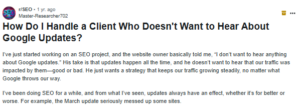

They’re not far off. Updates DO happen all the time, but their approach…leaves much to be desired.
If you skip this education, you’re setting yourself up for tough conversations later.
Here’s how to build the foundation early:
- Google’s algorithm looks at hundreds of factors to decide what shows up. Things like page quality, backlinks, user engagement, mobile experience, and more.
- These factors shift when Google decides it can serve users better. That’s why rankings can move even if you didn’t change anything.
Address common myths right from the start, or, if you missed that step, tackle them head-on when updates roll out:
- Myth 1: “We can guarantee a number one ranking.”
No, you can’t. No one can. Even Google says so. Rankings don’t come just from doing SEO.
- Myth 2: “Results happen in weeks.”
SEO is a slow build. It can take 3–6 months for targeted pages to gain stable traction, sometimes longer in competitive markets.
- Myth 3: “Once you rank, you stay there.”
That’s not true. Competitors are working on their sites too. Search rankings shift with every move your competitors make. Their improvements can push you down, while their mistakes open space for you to rise. The key is to track them closely and keep strengthening your own site.
Use a simple analogy. Help them view SEO as marathon training. You put in the work, pace yourself, and adjust for terrain. A sudden hill (algorithm change) might slow you down temporarily, but you keep running.
Bring The Numbers To Walk the Talk
According to a 2025 Ahrefs study, only 1.7% of newly published pages reach the top 10 within a year. That’s down from 5.7% the year before. And that’s without factoring in the impact of algorithm changes mid-campaign.
Clients need to understand they’re in a long game that requires strategy, with results also influenced by non-SEO factors such as expertise, experience, authority, trust, and customer experience. Go through their Google profile to see what their reputation is like. If a client changes direction or service quality drops, show them how it triggers negative reviews that seriously damage local SEO.
These are examples of customer experiences and processes outside the SEO agency’s control that can still damage local SEO efforts:
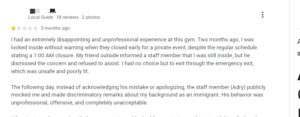



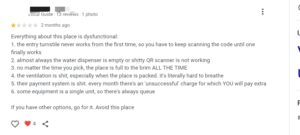

Source: GBP
Now, get them to take reputation management seriously while teaching them how to manage things, by, for instance, responding early to all negative reviews and making up with dissatisfied customers.
Build a Shared Language
Have a one-page explainer you walk through in onboarding. Show an example of a keyword graph before and after an update.
For instance, here’s what happened to one company after an update:
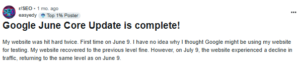

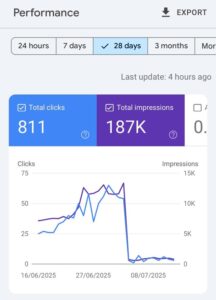

Here’s a better picture of their performance:
But here’s what happened to a different user:
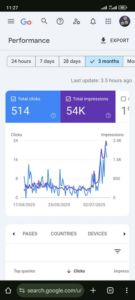

Source: Reddit
It’s important to explain that dips aren’t always losses; sometimes traffic or conversions stay steady or grow even if rankings move.
When you’ve handled this well, the conversation after an update isn’t “Why did this happen?” It’s “Which type of update is this and how do we respond?”
Step 2: Set Clear Timelines & Metrics Upfront
Uncertainty fuels panic. The fastest way to cut that off is to agree on what success looks like before you start and how you’ll measure it.
Define the difference between rankings, traffic, and conversions:
- Rankings tell you visibility potential.
- Traffic shows how many people visit.
- Conversions prove whether that traffic turns into leads or sales.
If you only talk about rankings, a temporary dip will look like failure, even if conversions are climbing from better targeting.
Lay Out Realistic Timelines
Here’s a framework you can adapt:
- 3 months: Early ranking movement and crawl/index improvements.
- 6 months: Noticeable keyword improvements, stronger traffic trends, early conversion lift.
- 12 months: Consistent visibility, measurable ROI, stronger brand authority.
These are benchmarks and not promises. Always explain that algorithm changes can speed up or slow down progress temporarily.
Agree on Reporting Structure
- How often: Monthly reports plus a mid-month check-in email works for most SMBs.
- What’s included: Rankings, traffic, conversions, and clear commentary on why numbers moved.
- Format: Visual charts backed with short, plain-English notes.
Clients who receive regular, easy-to-understand reports are more likely to stay long term. It’s not just about the data. It’s about trust through transparency.
Learn More: Best Client Management Tools for Marketing Agencies
Plan For The “What if?”
Before the first update even happens, outline your review process:
- Measure impact across all priority keywords.
- Check if the traffic or conversion rate actually dropped.
- Look for patterns. Did certain page types gain or lose positions?
- Wait 2–4 weeks before major strategy changes unless the update clearly penalizes outdated tactics.
Use a Real Example
Consider something like this: “A multi-location service business we worked with saw a 15% drop in rankings on high-volume keywords after a September update. But their conversions stayed flat. The update had shifted SERP layouts, moving map results higher. Once we pivoted to strengthen their local signals, rankings for those terms rebounded within two months, and conversions increased 8%.”
This type of story isn’t bragging; it’s showing that fluctuations can be managed with calm, data-led adjustments.
Step 4: Diagnose: Is the Drop Really an Update?
First thing, don’t assume Google’s the bad guy every time rankings dip.
Plenty of other things can tank numbers:
- Technical glitches
- Tracking errors
- Competitor moves
- Seasonal demand drops
If you jump to conclusions, you’ll waste weeks fixing the wrong thing.
Here’s how to check before you hit the panic button:
Start With Timing
Open Google Search Console (GSC) and analytics. Did the drop start on the same day or within a day of a confirmed update on Google’s Search Status Dashboard?
If yes, there’s a decent chance it’s related. If not, keep looking for the real reason.
Rule Out Technical Issues
- Check server uptime logs. Even a few hours of downtime can affect traffic.
- Run a crawl with tools like Screaming Frog or Sitebulb to see if URLs are suddenly blocked or noindexed.
- Look at robots.txt and sitemap updates; one wrong line can pull pages out of the index.
Compare Multiple Metrics
- In GSC, see if impressions fell but clicks held steady. If yes, that’s a visibility change, not necessarily a traffic disaster.
- Check analytics for conversion trends. If leads or sales are stable, the “drop” might just be vanity keywords shifting.
- Filter by page to spot isolated problem areas instead of sitewide drops.
A lot of ranking drops blamed on updates are at least partly caused by technical or site-level issues. That means in a lot of cases, agencies could have fixed the problem without touching the content.
The goal here is simple: diagnose with data. When you can walk a client through exactly what happened and why, you look like the steady hand they hired you for.
Step 5: Respond Strategically and Deliberately
Once you’ve confirmed it’s likely tied to an algorithm change, fight the urge to “fix” everything in the first 48 hours. Here’s what someone advised our previously mentioned hard-hit website owner:


Google rolls these updates out over one to two weeks. You can stay informed by visiting the Google Search Status Dashboard and learn how core updates can affect your website.
Jumping in mid-rollout is like repainting a house while the walls are still wet; you’ll make a mess.
Here’s the plan:
Wait For the Dust to Settle
Give it 2–4 weeks before you make major shifts. In that window, monitor patterns. Are the same page types or topics getting hit? Did mobile rankings move more than desktop?
Let Evidence Guide the Next Move
- If the update favors deeper content, audit affected pages for length, structure, and coverage of related queries.
- If UX factors seem to be in play, run Core Web Vitals, check mobile responsiveness, and fix load speed issues.
- If the link quality looks like the driver, review referring domains for relevance and authority.
Loop Clients in Early
Don’t disappear into “fix mode” without telling them what’s happening. Send them a short “diagnosis + next steps” note. It keeps them confident you’ve got a game plan instead of just reacting.
Step 6: Use the Update as an Opportunity to Pivot or Improve
Every update leaves clues about what Google’s rewarding. Your job is to read those clues and use them to your advantage.
Find the Weak Spots
- Is your content thin compared to competitors?
- Are you missing supporting topics that help Google understand authority?
- Are there older posts or service pages with outdated stats or dead links?
Act On the Findings
- Refresh content with current data, better formatting, and relevant subtopics.
- Build stronger E-E-A-T signals: expert bios, reputable source citations, original data if you have it.
- Tighten internal linking so Google can see topic clusters clearly.
Pitch Upgrades Where They Make Sense
If the update exposes a content gap across ten locations, suggest a structured rollout of new landing pages. If UX is hurting rankings, propose a design refresh.
This isn’t “selling to sell.” It shows clients how to fix the issue at the root and get ahead for the next update.
When you position this as “growth work” rather than “damage control,” you keep morale up and secure a budget for projects that improve results.
Step 7: Communicate Progress and Maintain Trust
Here’s the reality:
SEO fixes don’t flip rankings back overnight.
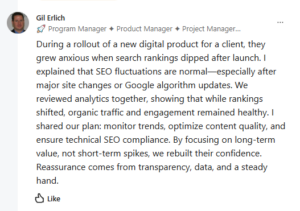
If you go silent while waiting for recovery, clients will assume nothing’s happening. Here’s something to inspire a better approach:

Show Improvements, Even Small Ones
- Did you just fix 120 crawl errors? Tell them.
- Page load time improved from 4.8 to 2.6 seconds? Show the before-and-after.
- Added 800 words of high-value content to a priority page? Screenshot it.
Highlight Quality Signals
Even if rankings are slow to rebound, show metrics like improved click-through rates, longer time on page, or more conversions from the same traffic. Those are signs the work is paying off.
Stay in Touch
Set a standing check-in, weekly if they’re anxious, monthly if they’re seasoned. Use that time to explain the “why” behind every move.
You can’t control Google’s algorithm, but you can control how informed and reassured your clients feel.
When clients feel in the loop, they’re more willing to ride out the volatility with you.
Common Client Misconceptions & How to Address Them
If you’ve been in the industry for a while, you know these conversations by heart.
The “Why aren’t we number one?” call. The “Where’s all the traffic?” email. The “Do we still need SEO now that we’re ranking?” question that makes you want to sigh into your coffee.
These moments are make-or-break. Handle them well, and you strengthen trust and long-term trust in your process. Handle them poorly and you start the slow slide toward losing the account.
Here’s how to tackle the big three without dodging the truth.
Misconception 1: “Why am I not #1 anymore?”
First, remind them that rankings move. Every day. Even without updates. The SERP is not a static billboard. It’s a live auction where pages compete for attention based on hundreds of factors.
Explain that shifts can happen for reasons completely outside your control. Google might test a different layout. A competitor might have published fresh content yesterday. Seasonal interest might push a different page higher for a few days.
Back it up with numbers. Backlinko data shows position one averages 32% of clicks, but position two still pulls roughly 25%.
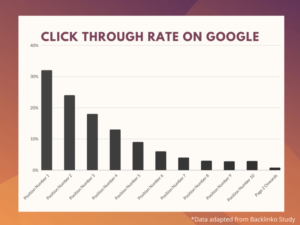

Source: Backlinko
Dropping a spot doesn’t automatically bury leads.
What to say:
“Google’s always testing. Our job isn’t to cling to one number but to make sure you’re showing up where the right customers are searching and clicking. That’s what drives business.”
Misconception 2: “Why aren’t we seeing traffic yet?”
Clients often think SEO is like flicking a light switch. You do the work, and the results show instantly.
But the reality is, Google’s index works in cycles. For some pages, it might take weeks for changes to be crawled, reprocessed, and rewarded.
Point them to Google’s own documentation. It clearly says significant changes can take months to reflect in rankings, especially for lower-priority pages.
Here’s how to frame it:
“SEO is more like planting a crop than turning on a light. We’ve prepped the soil, planted the seeds, and we’re watering regularly. You’ll see signs of growth soon, but the full harvest comes after the work matures. That’s how it sticks.”
If you want to make it real for them, show the crawl dates from GSC. If the target page was last crawled ten days ago, it’s clear why results aren’t showing yet.
Misconception 3: “Why do we need ongoing SEO?”
This one pops up after a big improvement in SEO efforts. The client sees rankings improve and wonders if it’s time to cut the budget.


Explain that stopping now is like cancelling your gym membership after finally getting fit. The gains don’t last without upkeep.

Search is competitive. Algorithms keep changing. Competitors are working too. Sites that stop updating content will see traffic drop in no time without a major update.
Remember, competitors are always optimizing and adding new content.
Script it like this:
“Ongoing SEO is about keeping your position and protecting it from competitors. If we stop, rankings can slide faster than they rose. That’s especially true right after a core update, when Google’s reshuffling results.”
Also Read: How To Handle ‘Difficult’ Agency Clients Professionally
Conclusion & Next Steps
Algorithm updates are part of the territory. You can’t stop them, but you can control how you and your clients respond.
When an update hits, the winners are the ones who were ready before it landed. They’ve set realistic expectations, they know their process, and they keep their clients fully looped in.
Remember, SEO cannot replace or improve customer experience, and clients have to ensure their audiences are getting the best.
Frequently Asked Questions
How to manage client expectations throughout the drafting and submission process?
Map the process out upfront. Show them what happens at each stage: research, drafting, internal review, revisions, and submission. Give timeframes for each so they know when to expect updates. Keep a shared tracker so they can see progress without chasing you for it. And always tie deliverables back to campaign goals so they know why each stage matters.
What is an effective way to handle a client’s changing requirements?
First, work out if it’s a true strategic change or a knee-jerk reaction. If it’s strategic, say, a market shift, adapt the plan and explain the trade-offs in budget, timeline, or scope. If it’s reactive, talk them through the pros and cons before changing course. Always confirm changes in writing so everyone’s aligned.
How do I manage client expectations when they have unrealistic demands or timelines?
Be straight but respectful. Break down what they’re asking into the actual work and time required. Then show the gap between their ask and reality. Use industry benchmarks or Google’s own timelines to prove your point. Offer a plan that balances quick wins with a sustainable path forward. That way, you’re not just saying “no,” you’re showing them the smartest “yes” they can get.


